Let me ask you something simple. When you go to a shop and the shopkeeper says, “Sorry, the price has gone up because the government added a new tax,” what do you do? You pay more. You have no choice. That is exactly what is happening right now in America — and what happens in America does not just stay in America. It travels. It reaches India. It reaches your life.
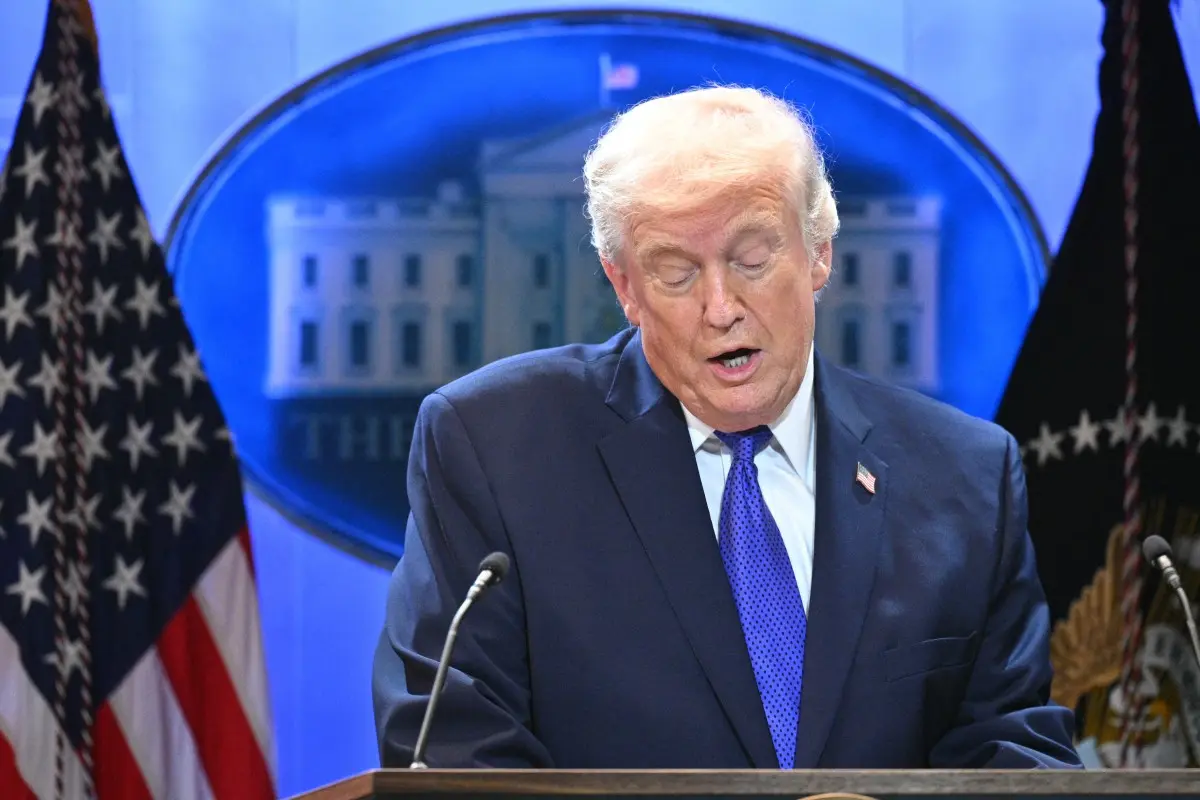
On Saturday, 21st February, American President Donald Trump announced a brand new 15% import tax on all goods coming into the United States from other countries. Import tax, also called a tariff, is simply extra money that a country charges when goods arrive from outside. Think of it like an entry fee. That extra cost is not eaten by the seller alone. It gets passed on to the buyer — the ordinary American person wondering why the price of their rice cooker or running shoes just went up.
This 15% tax actually replaced a 10% tax that Trump had announced just the day before. And that 10% tax itself came because the Supreme Court of America struck down Trump’s earlier, much larger tariff plan. The court said Trump had no legal authority to impose those tariffs using IEEPA — the International Emergency Economic Powers Act. IEEPA is a tool meant for emergencies like blocking money transfers or controlling trade with enemy nations, not for placing import taxes on the whole world. The court cancelled those tariffs.

So Trump found another law — Section 122 of the Trade Act of 1974. Never used before in American history to impose tariffs, this law allows a president to place up to 15% import tax, but only for 150 days, roughly five months. Section 122 was created for situations where America is spending far more on buying goods from other countries than it earns by selling its own — what is called a trade deficit. Trump argues this is exactly the kind of problem this law was made for. Legal experts, however, are not fully convinced. There is a real possibility someone will take this to court too. But for now, the tariff is in place and it is real.
In simple numbers — before the Supreme Court’s ruling, America's average import tax was 16%. After the ruling it dropped sharply to 9.1%. Now, with the new 15% tariff, it is expected to settle around 13.7%. As reported by The Wall Street Journal, a study by the Budget Lab at Yale University confirmed this.
Now, why should you care? India exports medicines, textiles, software services, gems and engineering goods to America. A 15% tax means Indian companies either absorb the loss or charge more and risk losing customers. Either way, jobs are affected. Salaries are affected. Trade is not a faraway government matter — it is connected to someone’s job, someone’s evening meal.
Trending Stories
)
'Hellish' wildfires burned through Europe for 300,000 years after supercontinent Pangea broke up
)
No Pandya as Auqib Nabi earns maiden ODI call-up; Mayank returns for WI T20Is| check full squads
)
Trump praises India’s Opium crackdown, hails anti-drug efforts
Mandakini breaks silence on Dawood Ibrahim photo: 'I was not invited by him'
)
Former India player Diana Edulji wants Smriti Mandhana to replace Harman as skipper at the earliest
)
Trump calls Canada-EU associate membership plan ‘laughable’ and threatens 'very serious tariffs'
)
Protests erupt over migrant housing plan in Piddington
)
India can scale up Finland’s circular solutions, minister Multala says
)
240-million-year-old bizarre 'pig with a tusk' creature creates new dilemma over origin of dinosaurs
)
Europe wants a common playbook for security threats, seeks security beyond NATO
)
All Indian goods to get duty-free access to New Zealand
)
Formula One reveals the 2027 race calendar; Monaco to host sprint race for the first time
)
Bigg Boss 20: Mahhi Vij reveals she lost Yuva role to Kareena Kapoor; 'didn’t work out in my favour'
)
Lionel Messi for 2026 Ballon d’Or over Mbappe and Yamal, says Diego Simeone
)
US House votes 417-3 to pass Ratepayer Protection Act targeting AI data center electricity costs
)
Hong Kong unveils 11 new measures to boost birth rates, offers higher cash bonuses and housing perks
)
Former OpenAI researcher warns of growing risks from Artificial Intelligence
)
Veteran actor Anant Nag honoured with Indian cinema’s highest award
)
Wildfire tears through forests in Spain's Valencia
)
AUS vs SA: Steve Smith still gets 'little flashbacks' from sandpaper gate
)
Pakistan naval vessel returns to harbour with 'severe damage' after collision with Indian warship in Arabian Sea
)
Fed raises rates for first time in 3 years, Kevin Warsh defies Trump as inflation mounts
)
Katrina Kaif’s postpartum weight is not the problem; your gaze is
)
Daayra movie review: Kareena Kapoor, Prithviraj Sukumaran shine in Meghna Gulzar’s cop-versus-cop crime thriller
)
Saudi Vs Houthis: Yemeni military rebels clash with Houthis
)
Pak batter Rizwan's petition against being questioned by cyber crime agency rejected by court
)
US trade tariff: 100% tariff targets Russian buyers amid trade tensions
)
Pakistan: Imran Khan's sons Kasim & Sulaiman claim their father is 'tortured' in jail
&im=FitAndFill=(700,400))
New OTT releases this week (September 14-20, 2026): Lust Stories 3, Waiting Hai, Irumudi- 5 new titles coming on Netflix, Prime Video and more
)
Ebola outbreak: WHO sees encouraging signs in fight against Ebola outbreak
)
Trump gets new power to hit India, China with up to 100% tariffs as US Senate clears Russia sanctions bill
)
‘Imagine 50 AI fighters cornering one manned jet’: India’s mobbing doctrine eyes a new era of air warm
)
Saudi vs Houthis: Riyadh claims to have shot Houthi drone targeting Mecca
)
US Treasury rallies global financial institutions for Op Economic Outcast to isolate Iran
)
Want to get married within a year? Why 18 lakh people rush to Jaipur for ‘sacred henna’
)
Pakistan boycotts chess match against Israel at Olympiad
)
UN General Assembly 2026: What is veto power. Which countries have it and how does it work?
&im=FitAndFill=(700,400))
Suriya and Jyothika say ‘I do’ again after 20 years! See their dreamy wedding pics
)
Abhishek Sharma rises to No. 2 in T20Is; ENG’s Robinson 3rd after record Pakistan Tests
)
Laura Wolvaardt sets new world record for most WT20I runs in a year
)
The Early Spring season 2 is happening, but fans have one request - 'don't change the actors'
)
“Wait,” you might ask, “didn’t India just agree to an 18% rate earlier this month?” Yes, we did. But that deal was built on a legal foundation that the Supreme Court just demolished. While the new 15% tax sounds lower on paper, it is actually a trap. It strips away India’s special status and puts us in the same bucket as everyone else, all while hanging a 150-day timer over our heads. In trade, a lower tax with high uncertainty is often worse than a higher tax with a clear future.
Not everything is taxed equally. Medicines, important minerals, defence goods, and products from Canada and Mexico under an existing trade agreement are exempt. But for most imports — including cheap goods from Chinese apps like Shein and Temu — the tax applies fully.
Earlier, packages worth $800 or less could enter America without any tax. Trump ended this benefit, and the White House confirmed it will not return. Every small package now faces the 15% tariff. The Republican Party has also passed a law to permanently end this system from June 2027.
On the ground, The Wall Street Journal noted that January’s inflation report showed prices for home appliances, furniture, and new cars had already gone up. For most of 2025, American companies and buyers paid over 90% of the extra costs themselves. Some companies stopped hiring. But shrimp fishermen in Alabama said tariffs actually helped them compete against cheaper foreign imports. So the story has two sides.
My honest opinion? Tariff policy is not a light switch you can flick on and off every few days. Every change creates uncertainty. Uncertainty is itself a cost. And that cost finds its way to ordinary people every single time.
Trump’s goal — protecting American industries, reducing dependence on China, bringing back jobs — is not wrong. But changing rates every 48 hours, getting them struck down in court, and finding new laws does not inspire confidence. A country’s trade policy must be stable and legally sound. What we are seeing right now is the opposite of that.
And that, my friend, is exactly why you should be paying attention.
(Disclaimer: The views of the writer do not represent the views of WION or ZMCL. Nor does WION or ZMCL endorse the views of the writer.)