

&imwidth=800&imheight=600&format=webp&quality=medium "Panta Bhaat: How the humble fermented rice has become a summer weekend staple for me")
Weekends are my perfect lyadh days. While I line up multiple tasks that need my attention on weekends, I don’t strive to complete them with the same efficiency and speed as I would on other working days.
I do things at my own pace.
And, my pace could be slow for many, but it is stubborn and persistent. It helps me meet my deadlines at work and lets me stay focused on my targets. Most importantly, it helps me take a back seat on the weekends. That’s when I feel more at ease, with myself and my surroundings.
‘Lyadh’ – in colloquial Bangla, means just that.
It means the art of doing nothing at all, of lazing around. Or it could mean taking your own sweet time in doing things. I fall into the latter categorisation.
Lyadh means different things to different people.
Trending Stories
&imwidth=180&imheight=135&format=webp&quality=medium)
Rahul Gandhi's plea against Election Commission delayed as Supreme Court registry flags 14 ‘defects’
&im=FitAndFill=(700,400)&imwidth=180&imheight=135&format=webp&quality=medium)
Navratri 2026: 9 days, 9 forms of Goddess Durga and 9 colours- Check the complete list
&imwidth=180&imheight=135&format=webp&quality=medium)
Korean peninsula tensions escalate as North Korea launches multiple ballistic missiles, PACOM says 'no threat to US personnel'
&imwidth=180&imheight=135&format=webp&quality=medium)
Trump weighs firing Kimberly Guilfoyle as US ambassador to Greece amid misconduct allegations: Report
&imwidth=180&imheight=135&format=webp&quality=medium)
Anti-SIR protest in Mumbai: Protestors wear black masks & ribbons in Mumbai
&imwidth=180&imheight=135&format=webp&quality=medium)
UK PM Andy Birnham renews claims of Russian meddling in Brexit vote
&imwidth=180&imheight=135&format=webp&quality=medium)
BCCI rejects venue shift reports, India vs Sri Lanka 1st ODI to remain in Delhi
&imwidth=180&imheight=135&format=webp&quality=medium)
'Absolutely disgusting': Australia slams US plan to livestream Nidal Hasan's execution; Mike Johnson raises concerns, warns of terrorist propaganda
&imwidth=180&imheight=135&format=webp&quality=medium)
1,500 drones illuminate Mumbai sky as Cordelia Cruises unveils second ship, Cordelia Sky
&imwidth=180&imheight=135&format=webp&quality=medium)
Houthis warns US of 'painful response' if Washington joins Saudi war in Yemen as airlines suspend flights to Saudi Arabia
&imwidth=180&imheight=135&format=webp&quality=medium)
Congress demands action against chief election commissioner
&imwidth=180&imheight=135&format=webp&quality=medium)
Robot gropes girl, makes thrusting movements in bizarre crime in Germany
&imwidth=180&imheight=135&format=webp&quality=medium)
'Turn approver, resign, we'll forgive you': Rahul Gandhi claims receiving messages from CEC Gyanesh Kumar
&imwidth=180&imheight=135&format=webp&quality=medium)
'I will not be silenced': Ilhan Omar alleges political intimidation after federal officers search her Washington home
&imwidth=180&imheight=135&format=webp&quality=medium)
Pakistan's government blames PTI for rise of terrorism in Khyber Pakhtunkhwa
&imwidth=180&imheight=135&format=webp&quality=medium)
‘This is just the start’: Maaya Rajeshwaran on historic ITF title, confidence boost and future goals
&imwidth=180&imheight=135&format=webp&quality=medium)
I.N.D.I.A. Bloc lists 10 requests to Supreme Court
&im=FitAndFill=(700,400)&imwidth=180&imheight=135&format=webp&quality=medium)
IMF World Economic Outlook: 10 economies to watch for growth in FY27 and FY28 - Where does India stand?
&im=FitAndFill=(700,400)&imwidth=180&imheight=135&format=webp&quality=medium)
How does a robot decide what to do next?
&imwidth=180&imheight=135&format=webp&quality=medium)
Is the AI chip boom already over? Global semiconductor stocks slide as investors question unbridled spending
&imwidth=180&imheight=135&format=webp&quality=medium)
L Murugan resigns as Union Minister, expresses wish to return to grassroots
&imwidth=180&imheight=135&format=webp&quality=medium)
Trump says he 'may' meet North Korean leader Kim Jong Un during upcoming Asia trip
&imwidth=180&imheight=135&format=webp&quality=medium)
'Ouch!!! That must hurt': Kangana Ranaut hails Kamal Haasan's sharp reply to Elon Musk over Starlink row
&imwidth=180&imheight=135&format=webp&quality=medium)
Sidhu Moose Wala’s younger brother wins hearts by recreating late singer’s signature move at Toronto Hologram Show
&imwidth=180&imheight=135&format=webp&quality=medium)
Girl 'dead' for 8 hours wakes up at her own funeral, dad insists she wasn't breathing
&imwidth=180&imheight=135&format=webp&quality=medium)
UK school ditches technology, shifts from screen to pen and paper for learning
&imwidth=180&imheight=135&format=webp&quality=medium)
Opposition’s 10 demands in Supreme Court petition range from stay on SIR to audit of voter rolls
&imwidth=180&imheight=135&format=webp&quality=medium)
'I am thoroughly unamused': Judge slams Trump administration after 400 trees cut at Washington golf course
&im=FitAndFill=(700,400)&imwidth=180&imheight=135&format=webp&quality=medium)
New OTT releases this week (October 12-18, 2026): Sacrifice, Koffee with Karan S9, Roadies Rebirth- 6 titles coming on Netflix, JioHotstar and more
&imwidth=180&imheight=135&format=webp&quality=medium)
China’s gold rush puts billion in focus
&imwidth=180&imheight=135&format=webp&quality=medium)
India's Ajit Doval, Iran's Mohsen Rezaei hold talks amid escalating West Asia tensions, discuss 'issues of mutual interest'
&imwidth=180&imheight=135&format=webp&quality=medium)
New Cold War: Why is China buying more gold? Explained
&imwidth=180&imheight=135&format=webp&quality=medium)
Anupam Kher joins Ranbir Kapoor's Ramayana as Jatayu, new poster unveiled
&imwidth=180&imheight=135&format=webp&quality=medium)
'Almost certainly': UK Prime Minister Andy Burnham says Iran's IRGC behind RAF Fairford threat
&imwidth=180&imheight=135&format=webp&quality=medium)
Elon Musk pumps $276 million into Republican campaigns ahead of US midterm elections
It could mean aimlessly watching the world pass by through your little window, gazing up at the clouds and making stories, striking up a conversation with the stars, rewatching mindless comedy classics, or simply putting your feet up and reading a book or listening to your favourite music, and dreaming away.
Basically, ‘Lyadh’ can be anything and everything that lets you unwind fully, where you don’t engage much at the cerebral level.
My idea of Lyadh-ing on a lazy summer Sunday is to have a leisurely brunch of ‘Panta Bhaat’, followed by an afternoon siesta.
What a pure bliss that is.
Of late, Panta Bhaat has become a staple food in our household during the summers. It has made its way to our home through me – or so I would like to believe.
While my parents enjoy Panta Bhaat, they are not fixated on having the fermented meal every summer weekend as I am. My love for Panta Bhaat has deepened over the last few years, especially because it tastes good, makes my tummy happy and lyadh-ing post that, feels even more justified.
This rice dish has many versions and is known by different names in different regions of India - Panta Bhaat in West Bengal, Pakhala in Odisha, Poita Bhaat in Assam, Geel Bhaat in Bihar, Pazhamkanji in Kerala, among others.
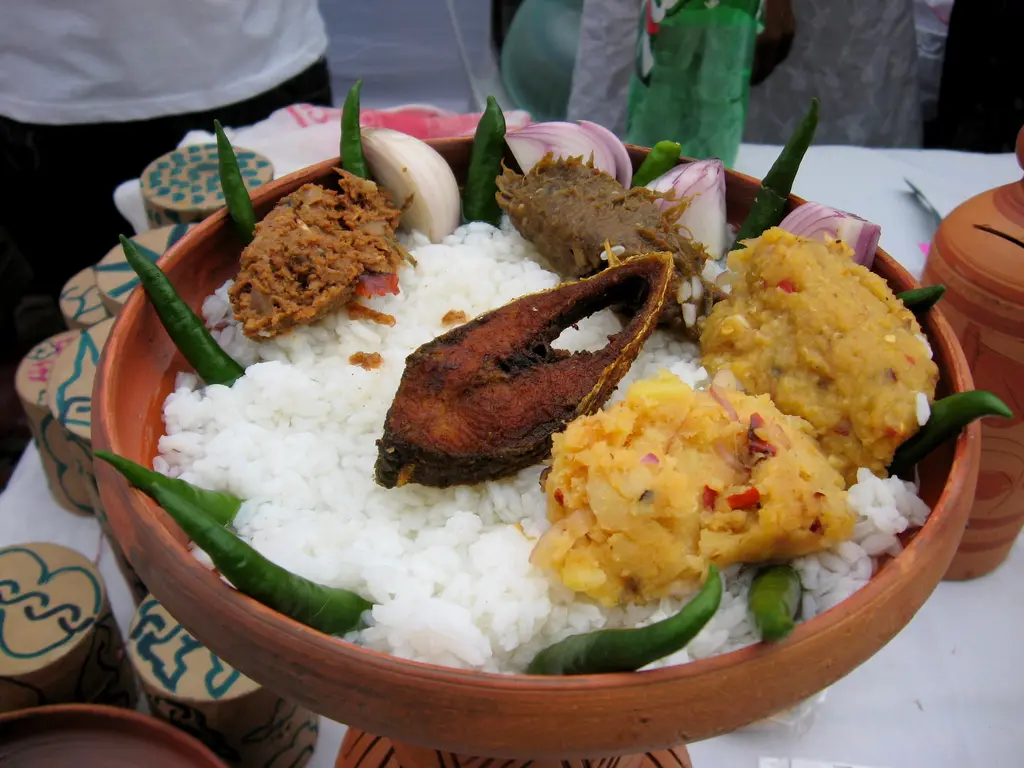
The first step in preparing Panta Bhaat (Bengali version) is the fermentation process. Usually, the leftover parboiled rice is soaked in water overnight, which then ferments the next day. A dash of lemon, preferably Gondhoraj lebu (a type of lemon grown in Bengal), is squeezed into the rice and is mashed with a bit of mustard oil and salt. It can then be had with onions and green chillies.
Along with this, there are several accompaniments to go with Panta Bhaat, like mashed potatoes, batter-fried vegetables, lentil fritters, and fried fish.
This mildly fermented rice dish was born out of utilitarian needs. Back in the day, when refrigerators were not so common, this was a meal meant for the working people. Moreover, the process left no food waste, as leftover rice was made into a dish that sustained them for a long time.
The oldest historical record of this fermented meal, which is widely reported, dates back to the 17th century. It is attributed to the Portuguese traveller Fray Sebastián Manrique, who visited Bengal and noted that Panta Bhaat, accompanied by salt and green, leafy vegetables, was the main meal for people across all communities.
While it’s evident that we have been consuming fermented foods since ancient times, their popularity has surged only recently. Did we recognise their health benefits too late?
I have been having fermented food items in my diet for many years now. Some of my preferred fermented Indian food items are - Idli (fermented rice cakes), Dosa (made from fermented batter of rice and lentils), Kanji (fermented drink made from black carrots and spices), Pickles (aachar in Hindi, made from fermented vegetables or fruits) and my all-time favourite – Dhokla (fermented snack made from chickpea flour). All these are rich in probiotics, fibre and essential micronutrients that promote gut health.
But ‘Panta Bhaat’ tops my list of favourite summer foods. Its high-water content makes it a hydrating meal, perfect for the scorching heat of Delhi-NCR. And, for me, it goes even deeper. It feels as though my soul immerses itself in a bowl of Panta Bhaat, relishing its cooling properties.
I know it sounds a bit exaggerated and surreal, but that’s exactly what I feel.
Here is a picture of what my plate of soul food looked like last weekend. The add-ons included - bhaaja, or fried lentil and seasonal vegetables, alu makha, or mashed potatoes with mustard oil and green chillies, and fried Ilish (hilsa) fish.
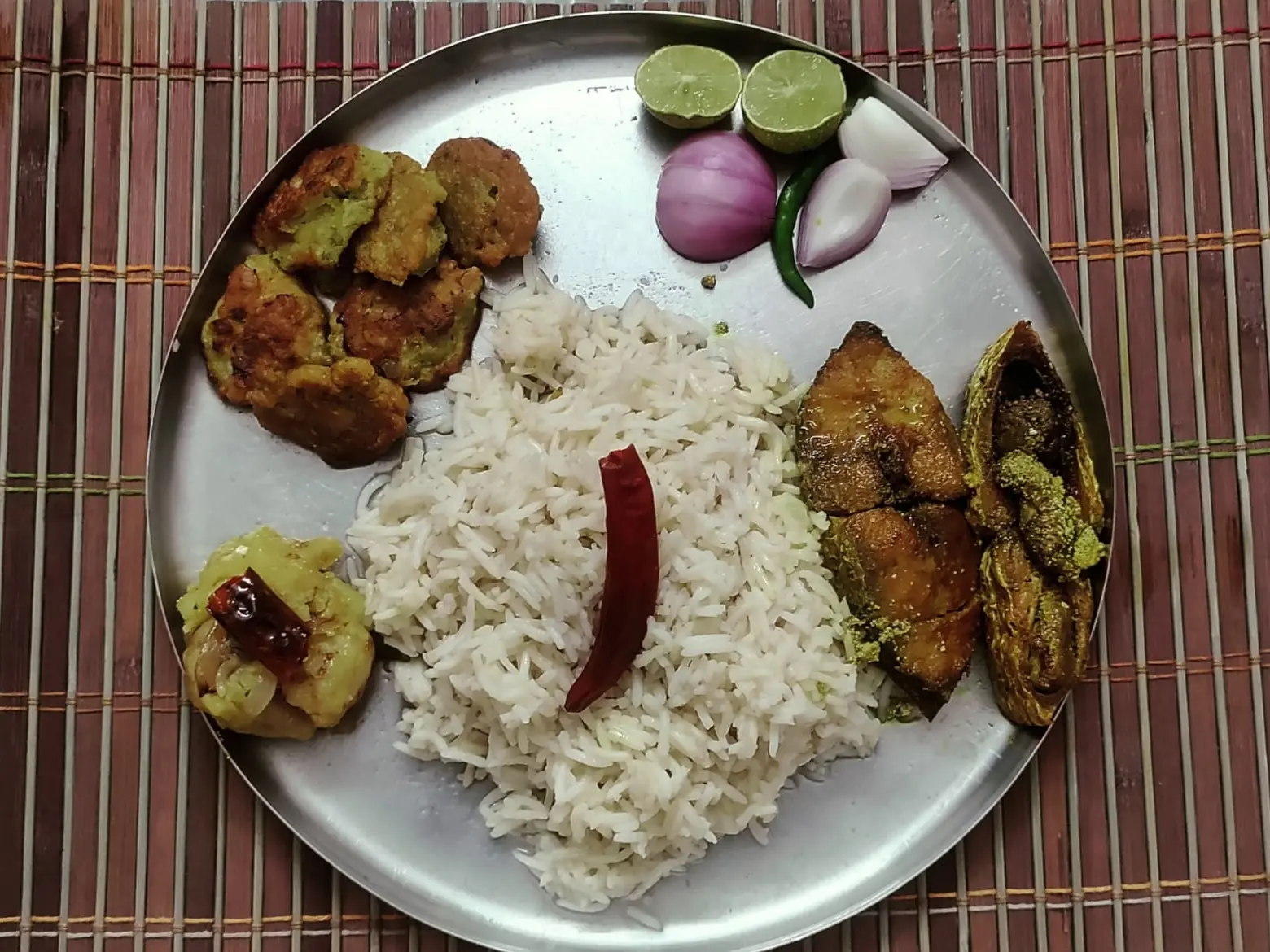)
Panta Bhaat Photograph: (Anushree Bhaumik)
If Wim Wenders’ Oscar-nominated Japanese drama “Perfect Days” ever gets made into an Indian version, I propose that the filmmaker include the often-called ‘peasant's meal’ in the narrative.
Panta Bhaat and lyadh-ing go in “perfect” sync with the theme of the film.
They all make a compelling case for a life that is simple, slow, light, and easy.