

&imwidth=800&imheight=600&format=webp&quality=medium "Hormuz Shock to Atmanirbhar energy: 5 game-changing opportunities India must grab now")
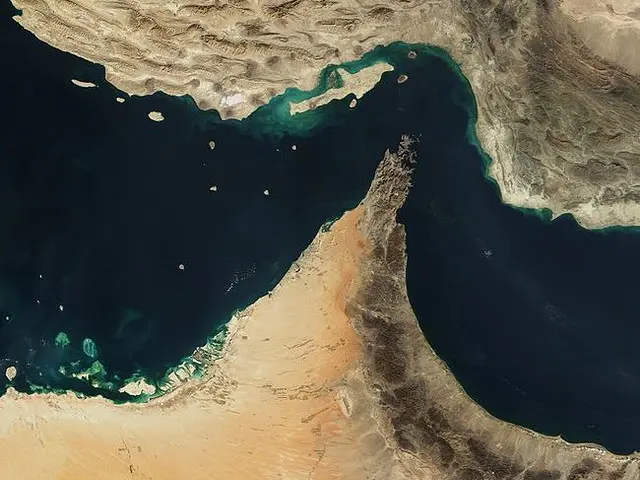
The war in West Asia has severely disrupted traffic through the Strait of Hormuz — one of the world’s most crucial energy corridors that handles about one-quarter of the world's seaborne crude oil trade — roughly 20 million barrels per day — and nearly one-fifth of global liquefied natural gas (LNG) shipments. Today, amid the escalating US-Israel-Iran conflict, this vital chokepoint has turned into a high-risk zone of deep uncertainty, sending shockwaves through energy markets and economies far beyond the Middle East. Tanker movement has slowed, insurance costs have jumped, and supply chains face fresh uncertainty.
Consequently, oil prices have surged sharply, with Brent crude trading above $100 per barrel. Shipping delays are affecting industries worldwide. Transport costs are rising. Fertiliser prices are climbing, putting pressure on agriculture and food supply systems. Economists warn that prolonged disruption could dent global growth this year.
India faces this shock acutely. The country imports around 85–90 per cent of its crude oil requirements. A significant share of these supplies traditionally moves through Hormuz-linked routes. LPG supplies are also under strain, as India depends heavily on imports from Gulf producers. Price volatility and delivery delays are adding pressure on households and industry.
Lo and behold, the geopolitical tension triggered by the Israel-Iran war has dropped bombshells on the GST bonanza by dampening demand momentum, set to give a jolt to the manufacturing sector. Yet this difficult moment also presents a strategic opening. With decisive action, India can turn disruption into an accelerator for energy security and self-reliance — advancing faster toward Viksit Bharat and long-term resilience.
Also Read: 'Strait of Hormuz only closed for...': Araghchi says Iran ready to take war as far as necessary
So, 5 game-changing opportunities India must seize now to turn global energy shock into rapid progress toward Atmanirbhar Energy.
Trending Stories
&imwidth=180&imheight=135&format=webp&quality=medium)
Rahul Gandhi's plea against Election Commission delayed as Supreme Court registry flags 14 ‘defects’
&im=FitAndFill=(700,400)&imwidth=180&imheight=135&format=webp&quality=medium)
Navratri 2026: 9 days, 9 forms of Goddess Durga and 9 colours- Check the complete list
&imwidth=180&imheight=135&format=webp&quality=medium)
Korean peninsula tensions escalate as North Korea launches multiple ballistic missiles, PACOM says 'no threat to US personnel'
&imwidth=180&imheight=135&format=webp&quality=medium)
Trump weighs firing Kimberly Guilfoyle as US ambassador to Greece amid misconduct allegations: Report
&imwidth=180&imheight=135&format=webp&quality=medium)
Anti-SIR protest in Mumbai: Protestors wear black masks & ribbons in Mumbai
&imwidth=180&imheight=135&format=webp&quality=medium)
UK PM Andy Birnham renews claims of Russian meddling in Brexit vote
&imwidth=180&imheight=135&format=webp&quality=medium)
BCCI rejects venue shift reports, India vs Sri Lanka 1st ODI to remain in Delhi
&imwidth=180&imheight=135&format=webp&quality=medium)
'Absolutely disgusting': Australia slams US plan to livestream Nidal Hasan's execution; Mike Johnson raises concerns, warns of terrorist propaganda
&imwidth=180&imheight=135&format=webp&quality=medium)
1,500 drones illuminate Mumbai sky as Cordelia Cruises unveils second ship, Cordelia Sky
&imwidth=180&imheight=135&format=webp&quality=medium)
Houthis warns US of 'painful response' if Washington joins Saudi war in Yemen as airlines suspend flights to Saudi Arabia
&imwidth=180&imheight=135&format=webp&quality=medium)
Congress demands action against chief election commissioner
&imwidth=180&imheight=135&format=webp&quality=medium)
'Turn approver, resign, we'll forgive you': Rahul Gandhi claims receiving messages from CEC Gyanesh Kumar
&imwidth=180&imheight=135&format=webp&quality=medium)
'I will not be silenced': Ilhan Omar alleges political intimidation after federal officers search her Washington home
&imwidth=180&imheight=135&format=webp&quality=medium)
Robotic surgery, advanced treatment: What is coming to this small Gujarat town?
&imwidth=180&imheight=135&format=webp&quality=medium)
Pakistan's government blames PTI for rise of terrorism in Khyber Pakhtunkhwa
&imwidth=180&imheight=135&format=webp&quality=medium)
‘This is just the start’: Maaya Rajeshwaran on historic ITF title, confidence boost and future goals
&im=FitAndFill=(700,400)&imwidth=180&imheight=135&format=webp&quality=medium)
How does a robot decide what to do next?
&imwidth=180&imheight=135&format=webp&quality=medium)
Trump says he 'may' meet North Korean leader Kim Jong Un during upcoming Asia trip
&imwidth=180&imheight=135&format=webp&quality=medium)
'Ouch!!! That must hurt': Kangana Ranaut hails Kamal Haasan's sharp reply to Elon Musk over Starlink row
&imwidth=180&imheight=135&format=webp&quality=medium)
Sidhu Moose Wala’s younger brother wins hearts by recreating late singer’s signature move at Toronto Hologram Show
&imwidth=180&imheight=135&format=webp&quality=medium)
Girl 'dead' for 8 hours wakes up at her own funeral, dad insists she wasn't breathing
&imwidth=180&imheight=135&format=webp&quality=medium)
UK school ditches technology, shifts from screen to pen and paper for learning
&imwidth=180&imheight=135&format=webp&quality=medium)
Opposition’s 10 demands in Supreme Court petition range from stay on SIR to audit of voter rolls
&imwidth=180&imheight=135&format=webp&quality=medium)
'I am thoroughly unamused': Judge slams Trump administration after 400 trees cut at Washington golf course
&im=FitAndFill=(700,400)&imwidth=180&imheight=135&format=webp&quality=medium)
New OTT releases this week (October 12-18, 2026): Sacrifice, Koffee with Karan S9, Roadies Rebirth- 6 titles coming on Netflix, JioHotstar and more
&imwidth=180&imheight=135&format=webp&quality=medium)
Delhi protest: CJI Surya Kant declines to meet India Bloc leaders
&imwidth=180&imheight=135&format=webp&quality=medium)
China’s gold rush puts billion in focus
&imwidth=180&imheight=135&format=webp&quality=medium)
India's Ajit Doval, Iran's Mohsen Rezaei hold talks amid escalating West Asia tensions, discuss 'issues of mutual interest'
&imwidth=180&imheight=135&format=webp&quality=medium)
'Almost certainly': UK Prime Minister Andy Burnham says Iran's IRGC behind RAF Fairford threat
&imwidth=180&imheight=135&format=webp&quality=medium)
Elon Musk pumps $276 million into Republican campaigns ahead of US midterm elections
&imwidth=180&imheight=135&format=webp&quality=medium)
'Never met' him: Melbourne Imam denies links to Flydubai co-pilot Hamam al-Hammami
1. Break free from Middle East oil reliance: India has historically sourced a large portion of its crude imports from the Middle East, though supplier diversification has improved in recent years. Expanding procurement from the US, Russia, Latin America, and Africa can further reduce geographic risk. At the same time, boosting domestic exploration and accelerating renewable deployment will strengthen long-term energy security. The present crisis underscores that energy resilience is a strategic necessity, not just an economic choice. The crisis has made energy security a top national need. Use this drive for strong policy steps.
2. Build massive energy storage as a shock absorber: Renewable energy capacity is expanding rapidly, but solar and wind are intermittent. Grid-scale storage — including battery energy storage systems and pumped hydro — is essential for reliable round-the-clock power. Multiple large storage projects are under development. Expanding storage capacity significantly by 2030 will help stabilise supply, reduce diesel backup dependence, and make renewables more dependable during global fuel disruptions.
Also Read:
3. Switch kitchens to clean electric cooking: Over 33 crore households use LPG. We import 60 per cent of our LPG needs. Almost 90 per cent of imports came through Hormuz. Shortages now drive people to induction stoves. Link them to rooftop solar. The PM Surya Ghar scheme grows fast. Over 30 lakh households now benefit from rooftop solar as per recent updates. One family switching saves 5,000 to 8,000 rupees yearly. Nationally, import costs drop by billions. Expand solar cooking trials. Boost subsidies for induction setups.
4. Push hard for Solar & Renewable self-sufficiency: India's installed renewable energy capacity now stands at 263.19 GW. This marks a key milestone, with renewables—including solar, wind, small hydro, and biomass—now making up over 50 per cent of the country's total installed power capacity of about 520.5 GW. Solar alone stands at around 140 GW. The 500 GW non-fossil target by 2030 turns into a survival goal. The crisis speeds up action. Set up more solar modules and inverter plants at home. Add wind and hybrid setups quickly. Every new gigawatt of local solar cuts the tanker needs from Hormuz. This gives true safety and big savings.
5. Race toward full electric transport: The transportation sector accounts for the highest share of petroleum consumption in the country and relies predominantly on fuels derived from imported crude. The shock makes EVs a money-saving must, not just green. To put EVs on the fast track, there is a need to build local battery factories faster. Also, if FAME-III incentives are considered, it could expedite the pace. The government must zero in on rolling out charging points at high speed. Recent data shows millions of EVs on the roads. Schemes have helped sell many lakhs. Every million EVs saves billions in oil imports. They create lakhs of green jobs too. Turn world trouble into India's factory growth story.
This Hormuz undoubtedly shocks today. Yet it can spark our best energy future. Act now on these five steps. India will reach energy independence more quickly. Homes cook with clean power. Roads fill with electric rides. Factories run on steady renewables. Import fears fade. Growth holds firm in hard times. Viksit Bharat comes sooner and stronger. The path is open. Seize it. Build an India that stands strong and free for all future generations.