Why India's G20 presidency will be a largely ceremonial tightrope walk

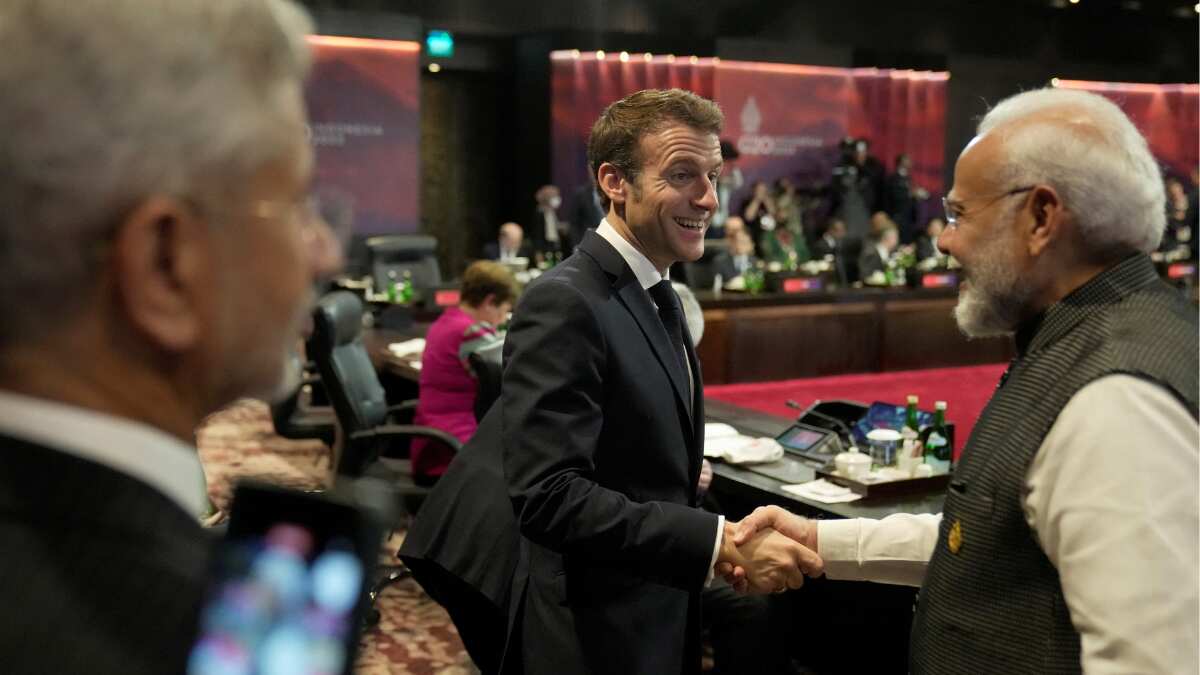
G20 Summit in Bali
Sovereignty is a double-edged sword. And leadership is a responsibility. These well could be the guiding mantras for Prime Minister Narendra Modi as he leads India's presidency in the planet's club of elite nations, the Group of 20, or G-20 -- because the presidency is fraught with challenges in a world in which nations seem to be behaving, to invoke an evocative metaphor from Hindu astrology, like the nine planets that are not capable of talking to each other -- as in getting along or getting together for a good cause.
Speaking at Bali, Indonesia, Modi called for a ceasefire in the Russia-Ukraine war in what is clearly an act of diplomatic grandstanding, while op-ed articles in India's newspapers discuss the pros and cons of India being a mediator to end the conflict. Two months ago, Modi met Russian President Vladimir Putin and said something about this not being an "age of war", in what might be seen by some as an act of belling the cat. That set the stage for a would-be Indian role.
Also Read |'Today's era must not be of war', G20 draft communique uses Indian PM Modi’s remarks to Putin

Well, Modi will do well to keep in mind the fact that India lost the World Cup in the 20-over format of its favourite game cricket after a magnificent performance until the semi-final. Be it G-20 or T-20, the long term and the big picture matter more. As do the details.
There is a minefield out there for India, much like a tight field in a cricket final.
This has been a challenging year for India's diplomacy after about 15 years being perceived as a strategic ally of Uncle Sam. The then president George W Bush's visit to India in 2006 sealed a nuclear agreement between the two countries in what could be hailed as a peak in bilateral relations after decades of Cold War frostiness and American sanctions against India's nuclear tests in 1998 that led to it officially being a nuclear weapons state.
&imwidth=180&imheight=135&format=webp&quality=medium)
Pakistan to head IMF, World Bank boards after 74 years amid persistent economic crisis
&imwidth=180&imheight=135&format=webp&quality=medium)
SC panel launches portal to submit evidence of July Jantar Mantar violence
&imwidth=180&imheight=135&format=webp&quality=medium)
Trump invokes national interest to waive new Russia sanctions, tariffs; India gets relief from 100% tariff threat
&imwidth=180&imheight=135&format=webp&quality=medium)
Lizard people? Ex-US Army sniper claims soldier killed by 'reptilian beings' in battle near Area 51
&imwidth=180&imheight=135&format=webp&quality=medium)
Ankita Bhandari murder case: Parents meet CBI, seek impartial investigation
&imwidth=180&imheight=135&format=webp&quality=medium)
Bangladesh resort fire kills 10 tourists, including a 5-year-old child
&imwidth=180&imheight=135&format=webp&quality=medium)
At least 19 killed in stampede-like situation after part of Kolkata Durga Puja pandal collapses
&imwidth=180&imheight=135&format=webp&quality=medium)
IMF chief warns inflation hurts poor countries, AI optimism risks market correction
&imwidth=180&imheight=135&format=webp&quality=medium)
Iranian woman, 23, handed death sentence for ‘blasphemy’ in social media post; appeals for help
&imwidth=180&imheight=135&format=webp&quality=medium)
'Still some time for the Olympics': Neeraj Chopra opens up about injury and comeback plans
&imwidth=180&imheight=135&format=webp&quality=medium)
'Reason UN has lost credibility': Amid SIR protests India hits out at report alleging 'youth repression'
&imwidth=180&imheight=135&format=webp&quality=medium)
Abhijeet Dipke released after fresh arrest, signs peace bond for second time
&imwidth=180&imheight=135&format=webp&quality=medium)
‘My president, I mean my husband’: Trump's new press secretary Katie Zacharia's first briefing goes off the rails in 14 minutes
&imwidth=180&imheight=135&format=webp&quality=medium)
China responds to Trump's Press Secretary Katie Zacharia after toilet remark: 'Visit China more often'
&imwidth=180&imheight=135&format=webp&quality=medium)
COVID-19 pandemic led to increase in divorce cases, observes Madras High Court
&imwidth=180&imheight=135&format=webp&quality=medium)
At least 400 arrested as protests turn violent in France; PM blames far left
&imwidth=180&imheight=135&format=webp&quality=medium)
2026 midterms, 2028 ambitions: Five politicians in focus
&imwidth=180&imheight=135&format=webp&quality=medium)
Israel examines Russia's Shahed-type drones sent by Ukraine to combat Iran | Gravitas
&imwidth=180&imheight=135&format=webp&quality=medium)
WATCH | iPhones, luxury perfumes floating in Hormuz? Iranian fishermen make bizarre discovery
&imwidth=180&imheight=135&format=webp&quality=medium)
US business activity grows in June, but tariffs and inflation cloud outlook
&im=FitAndFill=(700,400)&imwidth=180&imheight=135&format=webp&quality=medium)
Durga Puja 2026: Kajol, Jaya Bachchan, Mouni Roy and other celebs bring festive glam to pandals
&imwidth=180&imheight=135&format=webp&quality=medium)
WATCH | Zelensky gives cheeky response when asked if Trump is making him a scapegoat ahead of US midterms
&imwidth=180&imheight=135&format=webp&quality=medium)
No Ravindra Jadeja, Yashasvi Jaiswal in India’s 2027 ODI World Cup plans: Report
&imwidth=180&imheight=135&format=webp&quality=medium)
Kolkata Durga Puja stampede: PM Modi announces Rs 2 lakh ex-gratia for kin of dead, Amit Shah to visit injured
&im=FitAndFill=(700,400)&imwidth=180&imheight=135&format=webp&quality=medium)
Inside Tesla's Roadster: 10 features of Elon Musk's 'flying car' that push the limits of electric vehicles | In Pics
&imwidth=180&imheight=135&format=webp&quality=medium)
Anirudh Ravichander-Kavya Maran wedding: Telangana CM reveals Chennai reception date
&im=FitAndFill=(700,400)&imwidth=180&imheight=135&format=webp&quality=medium)
New Friday OTT releases (October 16, 2026): DC, Sacrifice, Aasha- 6 new movies and TV shows coming on Netflix, Zee 5, Prime Video and more
&imwidth=180&imheight=135&format=webp&quality=medium)
One species, two lineages: Why Sri Lanka’s spectacled cobra differs genetically from Indian variant
&imwidth=180&imheight=135&format=webp&quality=medium)
Oil tanker carrying over 2M barrels of crude hits mine in Strait of Hormuz, catches fire, says Iran
&imwidth=180&imheight=135&format=webp&quality=medium)
France protests: 'Block everything' movement escalates as public fury over austerity grows; over 200 arrested. Here's all you to need to know
&im=FitAndFill=(700,400)&imwidth=180&imheight=135&format=webp&quality=medium)
What does it cost to run a humanoid robot for a day?
&imwidth=180&imheight=135&format=webp&quality=medium)
'We feel like Mr India': Gujarat’s undercover SHE team guard garba nights at Navratri

US ends automatic work permit extensions; Indian workers lose 540-day safety net: What it means
&imwidth=180&imheight=135&format=webp&quality=medium)
US lawmaker Pramila Jaypal writes to Rubio, urges to raise handling of CJP protest with India
Earlier this year, as Moscow's troops invaded Ukraine, things seem to come apart. India has meticulously kept a somewhat neutral stance on the Russian invasion by critically abstaining from some crucial votes in the United Nations, and Modi offering help to Ukraine in peace efforts. These have earned it some brownie points as a potential mediator -- though no one seems to have really invited India.
But at the same time, India's opportunistic purchase of war-hit Russian oil to lower its energy bill has not gone unnoticed. I would certainly link that to Washington's September move to provide Pakistan with a $450 million military aid package that Pentagon called a "F-16 case for sustainment and related equipment".
Two can play the game called sovereignty. Though the US may not say it in so many words, Pakistan may be as important to it in containing China's growing global influence as India. It doesn't help India that we are in an age of a virtual new Cold War, with China and Russia standing up to or up against the US in so many ways.
India, in my humble opinion, cannot distance itself too much from the US because both are democracies with a liberal, pluralistic social order. They also have strong economic and technological relations that flourished in a glorious couple of decades until Putin messed things up. I don't see the European Union, the UK or Japan being so influential as to give India something extra in a manner that breaks ranks with the United States.
China and the US are blowing hot and cold at the G-20 summit, with Taiwan and North Korea mentioned as potential flashpoints between the two. However, we need to note that their two presidents, Xi and Biden, signed off their bilateral summit on what might be called a cordial note.
The message for India is clear. US is so restrained on China and so warm to Pakistan, that the so called "strategic" tie-up with India rests mostly on paper. Foreign Minster Subrahmanyam Jaishankar has been so articulate on India's sovereignty this year that nationalists are celebrating his spine in WhatsApp video forwards. But the flip side is that sovereignty is like being single: a kind of loneliness can creep in.
Modi's unveiling of a logo for India's G-20 presidency based on his Bharatiya Janata Party's (BJP) lotus symbol was apparently meant for domestic consumption in line with his supporters' projection of India, and by extension Modi, as a "Vishwaguru"(Global Guide). But the hard reality is that the US is still a supreme power, though frayed at the edges. Stepping on Uncle Sam's shoes can be difficult given India's difficult relations with China which is just across the Himalayas. The border clash in the Ladakh region in which India lost 20 soldiers two years ago is a grim reminder that New Delhi is a player, not a guru, much as it might harbour historic ambitions of being a future world guru.
That is what makes India's G-20 presidency a tightrope walk. I would call it a ceremonial one at that because I cannot imagine large-scale peace breaking out enough for India to do much else. Modi, if he plays his cards well, can get to host a summit somewhere to help Ukraine and Russia reconcile somehow. That is the best case scenario. Take that issue aside, and you find the usual platitudes on everything from sustainability to global economic revival after the Covid-19 pandemic. I don't see much progress there from the G-20 summit.
India's G20 leadership is in a way a crown of thorns because it is still a developing country with plenty of domestic issues, economic and social, to resolve. Being a Vishwaguru to a domestic audience is qualitatively different from being perceived as such elsewhere in the world.
Speaking at Bali, Modi underlined the need for India's energy security, which must be an eloquent explanation for why it is buying cheap Russian oil. However, the real Vishwaguru Test lies in being perceived as genuinely not just sovereign and neutral, but competent in a manner that transcends its own short-term self-interest for what I would call strategic sovereignty that keeps long-term goals in mind. That implies a responsible tightrope walk.
(Disclaimer: The views of the writer do not represent the views of WION or ZMCL. Nor does WION or ZMCL endorse the views of the writer.)
