When US's F-16 aid talks Urdu diplomacy to Pakistan, a handshake is not a hug for India

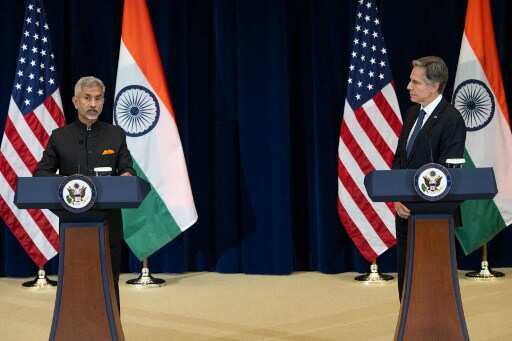
US Secretary of State Antony Blinken and Indian Foreign Minister Subrahmanyam Jaishankar
Pakistan's official language is Urdu, and when it comes to reading US foreign policy on the country, it is best to read it like the language's script: from the right to the left. Power comes first, democracy later.
As Uncle Sam offers $450 million to maintain F-16 fighter jets to a nation that has often been accused of harbouring or encouraging terrorism, it does smell of great irony when the somewhat lapsed superpower cites countering terrorism as one of the stated objectives for the aid package. To understand this, we must understand both America and Pakistan with a sense of detail.
But first, let us see what has changed for India, whose foreign minister Subrahamanyam Jaishankar minced no words as he lambasted Washington with a who-do-you-think-you-are-trying-to-fool attitude, inviting a State Department response that the US does not view Pakistan through an Indian lens.

Also read |F-16 aid to Pakistan: US responds to Indian foreign minister Jaishankar’s critical remarks
On the ground, little has changed in India's perception of the US: it is an intimate adversary, with a middling and meddling approach, singing the glories of shared democratic/liberal values and paeans to the virtues of free-market economics even as it footsies with Pakistan, Iran, and Saudi Arabia, depending on an ad-hoc mix of its self-appointed role as a globocop, an agent of Wall Street capitalism and a practitioner of visa protectionism that hurts India's service exports.
What has really changed is that under Dr. Jaishankar, India has skipped elegant diplomatese for sarcasm and a clear calling out of double standards. Much before his F-16 shot, the Minister of External Affairs had tauntedthe US on its questioning India's purchase of Ukraine-sanctions-tainted Russian oil even as Europe shopped for gas from Russia.
&imwidth=180&imheight=135&format=webp&quality=medium)
Other Mommy leads North American box Office as Verity, Resident Evil round out top four
&im=FitAndFill=(700,400)&imwidth=180&imheight=135&format=webp&quality=medium)
Navratri 2026: 9 days, 9 forms of Goddess Durga and 9 colours- Check the complete list
&imwidth=180&imheight=135&format=webp&quality=medium)
Anti-SIR protest in Mumbai: Protestors wear black masks & ribbons in Mumbai
&imwidth=180&imheight=135&format=webp&quality=medium)
BCCI rejects venue shift reports, India vs Sri Lanka 1st ODI to remain in Delhi
&imwidth=180&imheight=135&format=webp&quality=medium)
Diljit Dosanjh’s Delhi concert gets a new date: When and where to catch the singer
&im=FitAndFill=(700,400)&imwidth=180&imheight=135&format=webp&quality=medium)
Is sending robots to Mars easier than sending humans?
&imwidth=180&imheight=135&format=webp&quality=medium)
A watchdog rated 'ChatGPT for Teens' an unacceptable risk and says keep under-18s off it
&imwidth=180&imheight=135&format=webp&quality=medium)
1,500 drones illuminate Mumbai sky as Cordelia Cruises unveils second ship, Cordelia Sky
&imwidth=180&imheight=135&format=webp&quality=medium)
'Just coincidence': Police mistakes protester as AISA chief Neha Bora, arrests her from site
&imwidth=180&imheight=135&format=webp&quality=medium)
Anthropic's AI invented a murder witness and sent the fake tip to Philadelphia police
&imwidth=180&imheight=135&format=webp&quality=medium)
Congress demands action against chief election commissioner
&imwidth=180&imheight=135&format=webp&quality=medium)
CJI Surya Kant declines INDIA bloc leaders’ request for meeting ahead of march to SC, asks them to file petition
&imwidth=180&imheight=135&format=webp&quality=medium)
Saif Ali Khan is finally on Instagram! Here's what he shared in his first post
&imwidth=180&imheight=135&format=webp&quality=medium)
'Turn approver, resign, we'll forgive you': Rahul Gandhi claims receiving messages from CEC Gyanesh Kumar
&imwidth=180&imheight=135&format=webp&quality=medium)
One Indian killed in Riyadh airport attack; 11 others injured : MEA
&imwidth=180&imheight=135&format=webp&quality=medium)
Top AI models flunked a test of inventing new AI research, so much for self-improving AI
&imwidth=180&imheight=135&format=webp&quality=medium)
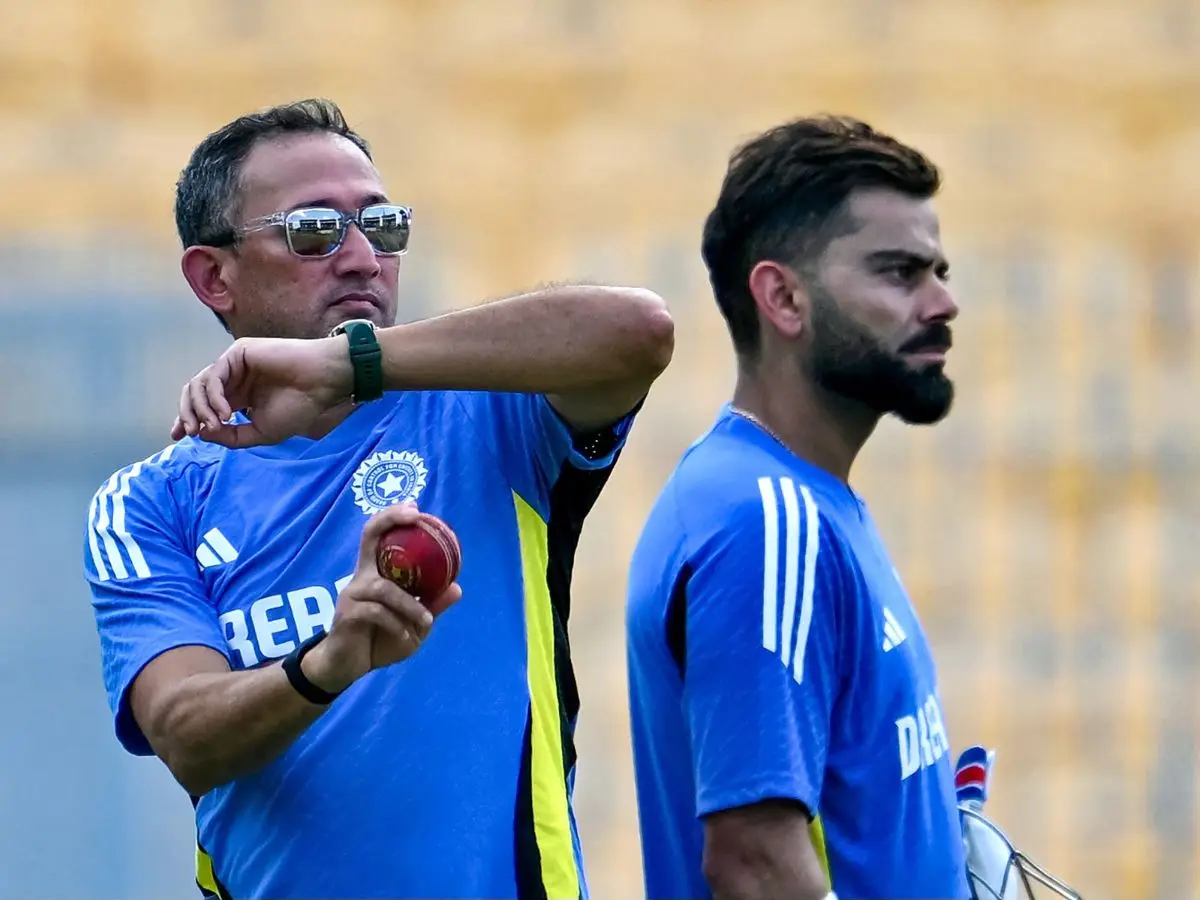
Wasim Jaffer blames Ajit Agarkar-led selection panel for Virat Kohli’s Test retirement
&imwidth=180&imheight=135&format=webp&quality=medium)
'Ouch!!! That must hurt': Kangana Ranaut hails Kamal Haasan's sharp reply to Elon Musk over Starlink row
&imwidth=180&imheight=135&format=webp&quality=medium)
Sidhu Moose Wala’s younger brother wins hearts by recreating late singer’s signature move at Toronto Hologram Show
&imwidth=180&imheight=135&format=webp&quality=medium)
UK school ditches technology, shifts from screen to pen and paper for learning
&imwidth=180&imheight=135&format=webp&quality=medium)
Telangana ATM heist: Thieves in nighties arrive in ambulance, break into SBI ATM in Kamareddy - VIDEO
&imwidth=180&imheight=135&format=webp&quality=medium)
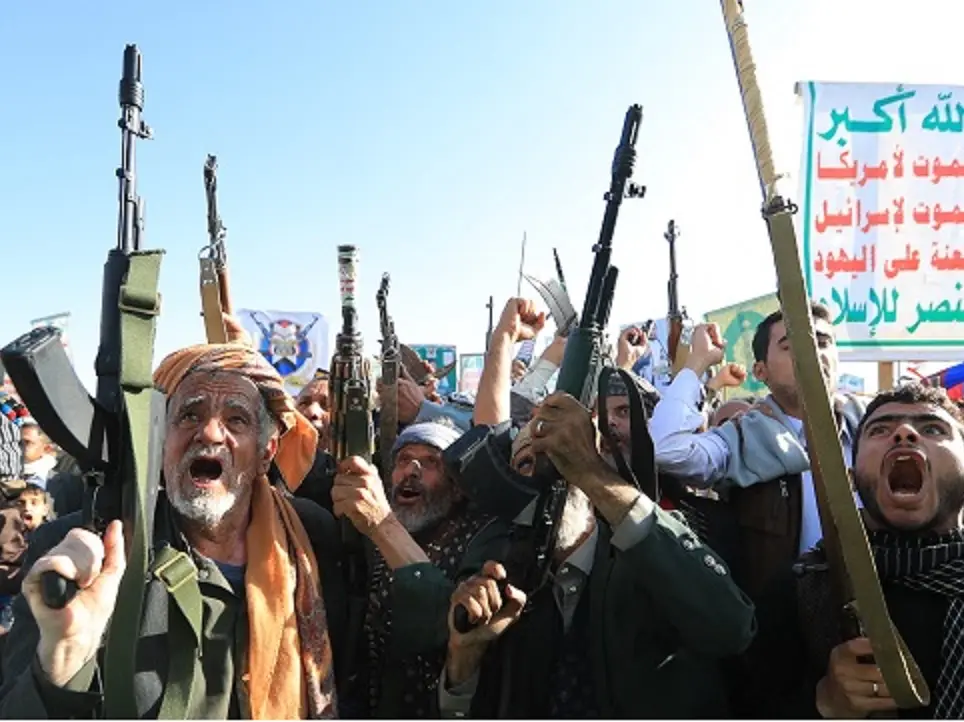
Houthis claim Riyadh airport attacks, Aramco strikes; issue fresh warning to airlines, travellers and workers
&imwidth=180&imheight=135&format=webp&quality=medium)
Portugal Federation confirms Cristiano Ronaldo’s return to national team despite suspension
&imwidth=180&imheight=135&format=webp&quality=medium)
Delhi protests: 'Court should not be dragged into political activity', says CJI Surya Kant
&im=FitAndFill=(700,400)&imwidth=180&imheight=135&format=webp&quality=medium)
New OTT releases this week (October 12-18, 2026): Sacrifice, Koffee with Karan S9, Roadies Rebirth- 6 titles coming on Netflix, JioHotstar and more
&imwidth=180&imheight=135&format=webp&quality=medium)
Microsoft's Nadella says treat every AI model as already hacked, and build an 'emergency brake'
&imwidth=180&imheight=135&format=webp&quality=medium)
Delhi protest: CJI Surya Kant declines to meet India Bloc leaders
&imwidth=180&imheight=135&format=webp&quality=medium)
Telangana man allegedly recruited into Russian military dies near Ukraine border
&imwidth=180&imheight=135&format=webp&quality=medium)
China imposes first-ever sanctions on ministers from Taiwan allies: What this means
&imwidth=180&imheight=135&format=webp&quality=medium)
McSweeney reveals how studying Virat Kohli’s YouTube clips helped Australia A conquer India
&imwidth=180&imheight=135&format=webp&quality=medium)
Maharashtra appoints FDA commissioner Tukaram Mundhe as secretary of committee for MPSC overhaul amid stir
&imwidth=180&imheight=135&format=webp&quality=medium)
Iran: US accepted some conditions, Clarity needed on others
&imwidth=180&imheight=135&format=webp&quality=medium)
Nana Patekar's cause of death confirmed; here's what his postmortem report says
&imwidth=180&imheight=135&format=webp&quality=medium)
iPhone Duo price index: Tracking Apple’s latest pricing trends
&imwidth=180&imheight=135&format=webp&quality=medium)
'Say no to Muse': Meta has no control over its own moderation AI while it forces a security nightmare on everyone
In a way, this is all diplomacy-as-usual because both India and the US pursue their interests independently. Washington has compromised on democratic values and India has let go of its old Panchsheel principle of opposing interventions into national sovereignty by being publicly neutral on Moscow's invasion of Ukraine under whatever pretext.
As an old Hindi/Urdu saying goes: Hamam mei sab nange hain. Everybody is naked in this bathtub.
Is there a deeper truth in all this but for episodic reiteration of every country pursuing its own interests? There is, for both India and the US, if they are to truly be the strategic allies they want/claim to be. Short-term diplomacy may be in narrow self-interest, but long-term views must align with core principles. India cannot drag its feet for too long as a neutral power even as Russia eats slices of Ukraine as if that country was some Italian pizza. The US, on the other hand, cannot be unconditionally friendly to the Pakistan army without considering its history (and that of its spy arm, the Inter-Services Intelligence) of effectively creating the atavistic Taliban in Afghanistan or of the Pakistani state playing ball with China on everything from business to the Kashmir dispute.
Somewhere along the way, there has to be a joint Indo-US plan in which Pakistan has a role, not a standalone US plan in which India and Pakistan have separate roles. This is for Washington to realise and act on, and for India to drive home.
New Delhi needs to reconcile with the idea that Pakistan, as an increasingly stronger democracy with an English-speaking civil society culture nurtured by British colonialism (and admittedly Indian civilisational roots), is a strange beast that needs special treatment beyond the caricatured desh-ka-dushman (enemy of our country) approach practised by the Narendra Modi government. This requires a painful mix of soft diplomacy, an assertive style and backroom deal-making.
And yes, this requires a quid-pro-quo from the US in the form of a visible role for India as an international interlocutor, not the patronising mention of India as a South Asian good boy.
India needs to understand that history may not be favourable for Islamabad's diplomatic gains, but geography most certainly is. Geopolitics certainly beats democratic dalliances, at least in the current phase of international diplomacy. Dr. Jaishankar understands this for sure, but how to drive a deal in such a context is where India's diplomacy is at. This requires deal-making diplomacy, not just biting words.
What rings true for India, above all this, after all those American handshakes, is a hard truth of foreign policy best expressed in a self-referential couplet by Pakistan's Urdu poet Ahmad Faraz:
Tum takalluf ko bhi ikhlaas samajhtey ho Faraz
Dost nahi hota har haath milane wala
(You mistake mere formality for affection, dear Faraz
Not everybody who shakes your hand is your friend).
Pakistanis can teach India some fine diplomacy lessons, for sure.
(Disclaimer: The views of the writer do not represent the views of WION or ZMCL. Nor does WION or ZMCL endorse the views of the writer.)
