Post-retirement jobs: Judiciary’s bane

Jan, 2019
Judges manning the courts are custodians of the justice-delivery system. This system thrives and survives on public trust. For this reason, disputes engaging complex political, religious, and ethical dimensions find a quietus in courts. The most visible example in recent times was the settlement of the Ayodhya land dispute which brokered peace between two religious communities in India vying for a common piece of land.
This verdict was given by a bench of five judges on November 9, 2019. The then Chief Justice of India (CJI) Ranjan Gogoi presided over the bench. This verdict bought peace between the Hindu and Muslim communities. The disputed area went to the majority Hindus while the minority Muslims got an alternate land of five acres. The nation was on the boil as the ruling party at the Centre – the Bhartiya Janata Party (BJP) had made it their poll plank to construct a temple at this very site dedicated to Lord Ram, one of the Hindu Gods. The Court unanimously held the land to be Lord Ram’s birthplace. A mosque at this site had been brought down by Hindu karsevaks on December 6, 1992. Despite the heartburn, the verdict witnessed no communal backlash.
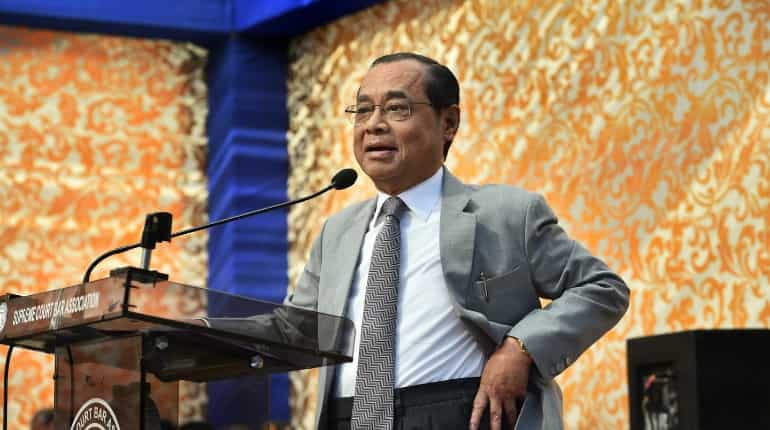
Four months later, former CJI Gogoi, one of the architects of the Ayodhya verdict, has been nominated by Indian President Ram Nath Kovind as a Member of Rajya Sabha. The choice of the President is governed by the ruling political dispensation at the Centre. In this case, it is the BJP which benefitted the most from the Ayodhya verdict. Also, Gogoi was part of the bench that gave a clean chit to the same BJP government led by Prime Minister Narendra Modi in a multi-million dollar defence purchase deal. The clamour is growing for the ex-CJI to reject the offer. But Gogoi has decided to take oath.

Gogoi knows that judges in the past, even CJIs, entered Parliament and accepted government posts. If Gogoi chooses to walk the beaten track, there is a disturbing history that should dissuade him from doing so.
Justice (Retd) Bahrul Islam, served at the Supreme Court from 1980 to 1983. Six weeks remaining for his retirement, he resigned and got Congress ticket to Lok Sabha from Barpeta (Assam). A month before his resignation, he absolved chief minister of Bihar, Jagannath Mishra, a tall Congress leader, in a case of forgery and criminal misconduct.
Justice (Retd) Ranga Nath Mishra retired as CJI in 1991. In 1984, he headed a judicial commission to probe allegations whether the Delhi Sikh riots was orchestrated by the ruling Congress party and its leaders. The riots were in the aftermath of former Prime Minister Indira Gandhi’s assassination. Mishra’s report blamed the police but absolved the Congress party of any complicity.
)
US Supreme Court backs Trump administration's use of SAVE database to check voter citizenship
)
Heart of the Beast review: Brad Pitt leads a gripping tale of survival and loyalty
)
Outrage erupts after 3-year-old is married to 60-year-old man in Pakistan, link to her sister's murder being probed
)
Pakistan deploys over 20,000 security personnel as PTI vows march for Imran Khan's release
)
Asian Games: Shooting spree continues as India win silver in women’s 50m rifle 3P team event
)
‘Not just a local tragedy’: Nepal PM Shah warns UN of growing climate threat, says Nepal floods were 'a warning to the world'
)
OpenAI AI Agents hacked 4 websites before Hugging Face, researchers reveal
)
Pentagon quietly adds 37 wounded troops to Iran war tally without explaining when or how
&im=FitAndFill=(700,400))
New Friday OTT releases (September 25, 2026): Don’t Be Shy, Hunkkaar: The Roar, Mango Pachcha- 6 movies and TV shows on Netflix, Prime Video and more
)
Yemen's war escalates: Saudi-backed leader calls for general mobilisation against the Houthis
)
‘Attack on Mecca a red line for Pakistan’: Shehbaz Sharif warns Houthis at UN
)
Tesla is preparing something big for Optimus: new Gen 3 models surface in app
)
Bias or safety concerns? Bengaluru CEO says firm will not hire men from UP, Bihar, Rajasthan, MP. Here's why
)
Did Hitler kill his niece Geli Raubal? Newly found records reopen a 95-year-old mystery
)
Nigeria Navy moves to boost oil security, tackle crude theft and infrastructure threats
)
Indian diplomat Petal Gahlot raises deteriorating situation in Pakistan-occupied Kashmir in right of reply at UN
)
Scientists detect first radio signals directly from faraway planet
)
‘It is all possible’: Putin weighs next steps on Ukraine talks, rules out Europe conflict
)
10,000 gather in support of 87-year-old forcefully evicted from home of 71 years
)
OpenAI investigates leak of 53 images linked to ChatgGPT users
)
Trump rejects Iran's 7-day ceasefire proposal as US weighs renewed bombing after midterms: Report
)
Red Sea crisis: Houthis promise not to target European ships; UNSC condemns Saudi attacks
)
Gaza's war turned environmental damage into second crisis
)
Trump-Xi summit wrap: Big pageantry, Iran talks, few major developments and more meetings planned
)
'Making history': Xi Jinping praises Trump as US-China leaders dine at White House
)
'We do not wish to continue. It's America that must choose': Iran president Pezeshkian calls on US to end war
)
India's UN Envoy slams Pakistan: 'They claim security by day, terrorism by night'
)
Bollywood mourns Mushtaq Khan: Sunny Deol, Rajpal Yadav and others pay tribute
)
Myanmar training camp case: US national, 6 Ukrainians allowed to meet their families abroad
)
'FIRST LOOK from inside Noah’s Ark': Researchers share video from inside mysterious mound in Turkey
)
Cindy Crawford’s son Presley Gerber cremated as death probe continues
)
WATCH | As Shehbaz Sharif claims Pakistan’s ‘victory’ during 2025 conflict, Indian diplomat R Srinivas laughs at UN
)
'A terrorist country is asking me that question?': Jaishankar hits back at Pakistani journalist at UN; flags attacks on commercial shipping
)
Army chief reviews operational preparedness along LoC, visits mega eye camp in Tangdhar
)
US court backs Pentagon's decision to exclude Anthropic over Claude AI restrictions
Within two years of his retirement, he became Chairman of India’s apex human rights body in October 1993. In 1998, Congress Party nominated him to the Rajya Sabha.
A similar charge of quid pro quo was levelled against former CJI P Sathasivam. Soon after his retirement in April 2014, he became Governor of Kerala. A year ago, he favoured Amit Shah, the present Union Home Minister, who then faced a fake encounter case as the Home Minister of Gujarat. Sathasivam presided a bench that closed probe against Shah in the alleged fake encounter killing of one Tulsiram Prajapati. The judge responded to the criticism claiming any judge in his position would have ruled the same.
There are other precedents too of judges accepting government posts. Judges after retirement are faced with a strong lure for political and constitutional offices. Many judges have hobnobbed with governments of the day for such posts. While nothing in law prevents judges from becoming Members of Parliament, it unnecessarily makes their decisions suspicious. This shakes public faith in judicial independence and casts doubts over their integrity. In England, there exists a bar upon retired judges to join the House of Commons. In India, this discretion is left to the judges. We do not need to control our judges.
Their independence and impartiality have remained the hallmarks of their decision-making that has stood the test of time. For this reason, even the Constitution makers did not think it necessary to bar judges from holding post-retirement executive posts. But the time seems to be ripe for a rethink. After all, the judiciary is the last bastion for citizens to expect justice. And if public trust faulters, it will be hard for the judiciary to restore its institutional integrity.
(Disclaimer: The opinions expressed above are the personal views of the author and do not reflect the views of ZMCL)