

&imwidth=800&imheight=600&format=webp&quality=medium "Xi at BRICS Summit: US factor, LAC normalisation and other variables ahead of Chinese president's likely visit")
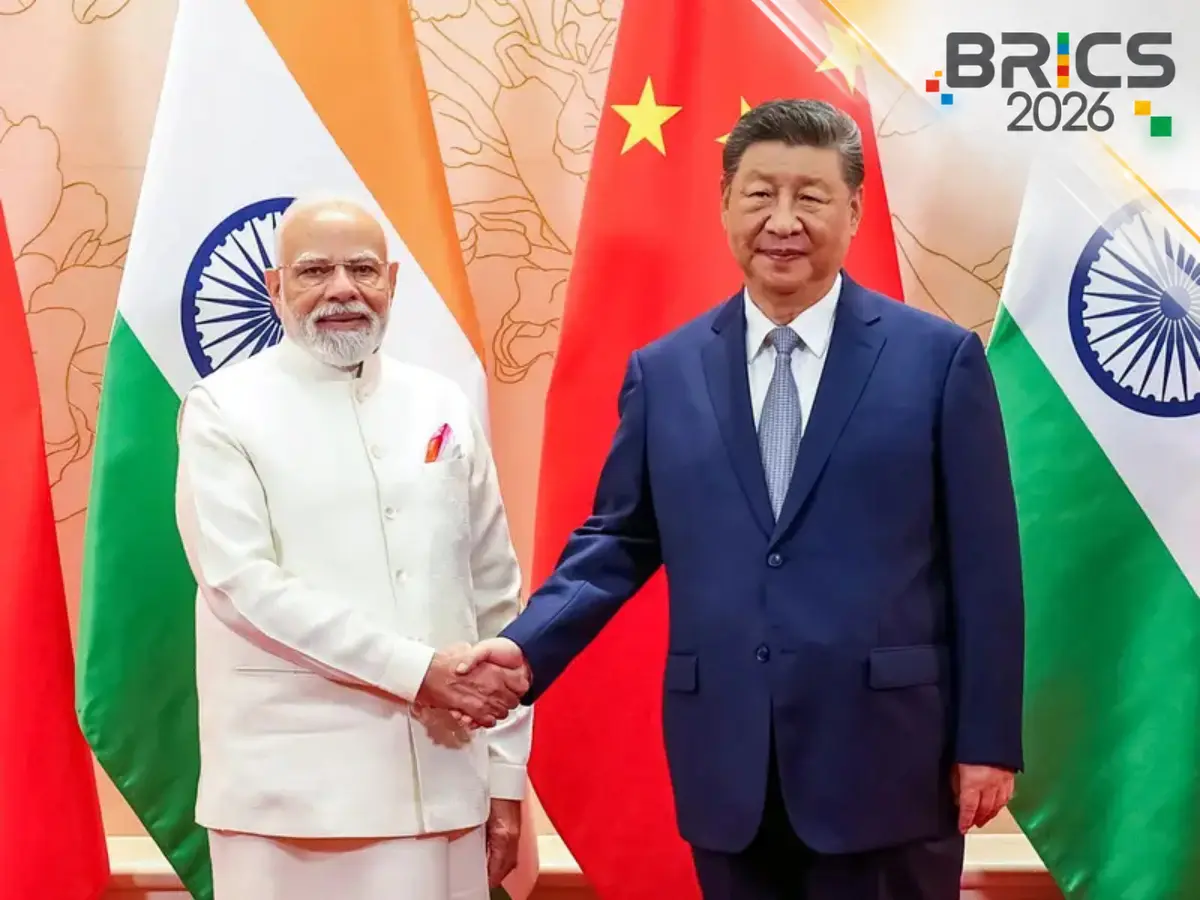
Chinese President Xi Jinping’s expected visit to India for the BRICS Summit 2026 is about much more than a multilateral meeting in New Delhi. If Xi does arrive, his presence at the September 12–13 summit would mark his first visit to India in seven years and provide the clearest public signal yet that Beijing and New Delhi are trying to stabilise a relationship damaged by the 2020 border clashes. Reuters has reported that Chinese officials are preparing for the trip, including security and hotel arrangements, although Beijing has not formally confirmed Xi’s attendance.
But the bigger question is: why now? The answer lies in months of quiet diplomacy and a series of practical bargains between India and China, from the Line of Actual Control to direct air links, border trade and Chinese supplies of strategically important commodities. And behind all of this is another factor: India’s attempt to protect its strategic room for manoeuvre at a time when its relationship with Washington is becoming more complicated.
The border came first
The most important piece of the India-China reset remains the LAC. The 2020 clashes transformed bilateral ties. Military deployments and a prolonged standoff along the disputed Himalayan frontier pushed the relationship to its lowest point in decades. The October 2024 disengagement agreement became the first major opening. It did not resolve the boundary dispute, but it created space for both governments to begin rebuilding political and economic engagement.
Since then, Delhi has repeatedly maintained that peace and tranquility along the border are essential for the broader relationship. That remains a crucial Indian red line. Even in August 2026, amid reports of another patrol-related confrontation, India reiterated that border peace is critical to bilateral ties. This distinction matters. India is not abandoning its security concerns or suddenly treating China as a partner. Instead, Delhi appears to be pursuing a more calibrated approach: manage the border dispute, prevent another military crisis and selectively restore engagement where Indian interests are served.
Then came the economic bargaining
Trending Stories
&imwidth=180&imheight=135&format=webp&quality=medium)
Brendan Taylor overtakes Andy Flower to become Zimbabwe’s leading ODI run-scorer
&imwidth=180&imheight=135&format=webp&quality=medium)
Researchers name newly discovered Andean plant after Argentina legend Lionel Messi
&imwidth=180&imheight=135&format=webp&quality=medium)
Lawrence Bishnoi gang claims responsibility for firing at Tiger Shroff over ties to Salman Khan
&imwidth=180&imheight=135&format=webp&quality=medium)
Flying car race: Alef Aeronautics welcomes Tesla Roadster '11 years' later, but are the two models the same?
&imwidth=180&imheight=135&format=webp&quality=medium)
Shastri backs Shami comeback; lauds Bhuvi and warns Bumrah on format workload ahead of World Cup
&imwidth=180&imheight=135&format=webp&quality=medium)
Netanyahu rival Benny Gantz quits Israel election race, vows to push for unity government
&imwidth=180&imheight=135&format=webp&quality=medium)
Saudi Arabia asks skyscraper employees to work from home amid Houthi threats
&imwidth=180&imheight=135&format=webp&quality=medium)
NFl 2026/27 - Saints vs Steelers to go ahead in Paris next week despite protest
&imwidth=180&imheight=135&format=webp&quality=medium)
4 killed, 19 critically injured in grass fire at Canada's largest military base
&im=FitAndFill=(700,400)&imwidth=180&imheight=135&format=webp&quality=medium)
Ghaziabad is world's fastest-growing city; Surat, Patna, Rajkot also feature on list
&imwidth=180&imheight=135&format=webp&quality=medium)
Nobel laureate Machado, who dedicated prize to Trump, confirmed as Venezuela opposition leader
&imwidth=180&imheight=135&format=webp&quality=medium)
After Kennedy Center and reflecting pool disputes, Trump turns to Washington golf course plan amid legal battle
&imwidth=180&imheight=135&format=webp&quality=medium)
Why France looks the most fragile in the G7 amid protests and budget deadlock
&imwidth=180&imheight=135&format=webp&quality=medium)
Asian Para Games: Nishad Kumar clinches T47 long jump gold; Ravi Budigina bags swimming silver
&imwidth=180&imheight=135&format=webp&quality=medium)
China responds to Trump's Press Secretary Katie Zacharia after toilet remark: 'Visit China more often'
&imwidth=180&imheight=135&format=webp&quality=medium)
PCB omits Atherton, Hussain from tri-series commentary panel over Imran Khan interview row
&imwidth=180&imheight=135&format=webp&quality=medium)
Anthropic’s public benefit plan: What its 5% share commitment means for AI’s future
&imwidth=180&imheight=135&format=webp&quality=medium)
Girl 'dead' for 8 hours wakes up at her own funeral, dad insists she wasn't breathing
&imwidth=180&imheight=135&format=webp&quality=medium)
MI5 is opening an AI threat centre, and OpenAI just told MPs the worst isn't over
&imwidth=180&imheight=135&format=webp&quality=medium)
Elon Musk features on Lucknow's 'anti-India' Ravan poster alongside Rahul Gandhi, Akhilesh
&im=FitAndFill=(700,400)&imwidth=180&imheight=135&format=webp&quality=medium)
New OTT releases this week (October 19-25, 2026): Gajab Raat to Chaar Yaar-8 titles to watch during Dussehra week on Netflix, Prime Video and more
&imwidth=180&imheight=135&format=webp&quality=medium)
Kylie Jenner makes Victoria’s Secret debut in $50 million diamond-encrusted design as Timothée Chalamet cheers
&imwidth=180&imheight=135&format=webp&quality=medium)
Putin wants joint meeting with Trump-Xi summit on Ukraine war, proposes talks alongside APEC: Report
&imwidth=180&imheight=135&format=webp&quality=medium)
No Ravindra Jadeja, Yashasvi Jaiswal in India’s 2027 ODI World Cup plans: Report
&imwidth=180&imheight=135&format=webp&quality=medium)
India moves to buy 10,000 more AI chips for a national compute pool open to startups
&imwidth=180&imheight=135&format=webp&quality=medium)
Anirudh Ravichander-Kavya Maran wedding: Telangana CM reveals Chennai reception date
&im=FitAndFill=(700,400)&imwidth=180&imheight=135&format=webp&quality=medium)
Tesla Roadster engineering: The hidden hardware behind its flying demonstration
&imwidth=180&imheight=135&format=webp&quality=medium)
Karan Johar reimagines Student Of The Year with thriller series After Dark, Shanaya Kapoor to debut on OTT
&imwidth=180&imheight=135&format=webp&quality=medium)
US to review Russia sanctions waiver within 60 days as Rubio cites India’s ‘substantial’ Russian energy imports
&imwidth=180&imheight=135&format=webp&quality=medium)
'Grassroots leagues help bridge the gap': India's ODI WC winner Suresh Raina lauds ISCL ahead of Season 2
&imwidth=180&imheight=135&format=webp&quality=medium)
'We feel like Mr India': Gujarat’s undercover SHE team guard garba nights at Navratri
&imwidth=180&imheight=135&format=webp&quality=medium)
Cattle-feed bran in biscuits, detergent in milk: FSSAI acts against 3 companies
&imwidth=180&imheight=135&format=webp&quality=medium)
'It's a joy to see the makers bring it on such a grand scale': SS Rajamouli on Ramayana
&imwidth=180&imheight=135&format=webp&quality=medium)
Priest dies after crucifix falls on his head during livestreamed Mass in Ecuador | VIDEO
The thaw has also been built around very practical issues. In August 2025, India and China agreed to work towards restoring direct flight connectivity, facilitating visas, reopening designated border-trade points and easing trade and investment flows.
For India, however, connectivity was only one part of the equation. Beijing also indicated that it would address Indian concerns over supplies of fertilisers, rare-earth minerals and magnets, and tunnel-boring machines, commodities and industrial inputs where Chinese dominance can create vulnerabilities for Indian manufacturers and infrastructure projects.
That is where the relationship gets particularly interesting. India's China policy since 2020 has broadly sought to reduce strategic dependence on Beijing while simultaneously recognising that completely decoupling from the world's manufacturing giant is neither practical nor necessarily desirable. The emerging formula is therefore closer to ‘de-risk, not disengage’. India wants alternative supply chains and greater domestic capacity. But it also wants critical Chinese supplies to keep moving when they are necessary for the Indian economy.
Direct flights are more than just connectivity
The agreement to resume direct flights also carries diplomatic significance. For years, the India-China relationship became increasingly insulated from normal people-to-people contact. Tourism, business travel, academic exchanges and other interactions were disrupted after the pandemic and the border crisis. Restoring flights and easing visas is therefore part of rebuilding the infrastructure of the relationship itself. It does not mean the trust deficit has disappeared. Rather, it suggests that both sides have concluded that permanent confrontation is too costly.
Also Read: Belgium, latest EU state cautioned by India over arms for Pakistan; gets assurances from Brussels
The SCO groundwork mattered
The Shanghai Cooperation Organisation has provided another important diplomatic channel. The SCO platform allowed Modi and Xi to engage at a time when neither India nor China was ready to present the bilateral relationship as fully normalised. That gradual process of leader-level engagement has helped create the political space for the next stage: Xi potentially travelling to New Delhi. The trajectory has been visible since the Modi-Xi meeting in Kazan in October 2024 and the subsequent diplomatic push to stabilise ties. India and China also agreed to support each other’s BRICS presidencies, China backing India’s 2026 summit and India supporting China’s 2027 summit. So the BRICS meeting is not appearing out of nowhere. The groundwork has been laid for months.
But there is a Washington angle too
This is perhaps the most consequential part of the story. India's engagement with China is taking place against a complicated relationship with the United States. Washington remains a critical strategic and economic partner for New Delhi, particularly on defence, technology, supply chains and the Indo-Pacific. But tensions over trade and tariffs have complicated the relationship.
At the same time, China has become one of the most important targets of Washington's economic and strategic pressure. That creates an unusual convergence between Delhi and Beijing. India does not want to become part of a US-China confrontation.
And China has little interest in seeing India move completely into an American strategic camp. That does not mean India is switching sides.
Quite the opposite. New Delhi's approach is better understood as strategic autonomy: maintain strong relations with Washington, deepen ties with other partners, and simultaneously stabilise relations with Beijing where Indian interests demand it. The India-China discussions have themselves reflected this broader outlook, with both sides stressing multilateralism, a rules-based trading system and a multipolar world.
What does Xi want?
For Xi, coming to Delhi would also carry several benefits. First, it would demonstrate that the China-India relationship is moving beyond the post-2020 confrontation. Second, Beijing has an interest in ensuring that BRICS remains cohesive as the grouping expands and becomes a more important platform for the Global South.
Third, China's relationship with India cannot be managed entirely through the border. The two countries are competitors in Asia, but they also share interests in trade, multilateral institutions, energy security and the broader question of how global power should be distributed. Xi's presence would allow Beijing to send a message that China and India can compete while simultaneously maintaining dialogue.
What does India want?
For Delhi, the calculation is equally straightforward. India wants the border to remain stable. It wants critical Chinese imports, particularly rare earths and other industrial inputs, to remain accessible. It wants greater connectivity and trade without returning to the pre-2020 model of deep economic dependence.
And it wants room to manoeuvre internationally. That makes Xi's potential visit less a symbol of “India and China are friends again” and more a symbol of something far more pragmatic: India and China have decided that managed competition is preferable to uncontrolled confrontation.
The BRICS test
That is why Xi's expected arrival in New Delhi matters. The BRICS Summit will put Modi and Xi in the same room at precisely the moment when both countries are testing whether their fragile reset can survive strategic competition. The border remains unresolved. Trust remains limited. China remains a major security challenge for India.
But the channels of communication are reopening. Flights are being restored. Trade mechanisms are being revived. Critical supplies are back in the conversation. Border-management mechanisms are being strengthened. And the two sides are preparing for another round of high-level engagement. So when Xi potentially arrives in Delhi, the headline may be BRICS 2026.
But the real story will be the bargain underneath it: India and China are not ending their rivalry. They are trying to make it manageable — while ensuring that neither Washington nor Beijing gets to dictate the limits of India's strategic choices.

