

&imwidth=800&imheight=600&format=webp&quality=medium "Why India may need Russian Su-57s before its indigenous AMCA project takes flight? WION decodes")
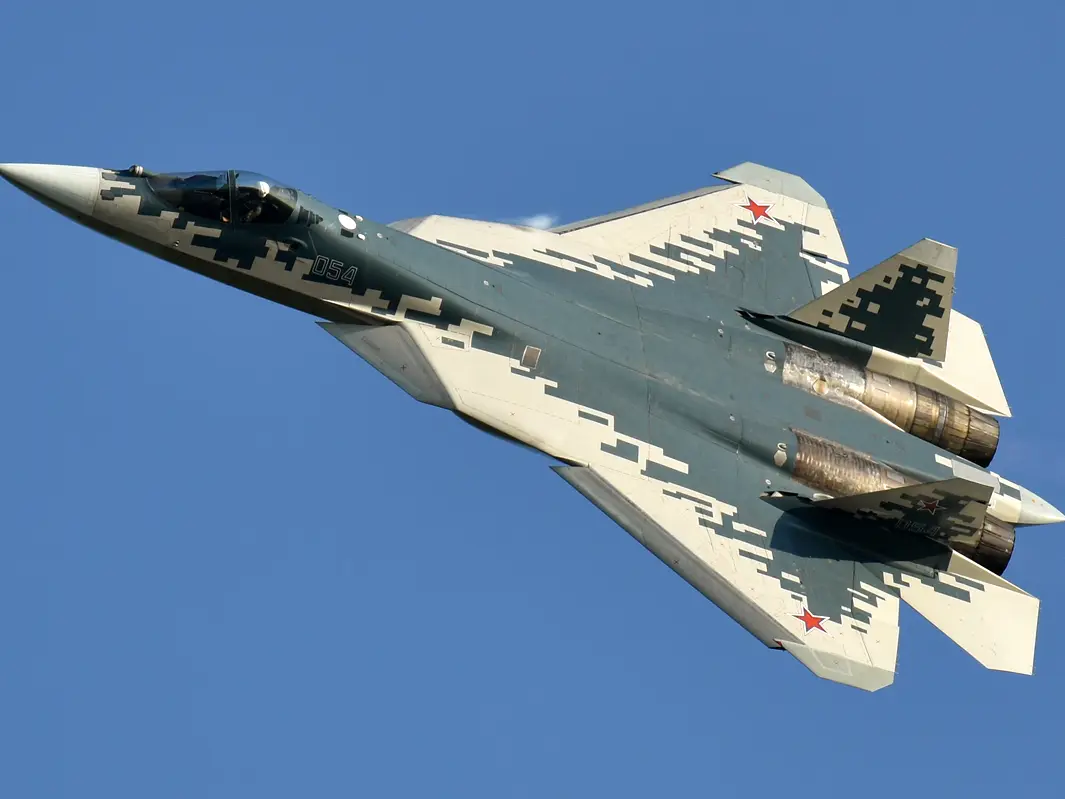
Russian President Vladimir Putin has offered India its fifth-generation stealth aircraft, Sukhoi Su-57, suggesting that the combat jet could even be jointly made with New Delhi in line with the strong strategic partnership between the two nations. The move came after persistent supply chain disruptions triggered by the war in Ukraine, which has forced India to aggressively diversify its military procurement strategy.
After years of assessing several options for a fifth-generation fighter jet, India has embarked on the Advanced Multirole Combat Aircraft (AMCA) project, widely regarded as the largest indigenous aerospace programme of the country. Against this backdrop, the Russian President reiterated Moscow's interest in partnering with New Delhi on the Su-57 aircraft programme. With the AMCA project unlikely to enter the Indian Air Force (IAF) before 2035, the government is reportedly exploring the possibility of acquiring at least two squadrons or around 36 Su-57s, subject to the aircraft meeting the technical and operational requirements.
What is India's Advanced Multirole Combat Aircraft (AMCA) project?
The Advanced Medium Combat Aircraft (AMCA) is the indigenous, fifth-generation, twin-engine, all-weather stealth multirole combat aircraft of India, which is currently in the development phase for the Indian Air Force and Indian Navy. The project is being designed to ensure India's air power, prompting the jet to feature low observable (stealth) technology, internal weapons bays, advanced avionics, and supercruise capabilities.
The project is being spearheaded by the Aeronautical Development Agency (ADA), a body under the Defence Research and Development Organisation (DRDO), representing a massive leap in the domestic defence capabilities of India. Traditionally, the production of flagship combat aircraft in India has been primarily led by state-run Hindustan Aeronautics Limited (HAL). However, the AMCA project marks a major structural shift by adopting a competitive consortium-based model.
The Indian government has started actively bringing top private aerospace and defence manufacturing firms into the core of the project. The development aims to fulfil reduced developmental delays, build supply chain resilience, and rapidly scale up production.
Trending Stories
&imwidth=180&imheight=135&format=webp&quality=medium)
'My name has always been Ilhan Omar': Congresswoman hits back at Trump, calls him a 'creep'
&imwidth=180&imheight=135&format=webp&quality=medium)
Gravitas | US attack could trigger WW III: Russian planes in Tehran, Israeli jets, US warships in action
&imwidth=180&imheight=135&format=webp&quality=medium)
Viral video shows cross falling on Colombia priest, no official confirmation | WATCH
&imwidth=180&imheight=135&format=webp&quality=medium)
'This is humiliation': Vijay Deverakonda under fire over controversial marriage proposal remark on Koffee With Karan 9
&imwidth=180&imheight=135&format=webp&quality=medium)
US Navy, Marine Corps boards defy Trump's transgender military ban, vote to retain troops
&imwidth=180&imheight=135&format=webp&quality=medium)
Will the US attack Iran this weekend? Trump's envoy says, 'absolutely'
&imwidth=180&imheight=135&format=webp&quality=medium)
Fauzi teaser out: Prabhas takes on the British Empire in patriotic avatar | Watch
&imwidth=180&imheight=135&format=webp&quality=medium)
India-China face-off continues near Arunachal’s Taksing, reveals ITBP chief in first official confirmation of tensions
&imwidth=180&imheight=135&format=webp&quality=medium)
Nairobi building collapse: Several feared trapped after 16-storey structure crumbles; rescue operation underway
&imwidth=180&imheight=135&format=webp&quality=medium)
Pakistan airline PIA unveils new crew uniforms, faces online criticism
&imwidth=180&imheight=135&format=webp&quality=medium)
Did Neha Bora call for Bangladesh-like GenZ protest, 'anarchy' in India? WION Fact-checks viral claim
&imwidth=180&imheight=135&format=webp&quality=medium)
Scientists make digital nose that can sniff and send scents over the internet
&imwidth=180&imheight=135&format=webp&quality=medium)
'Already tired of his 9-to-5': Baby born with a moustache becomes internet sensation, video goes viral | Watch
&imwidth=180&imheight=135&format=webp&quality=medium)
Horrific video shows the moment 18-year-old fell to her death from Mexico amusement park ride
&imwidth=180&imheight=135&format=webp&quality=medium)
IND-W vs ZIM-W, 1st ODI: Rawal, Charani star in India’s nine-wicket win over Zimbabwe
&imwidth=180&imheight=135&format=webp&quality=medium)
Massive 7.2 magnitude quake off Vanuatu triggers tsunami warning for coasts within 300 km
&imwidth=180&imheight=135&format=webp&quality=medium)
Microsoft AI diagnoses complex medical cases more than twice as accurately as doctors, study finds
&imwidth=180&imheight=135&format=webp&quality=medium)
Google Fitbit Air’s new health guardian feature tracks trends: How it works
&imwidth=180&imheight=135&format=webp&quality=medium)
US midterms 2026: Trump revises Canada tariffs as Susan Collins faces tight re-election race in Maine
&imwidth=180&imheight=135&format=webp&quality=medium)
US midterms 2026: Viral video claims Lindsey Graham paid underage men for sex; clip released weeks before his sister's Senate race
&imwidth=180&imheight=135&format=webp&quality=medium)
IND vs NZ 2nd T20I: Shreyas Iyer on brink of breaking Rohit Sharma’s record
&imwidth=180&imheight=135&format=webp&quality=medium)
AI deepfakes are spreading online: Why is removing them so difficult?
&imwidth=180&imheight=135&format=webp&quality=medium)
China's dancing robot turns violent bodyguard, lifts cars and fights intruders - Watch
&imwidth=180&imheight=135&format=webp&quality=medium)
Global cybersecurity alert: PHP flaws trigger website shutdowns as hack attempts surge into millions
&imwidth=180&imheight=135&format=webp&quality=medium)
'You’re a horrible little reporter, aren’t you?': Trump snaps at NBC reporter questioning his support for Ramaswamy's campaign ad
&imwidth=180&imheight=135&format=webp&quality=medium)
Chemical warehouse explosion in Mexico: Several injured in multiple blasts, 1,000 evacuated in León
&imwidth=180&imheight=135&format=webp&quality=medium)
US charges two former FBI officials with lying to Congress about Hunter Biden probes. 'Politically motivated' Trump grievance or something else?
&im=FitAndFill=(700,400)&imwidth=180&imheight=135&format=webp&quality=medium)
New Friday OTT releases (October 23, 2026): Gajab Raat, Dorothy, Chaar Yaar- Watch these 6 new movies and TV shows on Netflix, Prime Video and more
&imwidth=180&imheight=135&format=webp&quality=medium)
Anthropic security chief issues grim cyberattack warning: ‘It’s going to get a lot worse’
&imwidth=180&imheight=135&format=webp&quality=medium)
Tu Hai Meri Kiran film review: Sonakshi Sinha and Zaheer Iqbal's thriller gets tangled in its own twists
&imwidth=180&imheight=135&format=webp&quality=medium)
First Lady Melania Trump secures ceasefire between Russia, Ukraine in Oleshky: White House
&imwidth=180&imheight=135&format=webp&quality=medium)
Jenna Ortega plans TV break after Wednesday: ‘I want to leave time for new things’
&imwidth=180&imheight=135&format=webp&quality=medium)
Five killed, several injured after explosion in Bihar's Siwan as firecrackers catch fire
&imwidth=180&imheight=135&format=webp&quality=medium)
Iran targeting US diplomats? Intelligence warns of 'advanced' assassination plots: Report
&imwidth=180&imheight=135&format=webp&quality=medium)
Emmanuel Macron calls Paris suburb shooting a 'racist terrorist attack' after one killed, several injured
Why Russia's Su-57s before India's AMCA project?
The primary reason is that the timelines simply do not match, as India's own AMCA fighter jet is not likely to be mass-produced and ready for actual combat until the mid-2030s. However, India's neighbours already have fast-growing fleets of stealth planes that include China, which has already deployed over 200 active J-20 stealth fighters and is currently testing its new, carrier-ready J-35, and Pakistan has shown clear interest in buying Chinese FC-31 stealth jets. This threatens to take away the long-standing technical advantage of the Indian Air Force along its western border as well as the border with China.
Therefore, India urgently required a heavy stealth jet in order to keep its enemies in check. To meet this requirement, Russia’s upgraded Su-57 fighter, which comes with advanced Product 30 engines, is a ready-to-go option. It also fits perfectly with the massive repair and maintenance setups India already uses for its other Russian jets, like the Su-30MKI.
In addition, buying Russian-made Su-57s could act as a smart temporary bridge as it will provide IAF's pilots immediate, real-world training in modern stealth tactics, advanced battlefield communication, and high-tech radar systems long before the first AMCA is even built. It will also act as a vital shield to protect Indian skies while the homegrown technology of India develops.

