War at the speed of light: Why India must build the Sudarshan Chakra NOW

&imwidth=600&imheight=450&format=webp&quality=medium "War at the speed of light: Why India must build the Sudarshan Chakra NOW")
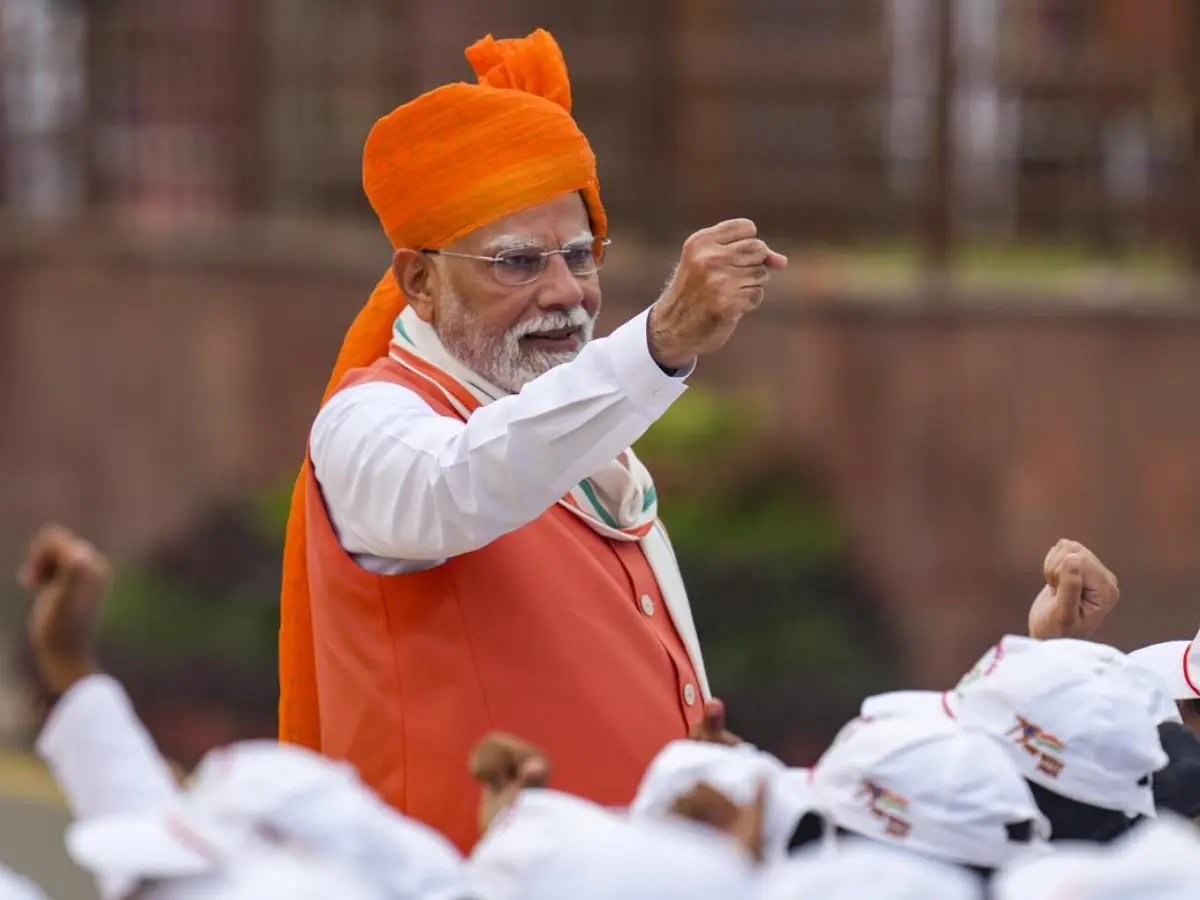
Prime Minister Narendra Modi interacts with students during the 79th Independence Day celebration at the Red Fort, in New Delhi, on August 15, 2025. Photograph: (PTI)
Modern warfare has shifted from single-target defences to complex threats. Nations now face swarms of drones, cyberattacks, space missiles and jammers simultaneously, overwhelming old systems designed for simpler, one-on-one battles.
The age of fighting one enemy at a time is over. Gone are the days when our defence systems could track a single missile, aim at it, and shoot it down in peace. Today's battlefield is like a video game on steroids, enemies attack from everywhere at once.
The Old Way vs The New Reality
Earlier, our defence was simple. See the missile, lock on target, fire. This worked when enemies sent one or two missiles at a time.
But now? Imagine facing a swarm of drones, cyber hackers trying to crash our systems, missiles coming from space, and electronic jammers all attacking together. Our old systems would be like using a single security guard to handle a riot.
This is exactly why Prime Minister Modi's vision of India'sSudarshan Chakra defence systemmakes perfect sense. Just likeLord Krishna's divine weaponthat could strike multiple enemies simultaneously, India needs a defence shield that can handle multiple threats at once.
What Makes Modern Warfare So Dangerous?
Trending Stories
&imwidth=280&imheight=210&format=webp&quality=medium)
&imwidth=280&imheight=210&format=webp&quality=medium)
&imwidth=280&imheight=210&format=webp&quality=medium)
&im=FitAndFill=(700,400)&imwidth=280&imheight=210&format=webp&quality=medium)
&imwidth=280&imheight=210&format=webp&quality=medium)
&imwidth=280&imheight=210&format=webp&quality=medium)
&imwidth=280&imheight=210&format=webp&quality=medium)
&imwidth=280&imheight=210&format=webp&quality=medium)
&imwidth=280&imheight=210&format=webp&quality=medium)
&imwidth=280&imheight=210&format=webp&quality=medium)
&imwidth=280&imheight=210&format=webp&quality=medium)
&imwidth=280&imheight=210&format=webp&quality=medium)
&imwidth=280&imheight=210&format=webp&quality=medium)
&imwidth=280&imheight=210&format=webp&quality=medium)
&imwidth=280&imheight=210&format=webp&quality=medium)
&imwidth=280&imheight=210&format=webp&quality=medium)
&imwidth=280&imheight=210&format=webp&quality=medium)
&imwidth=280&imheight=210&format=webp&quality=medium)
&imwidth=280&imheight=210&format=webp&quality=medium)
&imwidth=280&imheight=210&format=webp&quality=medium)
&imwidth=280&imheight=210&format=webp&quality=medium)
&imwidth=280&imheight=210&format=webp&quality=medium)
&imwidth=280&imheight=210&format=webp&quality=medium)
&imwidth=280&imheight=210&format=webp&quality=medium)
&imwidth=280&imheight=210&format=webp&quality=medium)
&imwidth=280&imheight=210&format=webp&quality=medium)
&imwidth=280&imheight=210&format=webp&quality=medium)
&im=FitAndFill=(700,400)&imwidth=280&imheight=210&format=webp&quality=medium)
&imwidth=280&imheight=210&format=webp&quality=medium)
&imwidth=280&imheight=210&format=webp&quality=medium)
&imwidth=280&imheight=210&format=webp&quality=medium)
&imwidth=280&imheight=210&format=webp&quality=medium)
&imwidth=280&imheight=210&format=webp&quality=medium)
&imwidth=280&imheight=210&format=webp&quality=medium)
Think of it this way: if earlier warfare was like chess, one move at a time, today's warfare is like playing chess, carrom, and video games all at once while someone is trying to hack your phone.
Countries like China and Pakistan are not going to send just missiles anymore. They will combine:
- Swarms of cheap drones(like the ones we saw in Ukraine)
- Super-fast hypersonic missilesthat travel at 5 times the speed of sound
- Cyber attacksto shut down our power grids and communication
- Electronic jammingto blind our radars
- Attacks from spacesatellites
Speed is Life in Modern Defence
The biggest challenge?Speed. Modern weapons are so fast that by the time a human operator sees the threat, decides what to do, and gives orders to fire back, the enemy missile has already hit its target. This is whereArtificial Intelligence (AI)comes in. Just like how your smartphone automatically focuses the camera and adjusts brightness before you even click, our defence systems need AI that canspot threats, decide the best response, and fire back – all in milliseconds. ThePentagon in Americahas realized this too. In April 2025, they called for urgent use of AI in defence, admitting thathuman reaction time is too slowfor modern threats.
India's Sudarshan Chakra Vision
PM Modi's concept ofSudarshan Chakrais brilliant because it understands this new reality. Like the mythical weapon that could:
- Attack multiple enemies at once
- Change direction mid-flight
- Return to its owner
- Never miss its target
India's defence system needs to be equallysmart and flexible.
What This Means Practically
Instead of having separate systems for different threats, India is building anintegrated shieldthat includes:
Learning from Global Examples
TheU.S. Space Forcehas been upgrading its systems since June 2025, openingnew space operation centersthat act like mission control rooms, connecting space satellites with ground-based weapons in real-time.
Israel's Iron Dome, while excellent for short-range rockets, cannot meet India's larger challenge. We need protection againstChina's hypersonic missiles,Pakistan's conventional weapons, and potentialcyber attacks from anywhere in the world.
The Technology Behind the Shield
The key technologies that make this possible are:
Artificial Intelligence (AI):Like having thousands of chess grandmasters working together, AI can calculate millions of possible threat scenarios and choose the best response in split seconds.
Digital Twins:These are computer copies of our entire defence system. Engineers can test "what if" scenarios – like what happens if 100 drones attack Mumbai while missiles target Delhi – without actually facing the real threat.
Model-Based Systems Engineering (MBSE):This is like having a master blueprint that shows how every piece of equipment should work together, from the satellite in space to the missile launcher on the ground.
Challenges We Must Overcome
Building this system is not easy. The biggest challenges are:
Why This Matters for Every Indian
This is not just about military strategy. A strong defence shield means:
- Better protection for our cities and people
- Confidence for foreign investors and businesses
- Stronger position in international negotiations
- Peace of mind for families living near borders
The Road Ahead
India is on theright track. Ourspace agency ISRO,defence research organization DRDO, and private companies likeTata and Mahindraare all working together. The government has also opened up defence manufacturing to private companies, bringing in fresh ideas and competition.
But we need tomove faster. Our enemies are not waiting, and technology changes every day. The next five years will decide whetherIndia becomes a global defence technology leaderor remains dependent on others.
Conclusion
TheSudarshan Chakrawas not just a weapon – it was a symbol ofjustice, protection, and divine interventionwhen needed most. PM Modi's vision of India's defence system carrying this name is bothinspiring and practical. In today's world, the biggest security threat is not justenemy missiles, but our ownslow thinking and outdated systems. By building a trulyintegrated, AI-powered, multi-domain defence system, India can ensure that likeLord Krishna's divine chakra, our protection will beswift, sure, and always on target. The time for half-measures is over.India's Sudarshan Chakra must be built now, built right, and built to win.
