Trump just made it nearly impossible for Indians to work in the US — Here's how

&imwidth=600&imheight=450&format=webp&quality=medium "Trump just made it nearly impossible for Indians to work in the US — Here's how")
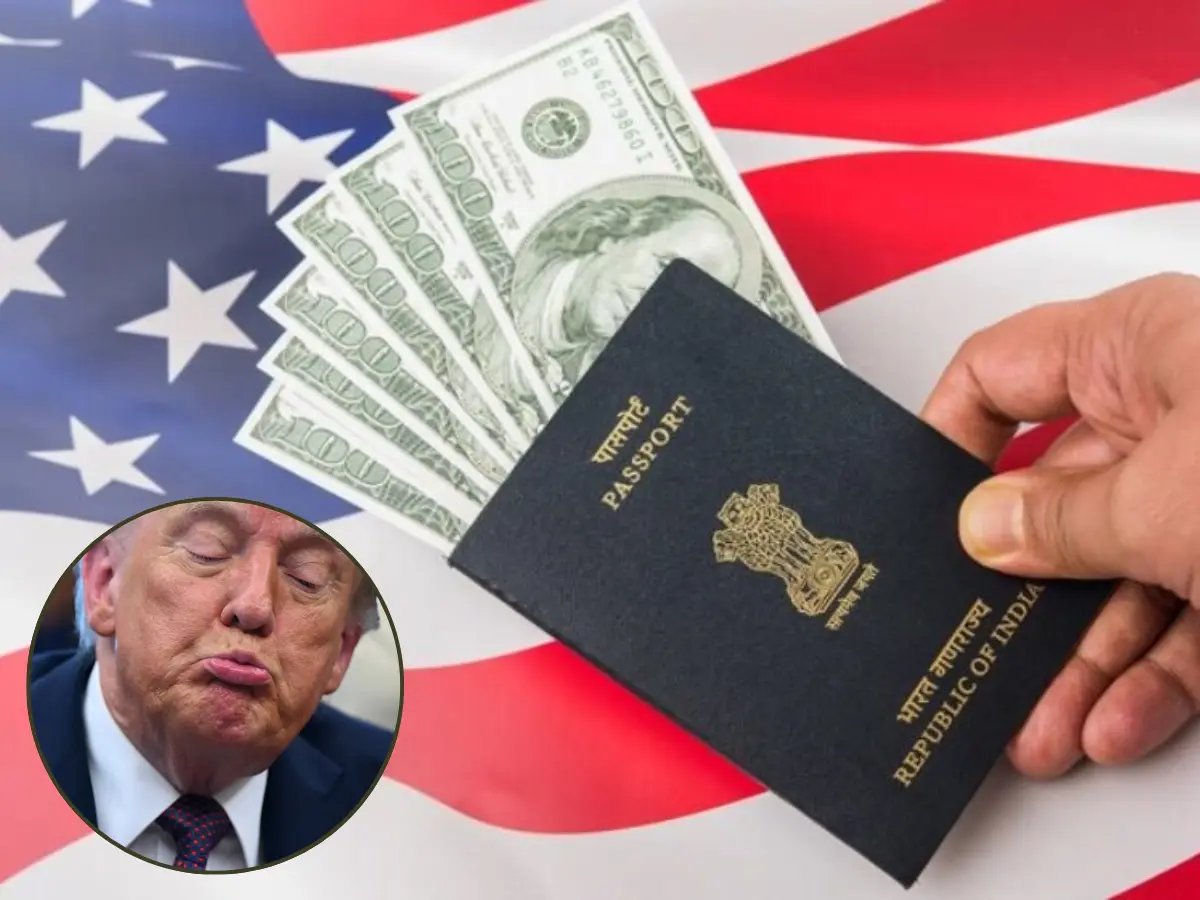
Representative image: Indian passport on a US flag, Inset: Donald Trump Photograph: (WION Web Desk)
President Donald Trump signed a new proclamation that dramatically raises the annual fee for H-1B visas to a whopping $100,000 or ₹90 lakh. The move may make the Indian techies' US dream nearly impossible. Here's All You Need To Know.
US President Donald Trump on Friday (Sep 19) signed a proclamation hiking the annual fee for H-1B visas to $100,000, a move that could deal a major blow to Indian tech workers and the firms that hire them. For Indians, this massive visa fee hike translates to a whopping ₹90 lakh. Through the H-1B program, American companies bring in highly skilled foreign workers, most of them from countries like India. However, now, for every visa application, employers will have to cough up $100,000 a year on top of existing filing fees and salaries. Singing the order in the Oval Office, Trump announced, "They (US-based companies) need workers, we need great workers. This proclamation ensures that America will now get good workers."
How many Indians will be affected?
According to Pew Research, India remains the top beneficiary of the H-1B visa programme. In 2023, Indians accounted for roughly three-quarters (around 73 per cent) of the total H-1B visa applicants. This translates to hundreds of thousands of Indians every year.
The impact of Trump's proclamation hiking the annual fee for H-1B visas was immediate on markets. Shares of Cognizant dropped nearly 5 per cent, while US-listed Indian IT majors Infosys and Wipro fell between 2 per cent and 5 per cent. Amazon, Microsoft, and Meta, which collectively secured tens of thousands of H-1B approvals this year, are also likely to face higher costs.
Trump's immigration crackdown
The fee hike comes on top of a growing list of visa hurdles, from stricter background checks to new rules forcing applicants to face screening for "anti-Americanism." In August 2025, US Citizenship and Immigration Services (USCIS) announced that immigration officers have now been instructed to weigh whether a green card applicant has "endorsed, promoted, supported, or otherwise espoused" anti-American, terrorist, or antisemitic views.
Additionally, starting October 2025, citizenship applicants will also face a tougher civics test. Under this, applicants will have to answer at least 12 out of 20 oral questions correctly from a pool of 128 questions.
)
)
)
)
)
)
)
)
)
)
)
)
)
)
)
)
)
)
)
)
)
)
)
)
)
)
)
)
&im=FitAndFill=(700,400))
)
)
)
)
)
)
)
)
)
)
)

