Will India switch to plastic currency? Why RBI wants to replace paper currency, and what it means for your wallet | WION Decodes

&imwidth=600&imheight=450&format=webp&quality=medium "Will India switch to plastic currency? Why RBI wants to replace paper currency, and what it means for your wallet | WION Decodes")
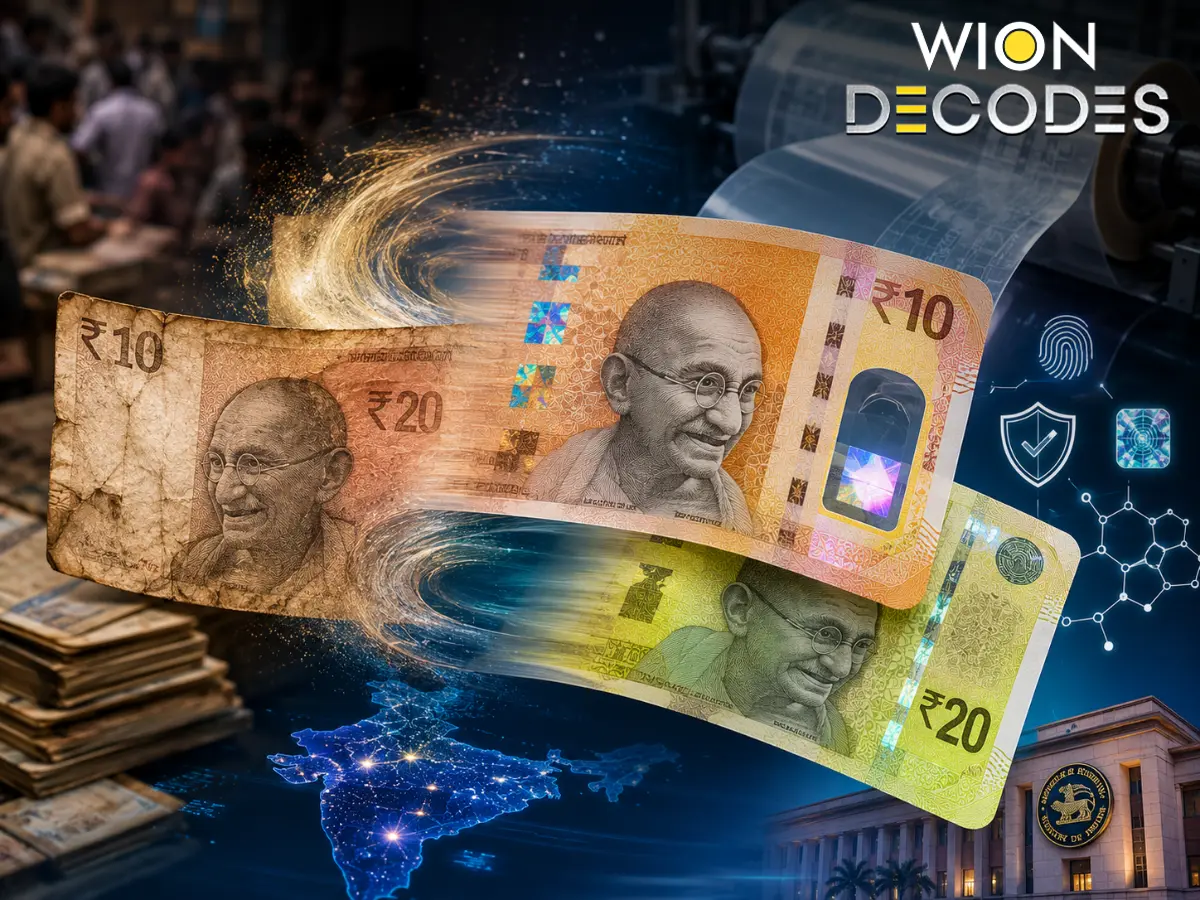
Plastic rupee notes soon? All you need to know about polymer notes Photograph: (AI-Generated image)
The RBI has taken its clearest step yet towards introducing polymer banknotes. But why replace paper notes that have been in use for decades? WION Decodes
India could soon join a growing list of countries replacing traditional paper currency with polymer, or plastic, banknotes. The Reserve Bank of India's currency-printing subsidiary, Bharatiya Reserve Bank Note Mudran Private Limited (BRBNMPL), on July 17, 2026, floated a Global Expression of Interest (EOI) inviting manufacturers to supply security-grade polymer substrate for Indian banknotes.
While the RBI has not yet announced the launch of plastic currency, its global tender is widely being seen as the first concrete step towards field trials of polymer currency, likely beginning with the ₹10 and ₹20 denominations.
If the trials succeed, India may eventually print more denominations on plastic instead of cotton-based paper. But why is the RBI considering the switch? Will your existing notes become invalid? And are plastic notes really safer and cheaper? Here's what we know.
Why is the RBI planning the switch now?
The immediate reason may be durability and cost. Lower-denomination notes such as ₹10 and ₹20 circulate rapidly, changing hands countless times every day. As a result, they become dirty, torn and unfit for circulation much faster than higher-value notes.
Trending Stories
)
)
)
)
)
)
)
)
)
)
)
)
)
)
)
)
)
)
&im=FitAndFill=(700,400))
)
)
)
&im=FitAndFill=(700,400))
)
&im=FitAndFill=(700,400))
&im=FitAndFill=(700,400))
)
According to the BRBNMPL tender, the RBI is seeking 68,000 reams of Biaxially Oriented Polypropylene (BOPP)-based polymer substrate, split equally for two denominations. The tender also states that larger procurement could follow if field trials are successful.
What exactly are polymer banknotes?
Despite being called "plastic money", polymer notes are not made from ordinary plastic. They are manufactured from a specially engineered polymer substrate, usually biaxially oriented polypropylene (BOPP), designed specifically for banknotes.
Unlike India's current cotton-based paper currency, polymer notes do not absorb moisture, dirt or oils from human hands.
This allows them to remain cleaner and structurally stronger throughout their lifespan.
How much longer do plastic notes last?
One of the biggest advantages is longevity. Studies and central bank experience show polymer notes typically remain in circulation two to two-and-a-half times longer than conventional paper notes.
Their non-porous surface makes them resistant to Moisture, dirt, sweat, grease and everyday wear and tear.
Will this reduce the RBI's printing costs?
Not immediately. Notably, polymer notes generally cost more to manufacture than paper notes. However, over a longer duration, central banks recover that extra cost because the notes last much longer.
That means that fewer replacement print runs will be needed. Additionally, it would mean lower and far less frequent transportation costs, reduced destruction of worn-out notes, and lower long-term currency management expenses.
The RBI appears to be targeting ₹10 and ₹20 notes first precisely because these denominations suffer the highest wear and tear in circulation.
Can plastic notes stop fake currency?
Not entirely, but they make counterfeiting considerably harder. Unlike paper notes, polymer banknotes can incorporate features that are extremely difficult to reproduce, including transparent windows, metallic numerals, embedded holographic elements, magnetic pseudo threads, shadow images, and iridescent security patterns.
The BRBNMPL tender specifically requires several of these security features for India's proposed polymer notes. "The bidder should also have the capacity and capability to manufacture and supply clear window with portrait, metallic numeral, magnetic pseudo thread, shadow image, iridescent pattern etc," it reads.
Counterfeiters can still attempt to forge polymer notes, but replicating the substrate and embedded security features is substantially more challenging than copying traditional paper currency.
Are polymer notes better for visually impaired users?
Because polymer banknotes can incorporate raised tactile features directly into the substrate, they might be better for the visually impaired. Unlike embossed markings on paper notes, which gradually wear away, these tactile elements generally remain effective throughout the note's life, making denomination recognition easier for visually impaired users.
Are plastic notes actually more environmentally friendly?
Surprisingly, many central banks say yes. Although polymer notes are plastic-based, they stay in circulation much longer, meaning fewer notes need to be printed, transported and destroyed.
At the end of their useful life, many polymer banknotes can also be recycled into plastic products instead of being incinerated or shredded.
The overall environmental benefit comes from using fewer replacement notes over time, rather than from the material itself.
Which countries already use polymer currency?
Australia pioneered the technology and became the first country to fully convert its banknotes to polymer.
Since then, dozens of countries have adopted polymer currency, including:
Globally, around 45 countries had introduced polymer banknotes by 2023, with adoption continuing to grow.
Will your existing notes become invalid?
Nothing announced so far suggests that. The current move is only towards field trials, beginning with lower-value notes.
If polymer notes are introduced, they are expected to circulate alongside existing paper notes during the transition, much like previous design changes in Indian currency.
There is no indication that the RBI plans a demonetisation or immediate withdrawal of paper notes as part of this initiative.

