Pakistan deploys thousands of troops, heavy weapons to contain PoK protests | Gravitas

&imwidth=600&imheight=450&format=webp&quality=medium "Pakistan deploys thousands of troops, heavy weapons to contain PoK protests | Gravitas")
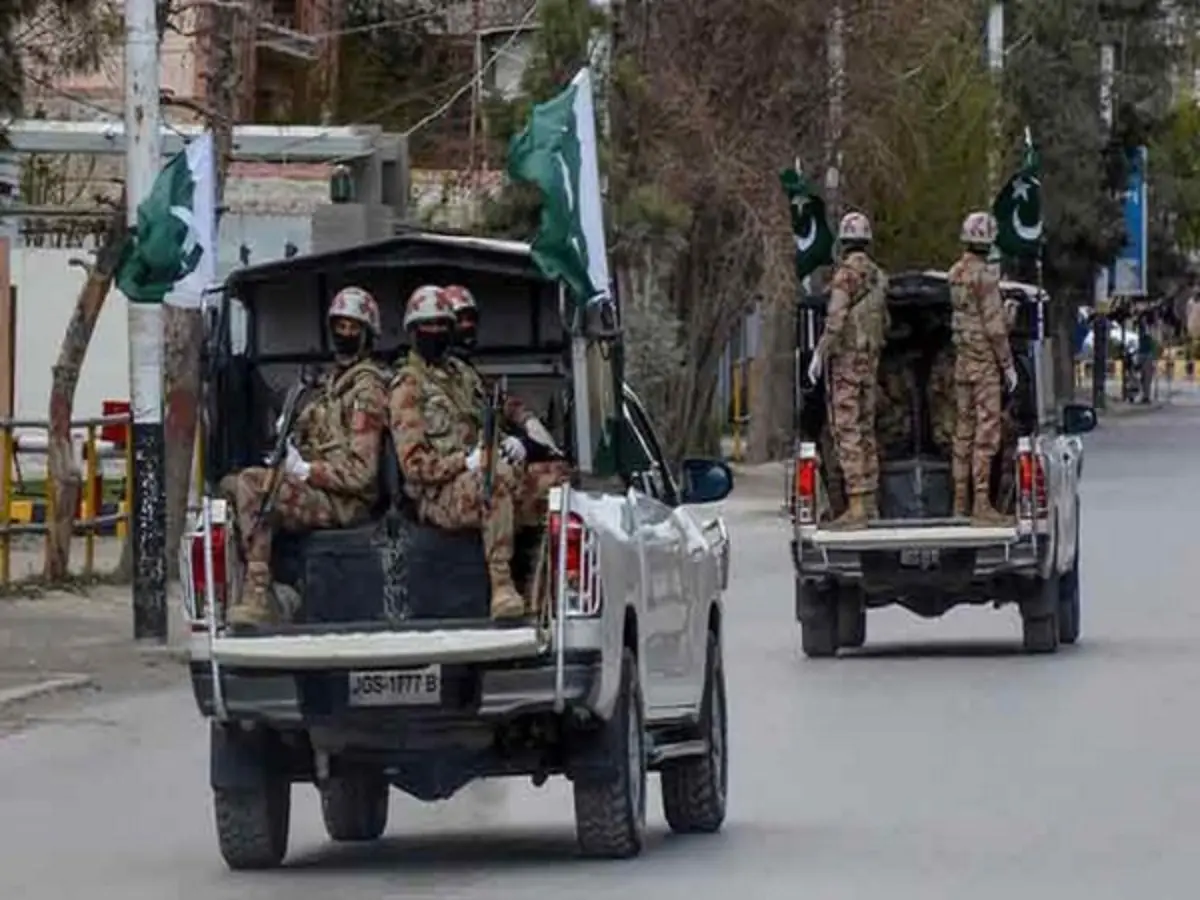
Representative Image
In PoK thousands of supporters of civil society group Joint Awami Action Committee (JAAC) have been on a sit-in at Rawalakot's Eidgah Ground since June 9.
While brute force has been Pakistan Army Chief Asim Munir's go-to approach to deal with dissent, the internal turmoil is deepening. With Islamabad facing different types of crises on four fronts, can it avoid another 1971, when East Pakistan seceded from Pakistan to become the independent country of Bangladesh?
Afghanistan's former Vice President Amrullah Saleh, who has been a vocal critic of the Pakistani military's policies, stirred up a hornet's nest recently with his cryptic post.
He said, "There are preliminary signs that a new country will be born in our region. Guess its name."
While he did not identify which territory he was referring to, his comment comes at a time when Pakistan-occupied Kashmir (PoK) and Balochistan have seen growing calls for freedom.
In PoK, for instance, thousands of supporters of civil society group Joint Awami Action Committee (JAAC) have been on a sit-in at Rawalakot's Eidgah Ground since June 9.
The protests were originally ignited by a ban on JAAC, which put forth 38 demands, including the abolition of 12 seats in the so-called legislative assembly, which are dominated by Pakistanis.
Trending Stories
&im=FitAndFill=(700,400)&imwidth=280&imheight=210&format=webp&quality=medium)
&imwidth=280&imheight=210&format=webp&quality=medium)
&imwidth=280&imheight=210&format=webp&quality=medium)
&imwidth=280&imheight=210&format=webp&quality=medium)
&imwidth=280&imheight=210&format=webp&quality=medium)
&imwidth=280&imheight=210&format=webp&quality=medium)
&imwidth=280&imheight=210&format=webp&quality=medium)
&imwidth=280&imheight=210&format=webp&quality=medium)
&imwidth=280&imheight=210&format=webp&quality=medium)
&imwidth=280&imheight=210&format=webp&quality=medium)
&imwidth=280&imheight=210&format=webp&quality=medium)
&imwidth=280&imheight=210&format=webp&quality=medium)
&imwidth=280&imheight=210&format=webp&quality=medium)
&im=FitAndFill=(700,400)&imwidth=280&imheight=210&format=webp&quality=medium)
&imwidth=280&imheight=210&format=webp&quality=medium)
&imwidth=280&imheight=210&format=webp&quality=medium)
&imwidth=280&imheight=210&format=webp&quality=medium)
&imwidth=280&imheight=210&format=webp&quality=medium)
&imwidth=280&imheight=210&format=webp&quality=medium)
&imwidth=280&imheight=210&format=webp&quality=medium)
&im=FitAndFill=(700,400)&imwidth=280&imheight=210&format=webp&quality=medium)
&imwidth=280&imheight=210&format=webp&quality=medium)
&imwidth=280&imheight=210&format=webp&quality=medium)
&im=FitAndFill=(700,400)&imwidth=280&imheight=210&format=webp&quality=medium)
&imwidth=280&imheight=210&format=webp&quality=medium)
&imwidth=280&imheight=210&format=webp&quality=medium)
&imwidth=280&imheight=210&format=webp&quality=medium)
&imwidth=280&imheight=210&format=webp&quality=medium)
&imwidth=280&imheight=210&format=webp&quality=medium)
&imwidth=280&imheight=210&format=webp&quality=medium)
&imwidth=280&imheight=210&format=webp&quality=medium)
&imwidth=280&imheight=210&format=webp&quality=medium)
&imwidth=280&imheight=210&format=webp&quality=medium)
&imwidth=280&imheight=210&format=webp&quality=medium)
In a big embarrassment for the Munir-led military establishment, PoK has reverberated with slogans seeking freedom from Pakistan.
Protesters have clearly earmarked the Pakistani government and military as "illegal occupiers."
With protesters warning of a long march to Muzaffarabad if the Pakistani government doesn't fulfill its demands by July 21, an additional 8,000 Rangers and heavy weaponry have reportedly been deployed in PoK.
After nine persons were killed as Munir's forces opened fire on innocent civilians, the UN has stepped in as well, calling for an impartial probe into all killings in PoK.
Jeremy Laurence, spokesperson for the UN High Commissioner for Human Rights, said, "Some of the group's leaders have subsequently been arrested. The criminalisation of a civil society organisation and imposition of strict limitations on gatherings raise serious concerns about infringements on the rights to freedom of expression, peaceful assembly and association."
If we turn our attention to Balochistan, which accounts for nearly 44% of Pakistan's area, the situation is no better.
As per human rights activist Mir Yar Baloch, Baloch rebels now control 85% of Balochistan's territory and are ready to throw out Munir's forces by the end of 2026.
The Baloch Liberation Army has stepped up its attacks since January this year by targeting Munir's forces in Operation Herof.
Earlier this month, at least 42 persons, most of whom were security personnel, were killed in three attacks by Baloch insurgents.
In subsequent operations, Pakistani forces claimed to have killed 129 militants.
As per the South Asia Terrorism Portal, 532 Pakistani security personnel have lost their lives in Balochistan this year.
On the other hand, the Tehrik-e-Taliban Pakistan (TTP) continues to pose a big challenge in the neighbouring Khyber Pakhtunkhwa province.
Attacks and targeted killings are on the rise
On July 15, for example, three policemen were killed and at least 20 others were injured when militants ambushed a security convoy and carried out a suicide attack on a police station.
Thereafter, Pakistan claimed to have killed 24 militants in a series of operations.
Now, Jamiat Ulema-e-Islam chief Fazlur Rehman also seems to have read the writing on the wall.
A politically ambitious cleric who has often picked a side based on the on-ground situation, Rehman has been taking on the military in the last few months.
Addressing a lawyers' convention in Islamabad, he exposed how Pakistan doesn't honour its own soldiers.
Maulana Fazlur Rehman said, "I know how much you value your martyrs. Can you tell us? Have you told the people until now regarding how many of our jawans were killed in Kargil? And how many of their bodies did you accept?"
This is not all. The veteran politician also flagged how Pakistan had increasingly become isolated owing to its tensions on all borders.
Maulana Fazlur Rehman said, "The border with India is closed. The border with Afghanistan is closed. China is not ready to do trade with you."
The Afghanistan front in particular is on the boil after Pakistan escalated hostilities with the Afghan Taliban in February this year by conducting air strikes on alleged TTP camps in Afghanistan's Nangarhar and Paktika provinces.
This led to a series of attacks and counter-attacks by both sides.
While it remains to be seen whether Amrullah Saleh's prediction comes true, it is increasingly clear that Pakistan is confronting a rather uncomfortable security situation in its own backyard, which is very tough to wish away.