MMU slams government’s Vande Mataram mandate in schools, urges LG and CM to withdraw coercive directive

&imwidth=600&imheight=450&format=webp&quality=medium "MMU slams government’s Vande Mataram mandate in schools, urges LG and CM to withdraw coercive directive")
MMU slams Vande Mataram mandate in schools, urges LG, CM to withdraw order Photograph: (WION)
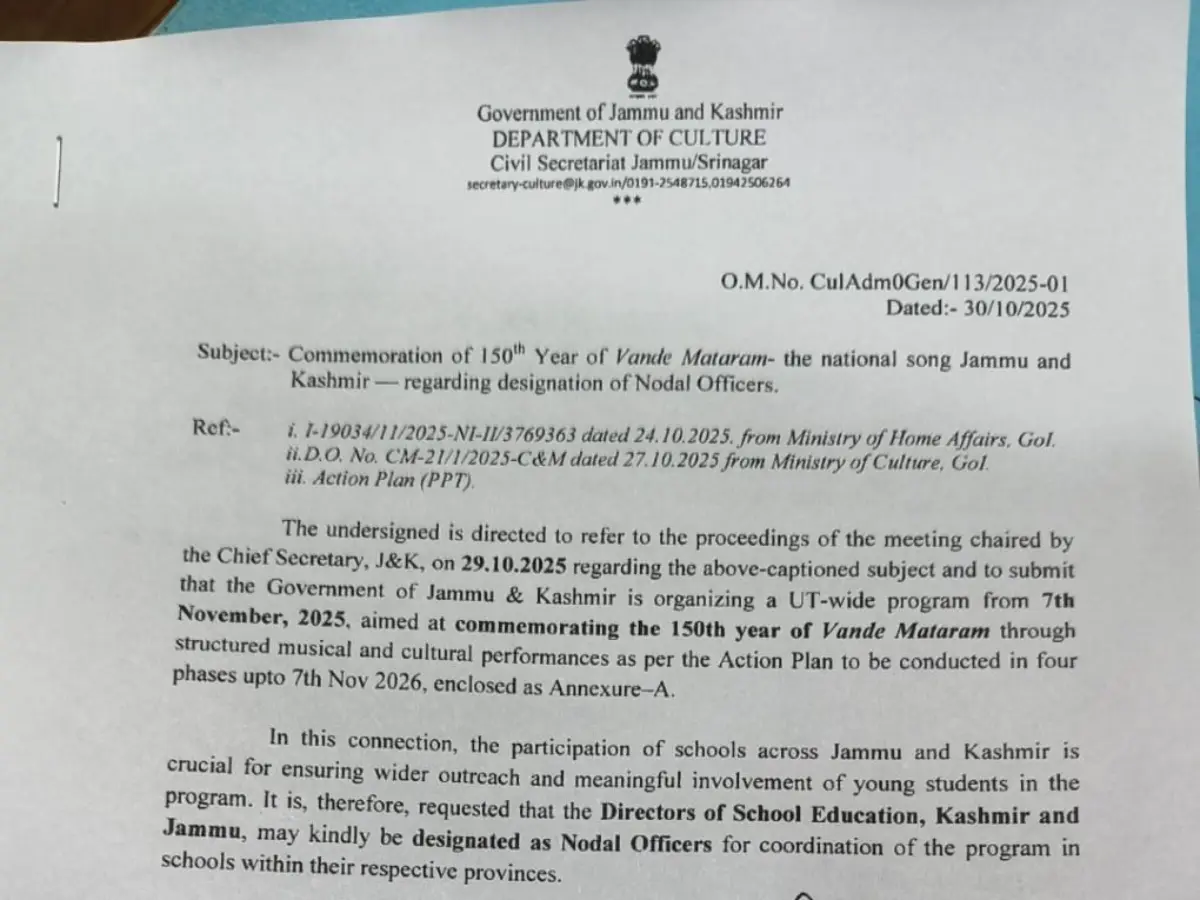
In a sharply worded statement, the MMU described the order from the Jammu and Kashmir Government's Department of Culture as "coercive" and "unjust," warning that it violates core Islamic principles.
The Mutahida Majlis-e-Ulema (MMU), a coalition of all major Muslim religious organizations in Jammu and Kashmir led by Mirwaiz Umar Farooq, has voiced strong opposition to a recent government directive mandating schools to celebrate the 150th anniversary of Vande Mataram through musical and cultural programs with compulsory participation from students and staff.
In a sharply worded statement, the MMU described the order from the Jammu and Kashmir Government's Department of Culture as "coercive" and "unjust," warning that it violates core Islamic principles. "Singing or reciting Vande Mataram is un-Islamic, as it contains expressions of devotion that contradict the fundamental Islamic belief in the absolute Oneness of Allah (Tawheed)," the body said. "Islam does not permit any act that involves worship or reverence directed to anyone or anything other than the Creator."
The MMU emphasized that while Muslims are encouraged to love and serve their homeland through acts of compassion, service, and societal contribution, such devotion must not conflict with faith. "Forcing Muslim students or institutions to participate in activities that clash with their religious beliefs is both unjust and unacceptable," the statement added.
Accusing the directive of being a "deliberate attempt to impose an RSS-driven Hindutva ideology on a Muslim-majority region under the guise of cultural celebration," the MMU argued that it undermines genuine unity and respect for diversity rather than fostering it.
The religious body has urged both the Lieutenant Governor-led administration and Chief Minister to immediately withdraw the order, which it says has caused "anguish to all Muslims." It demanded assurances that no student or institution will be compelled to act against their religious convictions.
The controversy comes amid ongoing debates over cultural mandates in the region, with the government yet to respond to the MMU's concerns. Critics see the directive as part of broader efforts to promote national integration, while opponents view it as insensitive to religious sensitivities in Jammu and Kashmir.
&imwidth=280&imheight=210&format=webp&quality=medium)
&im=FitAndFill=(700,400)&imwidth=280&imheight=210&format=webp&quality=medium)
&imwidth=280&imheight=210&format=webp&quality=medium)
&imwidth=280&imheight=210&format=webp&quality=medium)
&imwidth=280&imheight=210&format=webp&quality=medium)
&im=FitAndFill=(700,400)&imwidth=280&imheight=210&format=webp&quality=medium)
&imwidth=280&imheight=210&format=webp&quality=medium)
&imwidth=280&imheight=210&format=webp&quality=medium)
&imwidth=280&imheight=210&format=webp&quality=medium)
&imwidth=280&imheight=210&format=webp&quality=medium)
&imwidth=280&imheight=210&format=webp&quality=medium)
&imwidth=280&imheight=210&format=webp&quality=medium)
&imwidth=280&imheight=210&format=webp&quality=medium)
&imwidth=280&imheight=210&format=webp&quality=medium)
&imwidth=280&imheight=210&format=webp&quality=medium)
&imwidth=280&imheight=210&format=webp&quality=medium)
&imwidth=280&imheight=210&format=webp&quality=medium)
&imwidth=280&imheight=210&format=webp&quality=medium)
&imwidth=280&imheight=210&format=webp&quality=medium)
&imwidth=280&imheight=210&format=webp&quality=medium)
&imwidth=280&imheight=210&format=webp&quality=medium)
&imwidth=280&imheight=210&format=webp&quality=medium)
&imwidth=280&imheight=210&format=webp&quality=medium)
&imwidth=280&imheight=210&format=webp&quality=medium)
&im=FitAndFill=(700,400)&imwidth=280&imheight=210&format=webp&quality=medium)
&imwidth=280&imheight=210&format=webp&quality=medium)
&imwidth=280&imheight=210&format=webp&quality=medium)
&imwidth=280&imheight=210&format=webp&quality=medium)
&imwidth=280&imheight=210&format=webp&quality=medium)
&imwidth=280&imheight=210&format=webp&quality=medium)
&imwidth=280&imheight=210&format=webp&quality=medium)
&imwidth=280&imheight=210&format=webp&quality=medium)
&imwidth=280&imheight=210&format=webp&quality=medium)
&imwidth=280&imheight=210&format=webp&quality=medium)
&imwidth=280&imheight=210&format=webp&quality=medium)

