J&K: Ban on civilian traffic for two days a week on Jammu-Srinagar highway comes into effect

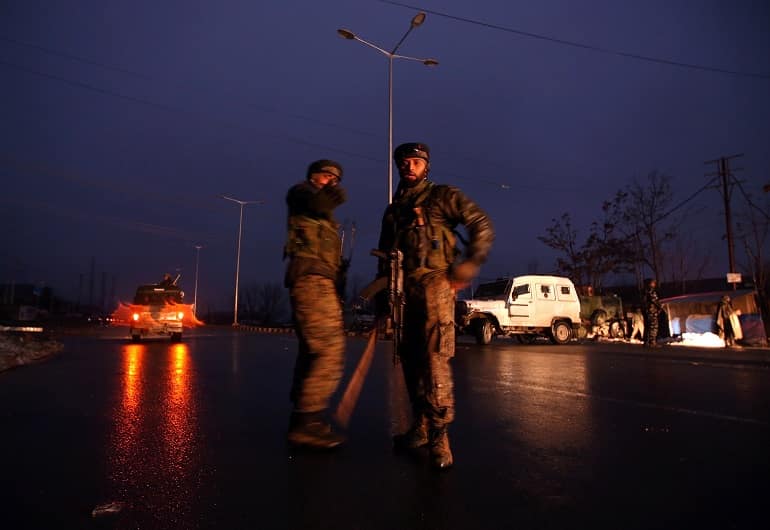
Site of explosion in Lethpora in Kashmir's Pulwama district February 14, 2019.
A "complete ban" on civilian traffic on Jammu-Srinagar highway for two days a week came into force on Sunday in order to ensure safe passage for army convoys to pass through the national highway, news agency PTI reported.
The ban will be in effect on Sundays and Wednesdays of every week from 4 am to 5 pm on most parts of the 300-km long Jammu-Srinagar National Highway. Medical emergency vehicles are exempted from the order.
These restrictions would remain in force till May 31, 2019.

"The main purpose is to ensure that the security forces are given safe passage so that their movement is faster and secure. District magistrates, SHOs, SDMs, and tehsildars have been deployed so that people can approach them if they require assistance," news agency ANI quoted Jammu Divisional Commissioner Sanjeev Verma as saying.
Asked on people using the highway during the affected days in times of emergency, Verma informed that passes would be issued subject to verification and establishment of the credential of purpose.
"To avoid incidents like Pulwama and Banihal, the highway has been sanitised to ensure safe and secure passage of security forces so that they can reach their destination safely. Troops will be going up and down for deployment during elections or other assignments. So, keeping this in mind, this has been done," Verma added.
&imwidth=180&imheight=135&format=webp&quality=medium)
'Baseless and misconceived': India issues statement after Elon Musk's 'oligarchs' claim over Starlink delay
&imwidth=180&imheight=135&format=webp&quality=medium)
‘You earned that love’: Messi’s wife shares heartfelt message as football icon bids farewell to international stage
&imwidth=180&imheight=135&format=webp&quality=medium)
BJP chief Nitin Nabin calls Rahul Gandhi ‘anarchist’, says Oppn ‘spreading poison’ in society
&imwidth=180&imheight=135&format=webp&quality=medium)
‘Team first and team ahead’: India coach Gambhir pens heartfelt wish for chief selector Ajit Agarkar
&imwidth=180&imheight=135&format=webp&quality=medium)
Trump's naked 23-karat gold statue unveiled near European Parliament
&imwidth=180&imheight=135&format=webp&quality=medium)
Nana Patekar: Remembering a legend of the Indian cinema
&imwidth=180&imheight=135&format=webp&quality=medium)
Thai Actors Fourth Nattawat, Gemini Norawit face racism accusations from Indian fans over viral Bollywood act
&imwidth=180&imheight=135&format=webp&quality=medium)
Captain Smit Machchhar on feet again, walks 10 steps as recovery continues after Flydubai flight attack
&imwidth=180&imheight=135&format=webp&quality=medium)
Ronaldo sends 'a hug' after Messi says he misses 'wearing the blue and white'
&imwidth=180&imheight=135&format=webp&quality=medium)
Trump distances himself from senior political advisers over work for pro-Russian government
&imwidth=180&imheight=135&format=webp&quality=medium)
A Love Other Than Yours: The temptation to cheat and what pushes people over the edge
&imwidth=180&imheight=135&format=webp&quality=medium)
Narendra Modi Stadium bomb threat declared hoax; India & Australia U19 squads safe
&imwidth=180&imheight=135&format=webp&quality=medium)
US midterms 2026: Why the Latino vote could shape control of Congress
&imwidth=180&imheight=135&format=webp&quality=medium)
BTS agency HYBE announces first-ever Weverse Con Festival in India
&imwidth=180&imheight=135&format=webp&quality=medium)
US Midterms 2026: Barack Obama hits campaign trail to boost Democratic candidates
&imwidth=180&imheight=135&format=webp&quality=medium)
Shia LaBeouf and Mia Goth head for divorce after nearly 10 years
&imwidth=180&imheight=135&format=webp&quality=medium)
Who is DogeDesigner? All we know about the X account that sparked India-Musk-Starlink ‘oligarchs’ controversy
&imwidth=180&imheight=135&format=webp&quality=medium)
India at UN: Pak allows terror groups to operate from its soil
&imwidth=180&imheight=135&format=webp&quality=medium)
Christa Pike wakes after failed execution, asks 'Where am I and who are you?'
&imwidth=180&imheight=135&format=webp&quality=medium)
Christa Pike 'angry' and 'confused' after failed execution; judge orders to preserve evidence
&imwidth=180&imheight=135&format=webp&quality=medium)
Nigerian President Bola Ahmed Tinubu hails Modi’s 25-year leadership milestone, calls for deeper Nigeria-India strategic ties
&im=FitAndFill=(700,400)&imwidth=180&imheight=135&format=webp&quality=medium)
US midterms 2026: 10 leaders and candidates to watch in the battle for Congress
&imwidth=180&imheight=135&format=webp&quality=medium)
Nana Patekar's #MeToo controversy: From Tanushree Dutta’s allegations to court ruling
&imwidth=180&imheight=135&format=webp&quality=medium)
Atlantic hurricane Isaias could make landfall as a strong Category 2 storm, tornado warnings issued
&imwidth=180&imheight=135&format=webp&quality=medium)
Veteran actor Nana Patekar dies at 75 after suffering cardiac arrest
&imwidth=180&imheight=135&format=webp&quality=medium)
Musk alleges ‘oligarchs’ blocking Starlink in India, here is what we know so far
&imwidth=180&imheight=135&format=webp&quality=medium)
Lightning strikes IndiGo Patna-Lucknow flight at 17,000 feet, damages nose; all 110 safe
&imwidth=180&imheight=135&format=webp&quality=medium)
Who is Nana Patekar's wife Neelakanti? The bank officer who earned Rs 2,500 when he earned Rs 50
&imwidth=180&imheight=135&format=webp&quality=medium)
France holds talks with Taliban government amid diplomatic outreach
&imwidth=180&imheight=135&format=webp&quality=medium)
New Cold War: Why is China buying more gold? Explained
&imwidth=180&imheight=135&format=webp&quality=medium)
Nadella to be honoured with national medal of technology & innovation
&imwidth=180&imheight=135&format=webp&quality=medium)
IndiGo flight struck by lightning at 17,000 feet, nose of Patna-Lucknow flight damaged
&imwidth=180&imheight=135&format=webp&quality=medium)
US readying to strike Iran? Report suggests Trump preparing to put on show of strength ahead of US midterms
&imwidth=180&imheight=135&format=webp&quality=medium)
Zendaya gives The Odyssey white lace jacket a stylish twist at Paris Fashion Week 2026
&im=FitAndFill=(700,400)&imwidth=180&imheight=135&format=webp&quality=medium)
World’s top vehicle producers: Top 10 countries making the most cars. Check where India stands
&imwidth=180&imheight=135&format=webp&quality=medium)
'We don't think so': Trump says Russian plague lab worker's death not linked to bio-weapon
&imwidth=180&imheight=135&format=webp&quality=medium)
Sri Lankan Tamil worker gets death sentence in Saudi Arabia over blasphemy, calls for pardon intensify
&imwidth=180&imheight=135&format=webp&quality=medium)
France protests: How a Gen Z school movement turned into a political war | The Verdict
The prohibition on the movement of civilian traffic on these two days of each week would be from Baramulla through Srinagar, Qazigund, Jawahar-Tunnel, Banihal, and Ramban till Udhampur.
Echoing similar sentiments, Bhim Singh Tuti, DIG, Udhampur-Ramban range urged the public to cooperate with the administration when the restrictions are in effect.
"Prohibitory orders have been imposed in Ramban and Udhampur districts. The adequate number of personnel has been deployed. We urge the public to cooperate with us. Plying of two-way traffic is difficult. At some places, landslides are frequent, which increases the vulnerability of the troops. After the
Banihal incident, this decision has been taken," he said.
In the event of any requirement for local traffic movement for any emergency or for other purposes, the local administration and police would evolve necessary procedures for this as is done during curfew days.
The restrictions come in the wake of February 14 terrorist attack on CRPF convoy in Pulwama district while it was on its way from Jammu and Srinagar. It was attacked by a suicide car bomber in which 40 personnel were killed.
Jaish-e-Mohammad (JeM) had claimed responsibility for the attack.
Subsequently, Union Home Minister Rajnath Singh, during his visit to Kashmir, had announced that no civilian traffic movement would be allowed during the convoy days.
(With inputs from agencies)