ISRO accomplishes second air drop test of Gaganyaan capsule

&imwidth=600&imheight=450&format=webp&quality=medium "ISRO accomplishes second air drop test of Gaganyaan capsule")
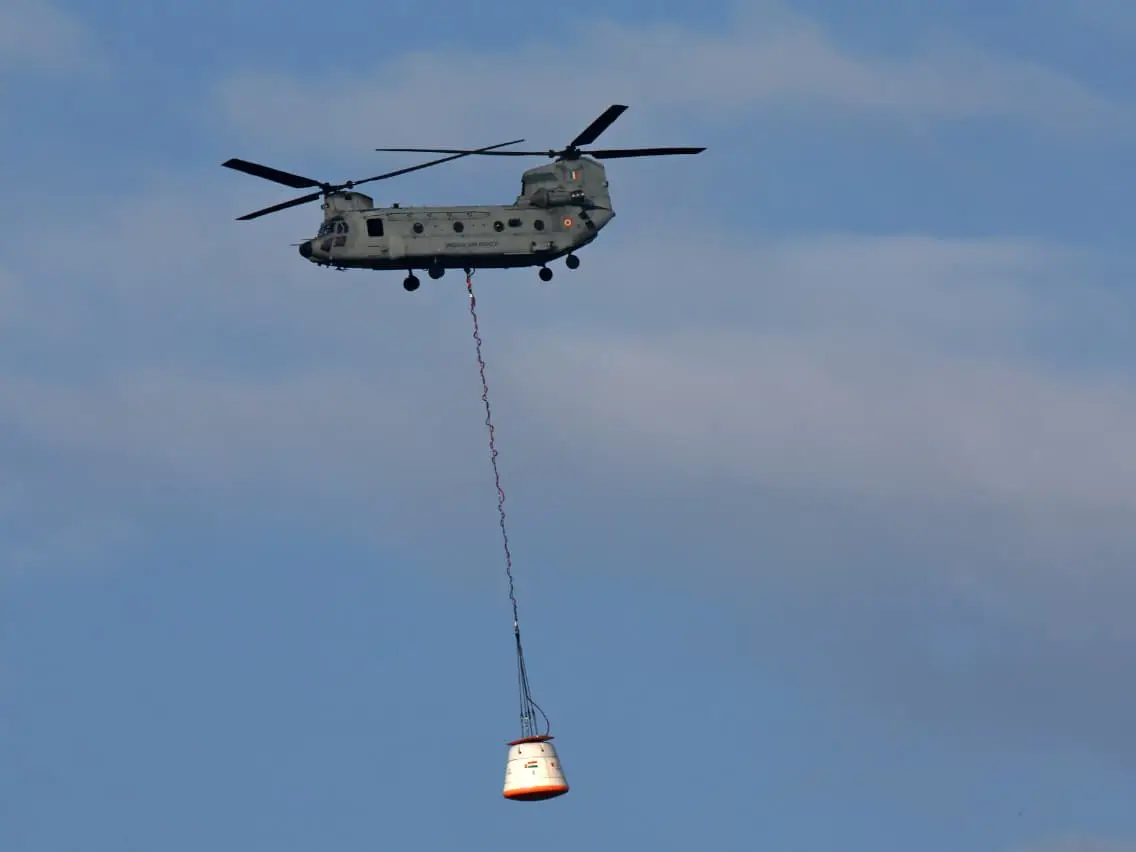
ISRO conducted the IADT along with the Indian Air Force, Indian Navy, off the Indian spaceport in Sriharikota, Andhra Pradesh. Photograph: (WION)
How close is India to sending humans into space? After a key parachute drop test, ISRO has taken another step toward its ambitious Gaganyaan mission. Scroll down to read more.
Indian space agency ISRO has successfully completed the second Integrated Air Drop test(IADT), an air-sea coordinated effort done in preparation for the Gaganyaan astronaut mission. ISRO conducted the IADT along with the Indian Air Force, Indian Navy, off the Indian spaceport in Sriharikota, Andhra Pradesh. This test was meant to validate the series of parachutes that sequentially deploy to ensure the safe and smooth splashdown of the capsule meant to carry India's astronauts.
The announcement regarding the successful completion of the test came from Dr Jitendra Singh, India's science minister. However, ISRO has not revealed any information regarding this test and how it is different from the IADT carried out in August 2025.
What is the IADT test? How is it done?
The test involves an Indian Air Force Boeing CH-47 Chinook heavy-lift helicopter, which carries an underslung load of 4,000-5000kg (the Gaganyaan astronaut-carrying capsule). The tandem-rotor helicopter lifts the capsule to an altitude of about 3,000-4,000meters (3-4 kilometres), and then drops it into the sea, typically at least 10 kilometres away from the coast.
As the capsule descends rapidly, it sequentially deploys a series of parachutes to slow itself down for a safe and smooth splashdown landing. Think of it like skydiving: as soon as one jumps out of the plane, the descent is rapid and uncontrolled. But when the parachutes are deployed, the descent becomes controlled and slow. This test validates the deployment of multiple parachutes and related systems installed on the Gaganyaan crew module.
Trending Stories
&imwidth=280&imheight=210&format=webp&quality=medium)
&imwidth=280&imheight=210&format=webp&quality=medium)
&imwidth=280&imheight=210&format=webp&quality=medium)
&imwidth=280&imheight=210&format=webp&quality=medium)
&imwidth=280&imheight=210&format=webp&quality=medium)
&imwidth=280&imheight=210&format=webp&quality=medium)
&imwidth=280&imheight=210&format=webp&quality=medium)
&imwidth=280&imheight=210&format=webp&quality=medium)
&imwidth=280&imheight=210&format=webp&quality=medium)
&imwidth=280&imheight=210&format=webp&quality=medium)
&imwidth=280&imheight=210&format=webp&quality=medium)
&imwidth=280&imheight=210&format=webp&quality=medium)
&imwidth=280&imheight=210&format=webp&quality=medium)
&imwidth=280&imheight=210&format=webp&quality=medium)
&imwidth=280&imheight=210&format=webp&quality=medium)
&imwidth=280&imheight=210&format=webp&quality=medium)
&imwidth=280&imheight=210&format=webp&quality=medium)
&imwidth=280&imheight=210&format=webp&quality=medium)
&imwidth=280&imheight=210&format=webp&quality=medium)
&imwidth=280&imheight=210&format=webp&quality=medium)
&imwidth=280&imheight=210&format=webp&quality=medium)
&imwidth=280&imheight=210&format=webp&quality=medium)
&imwidth=280&imheight=210&format=webp&quality=medium)
&imwidth=280&imheight=210&format=webp&quality=medium)
&im=FitAndFill=(700,400)&imwidth=280&imheight=210&format=webp&quality=medium)
&imwidth=280&imheight=210&format=webp&quality=medium)
&imwidth=280&imheight=210&format=webp&quality=medium)
&imwidth=280&imheight=210&format=webp&quality=medium)
&imwidth=280&imheight=210&format=webp&quality=medium)
&imwidth=280&imheight=210&format=webp&quality=medium)
&imwidth=280&imheight=210&format=webp&quality=medium)
&im=FitAndFill=(700,400)&imwidth=280&imheight=210&format=webp&quality=medium)
Such a safe splashdown landing using a series of parachutes is the crucial final step when an astronaut-carrying capsule returns from space.
Once the capsule safely splashes down, the Indian Navy's vessels pre-positioned in the region deploy their smaller boats to approach the capsule, inspect it, and connect the capsule to a ship-borne crane. Thereafter, the capsule gets lifted up by the massive ship-borne crane and is safely placed on the ship's deck.
This operation will be closely monitored from the air and sea by a range of assets belonging to ISRO, Navy, and IAF. Parachutes for this test have been developed by India's Defence Research and Development Organization (DRDO). Being a national mission, Gaganyaan requires multi-agency synergy and coordination.
IADT is one among thousands of Gaganyaan-related tests
In the process of accomplishing the Gaganyaan human spaceflight mission, ISRO must conduct thousands of tests spanning various technical domains: electrical, mechanical, chemical, software, materials, navigation, guidance, automation, etc.
While thousands of tests have been completed, several thousand remain, and new technologies are being tested and validated. However, most of the testing happens behind closed doors, and it is only the rare ones like IADT and other rocketry-related tests that happen out in the open and with the involvement of military assets.
As for the high-profile tests that happen in the open, ISRO has to accomplish more Integrated Air Drop Tests, more Test Vehicle launches (mid-flight abort and ejection), Pad Abort Tests (ejecting, saving crew capsule from a potential rocket explosion at launchpad), and multiple unmanned flights of the whole Gaganyaan rocket and spacecraft, using a robot instead of astronauts.
Only when all these tests go flawlessly can ISRO put astronauts on its rocket and fly them to space. In 2018, Indian Prime Minister Modi announced that Gaganyaan would be accomplished in 2022. At present, the Indian Government says that Gaganyaan would be accomplished in 2027. However, given the pace of activities, it is evident that it could take years more.
