Indian firm test fires 3-D printed cryogenic engine; spacefaring rocket launch by 2023 end

Indian firm test fires 3-D printed cryogenic engine; spacefaring rocket launch by end-2023
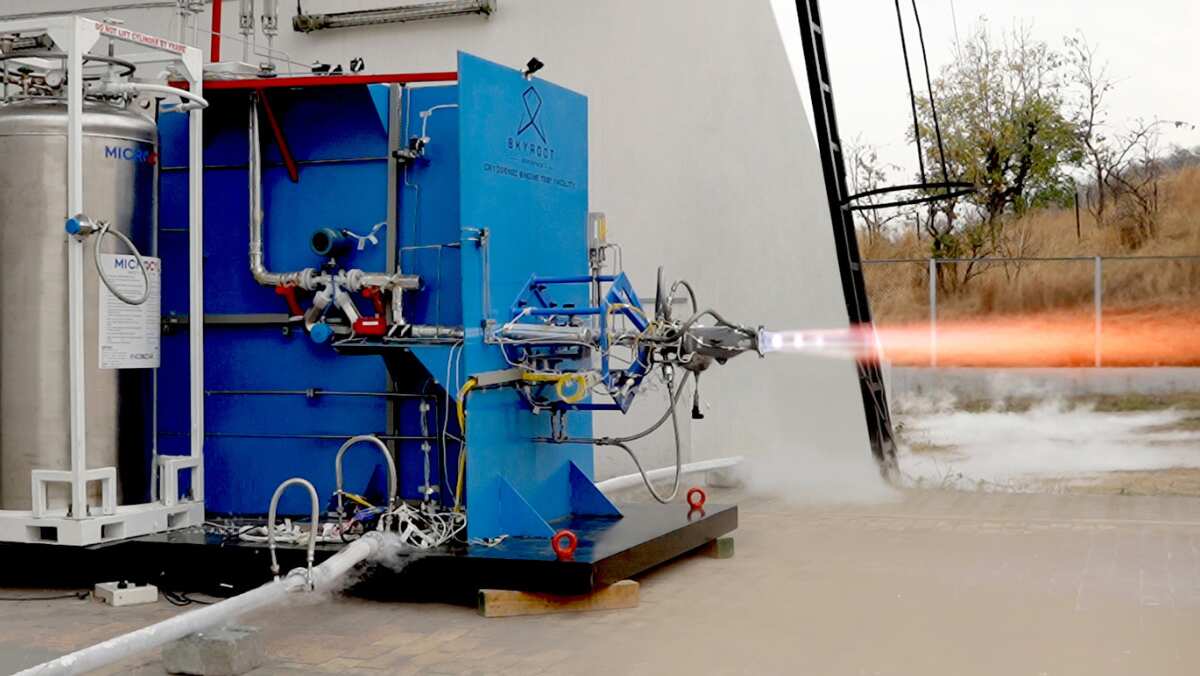
Skyroot Aerospace, the Indian firm that launched the country's first privately-built rocket has now announced a new milestone - the test firing of a 3-D printed Cryogenic Engine for a duration of 200 seconds. Cryogenic engines are among the most sophisticated engineering feats in rocketry and only a few nations and private firms possess this technology.
Cryogenic engines are highly-efficient and powerful and enable rockets to carry heavier payloads to space. WION spoke to Pawan K Chandana, Co-Founder, Skyroot Aerospace to understand the significance of the test.
Also Read | ChatGPT can propel four-day work-week? Here's what Nobel Prize-winning economist says

Cryogenic engines are powered by super-cooled fuels, that are stored at temperatures below -150 degrees centigrade. The most common cryogenic fuel combination is liquid hydrogen and liquid oxygen. However, Skyroot's latest engine known as 'Dhawan-II' is powered by Liquified Natural Gas(comprising more than 90%methane) and Liquid oxygen.
The engine has been named so, as a tribute to Prof. Satish Dhawan, an pioneer who made great contributions to India's space programme.
Also Read | North Korea says US-South Korea drills driving tensions in Korean Peninsula to 'brink of nuclear war'
)
Trump says Russia has ‘lost control’ of its diesel industry, calls for end to ‘ridiculous, never-ending’ war
)
Asian Games: Indian women's hockey team thrash Indonesia 17-1, blasts 36 goals in 2 matches
)
Putin's United Russia party wins 355 seats in Duma election; 4 other parties cross threshold to enter parliament
)
AI kill switch explained: Why shutting down a dangerous AI may not be as simple as pressing a button
)
Delhi Air pollution: Strict crackdown on waste burning
)
‘0% chance’: Nvidia CEO Jensen Huang dismisses AI extinction fears by 2030
)
Samay Raina-Mukesh Chhabra controversy explained: What happened over girlfriend joke on India's Got Latent?
)
Four decades after leaving Kolkata, the Birlas may be coming back for more
)
Apple reportedly building AI server with M8 Ultra chips, may use Nvidia technology
)
BTS' fans question iHeartRadio’s treatment of group after brief festival set
)
Glitch in the matrix caught on camera: Woman vanishes after talking to reporter
)
IIT Bombay tensions ease after three-hour open house; director’s assurances pacify students
)
Samsung raises Galaxy S26 prices by Rs 20,000: Here’s what each model now costs
)
J&K Assembly Session begins amid chaos: BJP, ruling alliance clash as statehood demand dominates
)
Bessent meets China’s He Lifeng to prepare for Trump-Xi summit
)
Four Hands, Two Sonatas ep (5-8) review: Song Kang Lee, Jun Young elevate the emotional stakes after a tragic turn
)
The Verdict | The Mecca Agreement is under scrutiny as Houthis attack Saudis
)
Who was Sheikh Ahmed bin Rashid Al Maktoum? From Dubai Royal family to police, sports and racing
)
Saudi Arabia exits China-led mBridge digital currency platform amid Saudi-Houthi conflict
)
Maharashtra TET paper leak: Chargesheet reveals papers smuggled in shoe insoles for Rs 8,000
)
'Lot of things to learn from experienced players': Jayasuriya backs Rohit, Virat for 2027 ODI World Cup
)
Taylor Swift has a 'proud wife' moment as Travis Kelce scores first touchdown of season: 'That’s my husband!'
)
Chancellor Friedrich Merz vows to stay on as exit polls signal major poll setback
)
Pakistan kills 3 civilians in air strikes on Afghanistan, Taliban vows retaliation | Gravitas
)
Mahabharat actor Saurav Gurjar arrested in Hyderabad, sent to 14-day judicial custody in sexual exploitation case
)
North Korea's nuclear tests triggered 1,399 earthquakes: Earth is still shaking | Gravitas
&im=FitAndFill=(700,400))
New OTT releases this week (September 21-27, 2026): Shaque: Trust No One, Hunkkaar, Don’t Be Shy- 5 new titles coming to Netflix, Prime Video and more
)
WATCH | Mysterious lights over Tehran caught on video. Drone, aircraft or something else?
)
What is Yom Kippur and why is it celebrated? All you need to know about the Jewish Day of Atonement
)
Iranian airlines to shut worldwide on Sept 23, Bessent warns of US banking ban
)
White House TV pool halts Trump coverage after CNN barred from UNGA events
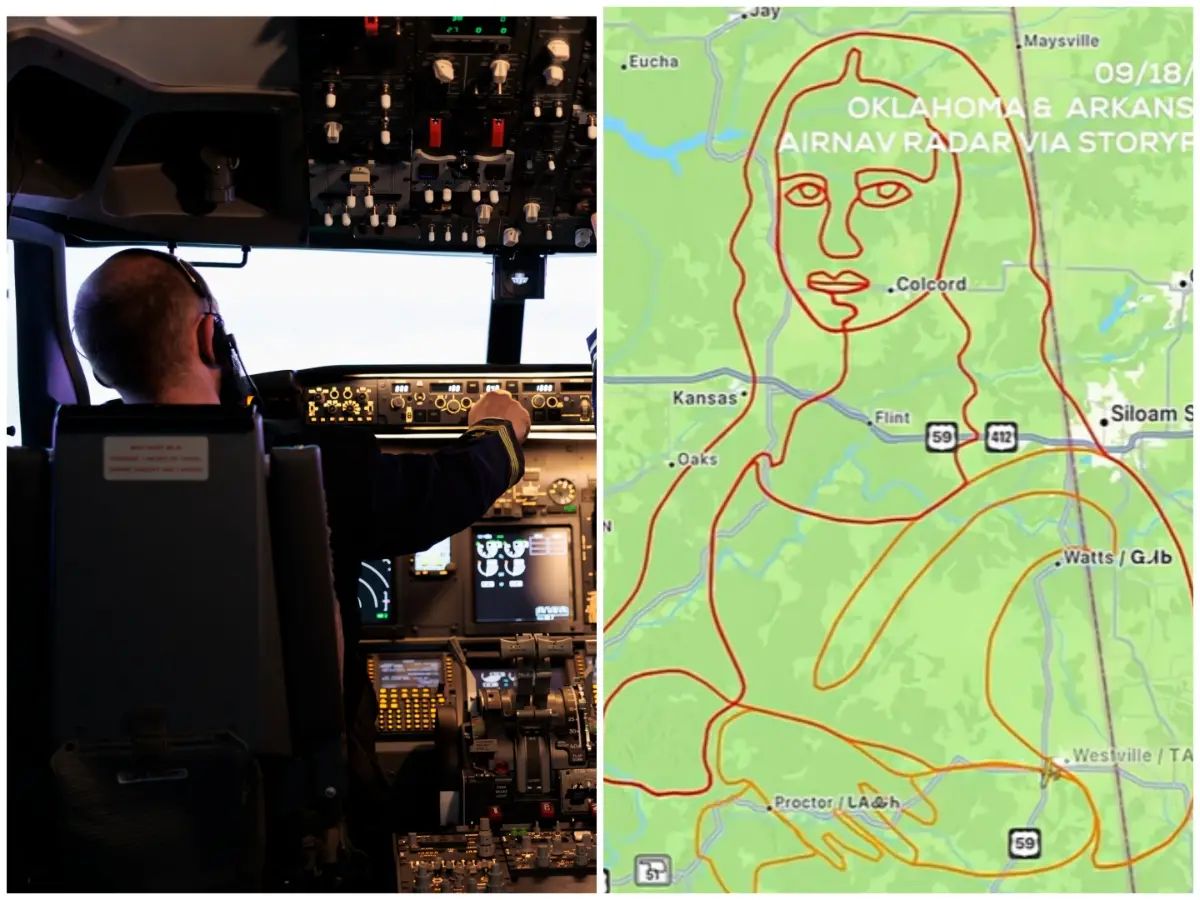)
Pilot recreates Mona Lisa in sky over Oklahoma and Arkansas in four-hour flight: VIDEO
)
Fitna Al-Khawarij: Decoding biggest security threat to Pakistan | Gravitas
)
Jailer 2: Vidya Balan joins Rajinikanth's upcoming film as Kantha | Watch
)
Microsoft executive called AI training the ‘largest theft of labour in human history’
)
40-foot waves crash into cruise ship in dangerous stretch near Antarctica. Watch
)
Mystery explosions rock Aleppo, residents told to stay indoors
)
BTS fans mock iHeartRadio’s day 2 turnout after short set controversy
)
The Scandal, why so scandalous? Ji Chang Wook leaves you gasping for air
Queried about the rationale behind going for a Methane-Liquid oxygen fuel combination, Pawan explained to WION that using alternative cryogenic or semi-cryogenic fuels such as liquid hydrogen or kerosene had certain limitations. "Liquid hydrogen is a very complex fuel to store and handle.
It is also highly explosive in nature and it is expensive as well. Kerosene is not a clean burning fuel like methane and leaves behind carbon soot deposits" he said.
In November 2022, Skyroot had launched 'Vikram-S', an upper-atmospheric research rocket. However, this doesn't qualify as a spacefaring rocket. It is to develop their own spacefaring rockets that the firm has been developing and testing engines such as 'Dhawan-II'.
The firm is developing two spacefaring rockets Vikram-1 and Vikram-2, both of which are four-stage rockets, with three solid-fuel stages and a liquid-fuelled upper stage. While Vikram-1 uses earth-storable fuels in its upper stage, Vikram-2 will be using a cryogenic upper stage, thus helping it carry more payloads to space.
Watch | Gravitas: Is India emerging as a space leader?
"Vikram-1 is meant to carry 290kg to low earth orbit, whereas Vikram-2 with its Cryogenic(methane-liquid oxygen) engine can carry upto 400kg to the same orbit. This new engine offers a 40percent increase in payload carrying" Pawan said.
He also explained that methane was the most preferred fuel choice, as it was denser than hydrogen and could be stored in smaller tanks. He added that burning of methane released very less carbon and that it is even possible to generate green methane from renewable energy.
Having methane-powered engines given the firm confidence to test and build re-usable rockets as well.
According to the firm, the 'Dhawan-II' cryogenic engine delivers a thrust of 3.5 Kilo Newton, a significant upgrade over the 1.0 Kilo Newton thrust 'Dhawan-I' cryogenic engine that they had test fired in 2021. The firm is looking to launch their maiden spacefaring rocket Vikram-1, by the end of 2023, Pawan told WION.
WATCH WION LIVE HERE
You can now write for wionews.com and be a part of the community. Share your stories and opinions with us here.
