India to develop 12 sovereign AI models and launch commercial chip production: Top Indian Minister Ashwini Vaishnaw

&imwidth=600&imheight=450&format=webp&quality=medium "India to develop 12 sovereign AI models and launch commercial chip production: Top Indian Minister Ashwini Vaishnaw")
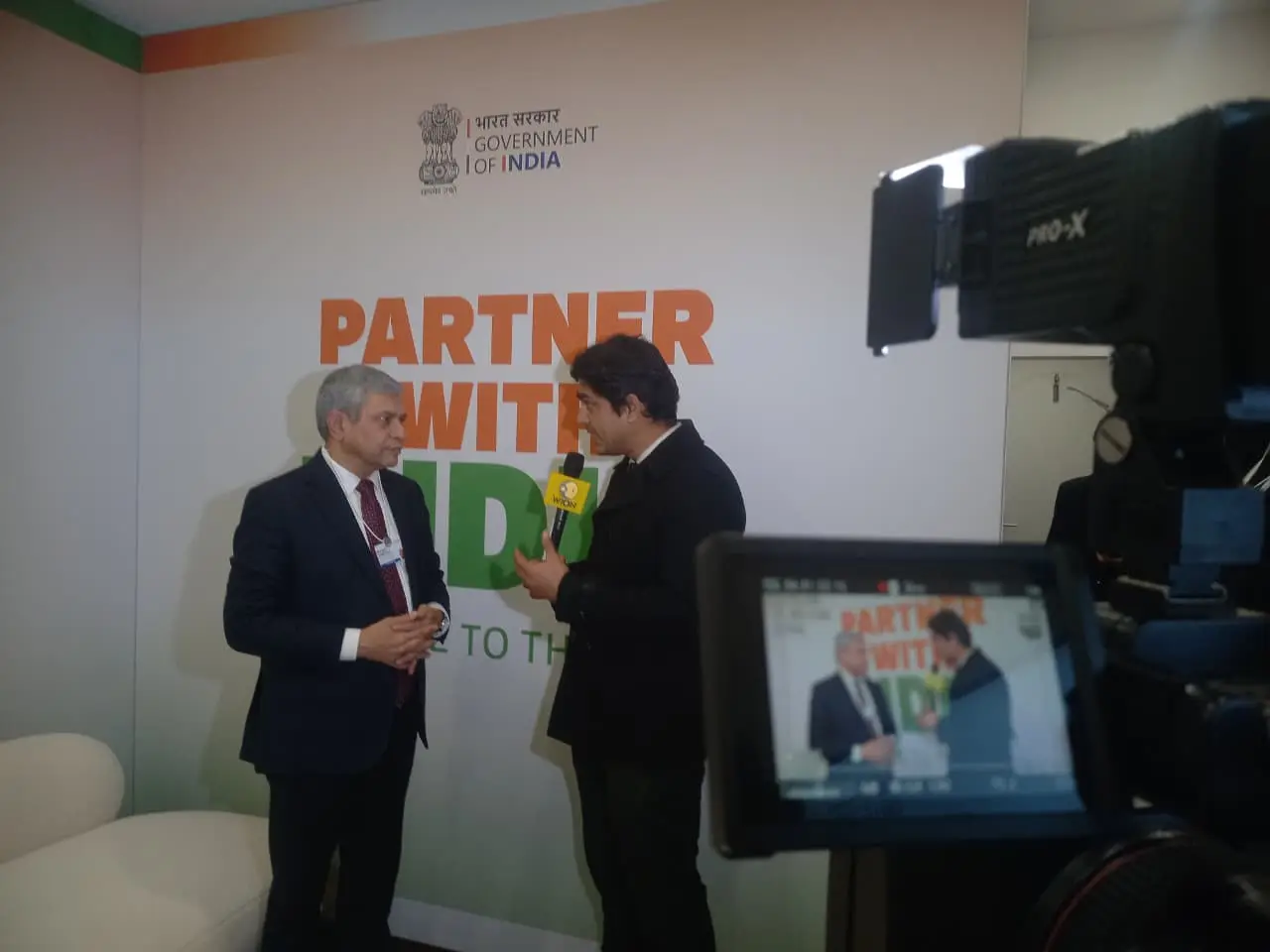
India to develop 12 sovereign AI models and launch commercial chip production: Top Indian Minister Ashwini Vaishnaw Photograph: (WION)
The announcements come as India prepares to host the AI Impact Summit, focusing on productivity gains, technology access and safety guardrails.
India is building 12 sovereign artificial intelligence models tailored to specific national problems, India's top Minister Ashwini Vaishnaw has said at the World Economic Forum in Davos.
The minister described the models as part of a five-layer national AI strategy, saying they have already been tested in real environments with strong results. “We are developing a bouquet of 12 sovereign models which will be focused on very specific types of problems that they can solve,” he said while speaking to WION's Sidhant Sibal. “Many of these models have already been tested in real environments, and the results are very good.”
He also announced progress in semiconductors, with four of ten approved plants now in pilot production and one set to begin commercial output in the last week of February. India aims to advance from 28nm to 2nm technology by 2035, he added.
On infrastructure, Mr Vaishnaw confirmed the first section of the Mumbai-Ahmedabad high-speed rail, Surat to Bilimora, will open in August 2027, with the project making “very good progress”. The announcements come as India prepares to host the AI Impact Summit, focusing on productivity gains, technology access and safety guardrails. The minister holds the portfolio of Minister for Railways, Information & Broadcasting, Electronics & Information Technology.
Full interview:
Sidhant Sibal: With me is Minister Ashwani Vashnav, who has been wearing several hats. Sir, welcome to WION here in Davos. And the first question to you is the big India message from Davos. What is it? We have a big pavilion. We have the message of ‘Partner with India’, but if you can talk much more about India’s presence here at Davos.
Trending Stories
&imwidth=280&imheight=210&format=webp&quality=medium)
&imwidth=280&imheight=210&format=webp&quality=medium)
&imwidth=280&imheight=210&format=webp&quality=medium)
&imwidth=280&imheight=210&format=webp&quality=medium)
&imwidth=280&imheight=210&format=webp&quality=medium)
&imwidth=280&imheight=210&format=webp&quality=medium)
&imwidth=280&imheight=210&format=webp&quality=medium)
&imwidth=280&imheight=210&format=webp&quality=medium)
&imwidth=280&imheight=210&format=webp&quality=medium)
&imwidth=280&imheight=210&format=webp&quality=medium)
&imwidth=280&imheight=210&format=webp&quality=medium)
&imwidth=280&imheight=210&format=webp&quality=medium)
&imwidth=280&imheight=210&format=webp&quality=medium)
&imwidth=280&imheight=210&format=webp&quality=medium)
&imwidth=280&imheight=210&format=webp&quality=medium)
&imwidth=280&imheight=210&format=webp&quality=medium)
&imwidth=280&imheight=210&format=webp&quality=medium)
&imwidth=280&imheight=210&format=webp&quality=medium)
&imwidth=280&imheight=210&format=webp&quality=medium)
&imwidth=280&imheight=210&format=webp&quality=medium)
&imwidth=280&imheight=210&format=webp&quality=medium)
&imwidth=280&imheight=210&format=webp&quality=medium)
&imwidth=280&imheight=210&format=webp&quality=medium)
&imwidth=280&imheight=210&format=webp&quality=medium)
&imwidth=280&imheight=210&format=webp&quality=medium)
&imwidth=280&imheight=210&format=webp&quality=medium)
&im=FitAndFill=(700,400)&imwidth=280&imheight=210&format=webp&quality=medium)
&im=FitAndFill=(700,400)&imwidth=280&imheight=210&format=webp&quality=medium)
&imwidth=280&imheight=210&format=webp&quality=medium)
&imwidth=280&imheight=210&format=webp&quality=medium)
&imwidth=280&imheight=210&format=webp&quality=medium)
&imwidth=280&imheight=210&format=webp&quality=medium)
&imwidth=280&imheight=210&format=webp&quality=medium)
&imwidth=280&imheight=210&format=webp&quality=medium)
Minister Ashwini Vaishnaw: The entire world is going through a very serious turbulence. The old rules are changing. The old alliances and partnerships are changing. Under such circumstances, India is today seen as a trusted value chain partner, as a very vibrant democracy, as a country which delivers, as a leadership which is focused on inclusive growth. So, that is the main message which the world today is giving to us in panel after panel, discussion after discussion, meeting after meeting. People trust India as a country with which they can work, co-create, co-develop new technologies, new solutions, and a country with which they can work very comfortably.
Sidhant Sibal: AI, which is a dominating issue here and globally as well. India is taking the lead on it. In fact, one of your clips is going viral from earlier today, your meeting there. But what's the vision of India when it comes to AI and leading it at a time when this is the buzzword everywhere?
Minister Ashwini Vaishnaw: So, if you look at the AI stack, it's in five layers. The top layer is the application layer. How do you use AI to get your return on investment? How do you use AI to have that efficiency gain, that productivity gain, that multiplier that AI can bring? That is where our IT companies have taken a big pivot, away from the old software services model. And now they are working towards providing AI-based solutions to the world. We are definitely going to be the leader in this first. The second layer is the model layer. Models today have become commodities. A model of 50 billion parameters can do 95% of the work that is required to be done, and you don't need a very large infrastructure to run a 50 billion parameter model. We are developing a bouquet of 12 sovereign models, which will be focused on very specific types of problems that they can solve. And that is giving us a huge capability. Many of these models have already been tested in real environments, and the results are very good. The third layer is the chip layer. The semiconductor ecosystem is developing very good. We had a semiconductor round table yesterday. Each and every semiconductor industry leader was 1 21st January, 2026 super happy with the performance. And it's a very complex thing. So, we are cognizant of the difficulties that we are facing and working meticulously to solve those. The fourth layer is the infra layer. Today, we have confirmed investments of $70 billion in the AI data centres. And hopefully in the coming months, we'll have another $50 billion investment coming into India. So, that will take the investment in AI data centres to $120 billion, or maybe even more than that. The final layer, the fifth layer, is the energy layer. So, this is where nuclear energy is going to be very important. In the fifth industrial revolution, which is going to be driven by AI, energy is going to be a major input. So, that's why our Prime Minister has given so much emphasis on getting nuclear energy opened up and developed in our country, so that we keep getting the most vital ingredient in the fifth industrial revolution. So, we are working on all five layers.
Sidhant Sibal: Five layers, and perhaps much will be talked about when India hosts the AI summit. What is the focus? How important will the AI summit be? Almost 100 countries have been sent an invitation. Many of them will be present at the head of government leaders' level. So what is India looking for in terms of deliverables by hosting this summit?
Minister Ashwini Vaishnaw: Three major objectives. Objective number one, as the name of the summit indicates, AI Impact Summit. What is the impact of AI? How do you bring ROI? How do you improve productivity? How do you add that value in people's lives and industries' lives? That is the first. Second, make technology accessible to all. Our Prime Minister always focuses on democratizing technology. So, how do you make technology accessible, available to all? The third deliverable out of that summit is: AI has great capabilities, but there are certain harms which AI can do; how do you put the right guardrails in the whole new technology, so that the harms can be controlled and the benefits can be harnessed?
Sidhant Sibal: Sir, you were in Washington. You were invited for the critical minerals meeting that took place, led by the United States. What were the conversations like, and how can India play an important role when it comes to dealing with critical minerals and critical mineral chains?
Minister Ashwini Vaishnaw: So, the critical mineral value chain is very complex. Multiple players have to play their roles. Minerals are available, but getting them into useful products requires a lot of refining, a lot of processing. We today have collaborations with Japan, with South Korea, with Singapore, with Australia, with all of Europe and with the US now, where these collaborations can play a major role in securing our critical minerals value chain.
Sidhant Sibal: My final two questions, first on semiconductors and chip manufacturing. Any good news?
Minister Ashwini Vaishnaw: Yes. Out of the 10 plants which are approved, four had started pilot production in the last few months, and one of them is going to start commercial production in the last week of February. So this is a very significant milestone for us. We must understand the complexity of the semiconductor industry. You recall, in our childhood, we would write the name on a piece of rice. That is the precision required in the semiconductor industry. So, it's a very complex thing, the most complex thing that human beings have ever done. So, that's why we are very cognizant of the difficulties, and we are focused on solving them. Very meticulously, very methodically, we have worked in creating the value chain, the entire ecosystem. We are first starting with 28 nm, then we'll be going to 7 nm, then to 3 nm, then to 2 nm, in a very methodical way. By 2035, we'll become one of the major semiconductor nations in the world.
Sidhant Sibal: My final question, and this is pertaining to your different hat, that's the railway sector. The bullet train is being much talked about. We saw the Japanese foreign minister visiting India. There were conversations on that as well. When can we see the first Indians using that bullet train which is much talked about between Ahmedabad and Mumbai?
Minister Ashwini Vaishnaw: 2027
Sidhant Sibal: And what's the progress like, any update?
Minister Ashwini Vaishnaw: Very good progress. The project is progressing very well. Construction for the first section will be ready by December of 2026 itself. First section will be Surat to Bilimora. The second section will be from Vapi, all the way to Ahmedabad. That will be ready in the first half of 2027. And then up to Tane, then up to Mumbai. Progress is absolutely good. And, we should be opening the first section, Surat to Bilimora, in August 2027.
