
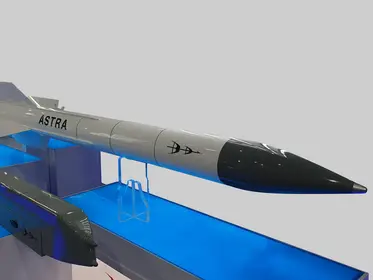
&imwidth=800&imheight=600&format=webp&quality=medium "India's Astra missile: The sky warrior that hits before the enemy even knows what's coming")
July 11, 2025 will be remembered as the day India's defense dreams took flight. When two Astra missiles roared off the Odisha coast and destroyed their targets with deadly precision, they weren't just hitting practice drones – they were announcing to the world that India now builds weapons as good as any superpower.
The Game-Changer That Flies at Lightning Speed
Picture this: An enemy fighter jet approaching Indian airspace, confident that our pilots will have to get dangerously close to engage. Suddenly, an Astra missile – traveling at four and a half times the speed of sound – appears out of nowhere and destroys the threat before the enemy pilot even realizes he's been detected.

This is exactly what happened during the test. Our Su-30 MKI fighter launched two Astra missiles, and both scored perfect bullseyes.Zero misses, two direct hits.
What Makes Astra So Deadly?
The lethality of the Astra comes from a combination of its long reach, its smart brain, and its powerful sting.
Trending Stories
)
No Pandya as Auqib Nabi earns maiden ODI call-up; Mayank returns for WI T20Is| check full squads
)
Trump praises India’s Opium crackdown, hails anti-drug efforts
)
Sydney Sweeney defends provocative ad choice, the internet is still not impressed
)
Former India player Diana Edulji wants Smriti Mandhana to replace Harman as skipper at the earliest
)
Trump calls Canada-EU associate membership plan ‘laughable’ and threatens 'very serious tariffs'
)
Protests erupt over migrant housing plan in Piddington
)
Shahzad Bhatti Network declared terrorist organisation under UAPA: Govt order
)
Europe wants a common playbook for security threats, seeks security beyond NATO
)
240-million-year-old bizarre 'pig with a tusk' creature creates new dilemma over origin of dinosaurs
)
Formula One reveals the 2027 race calendar; Monaco to host sprint race for the first time
)
All Indian goods to get duty-free access to New Zealand
)
Bigg Boss 20: Mahhi Vij reveals she lost Yuva role to Kareena Kapoor; 'didn’t work out in my favour'
)
Lionel Messi for 2026 Ballon d’Or over Mbappe and Yamal, says Diego Simeone
)
US House votes 417-3 to pass Ratepayer Protection Act targeting AI data center electricity costs
)
Hong Kong unveils 11 new measures to boost birth rates, offers higher cash bonuses and housing perks
)
Former OpenAI researcher warns of growing risks from Artificial Intelligence
)
Veteran actor Anant Nag honoured with Indian cinema’s highest award
)
Wildfire tears through forests in Spain's Valencia
)
AUS vs SA: Steve Smith still gets 'little flashbacks' from sandpaper gate
)
Pakistan naval vessel returns to harbour with 'severe damage' after collision with Indian warship in Arabian Sea
)
Fed raises rates for first time in 3 years, Kevin Warsh defies Trump as inflation mounts
)
Katrina Kaif’s postpartum weight is not the problem; your gaze is
)
Taiwan seeks deeper India ties as direct flights restart soon and chip projects advance
)
Daayra movie review: Kareena Kapoor, Prithviraj Sukumaran shine in Meghna Gulzar’s cop-versus-cop crime thriller
)
Saudi Vs Houthis: Yemeni military rebels clash with Houthis
)
Pak batter Rizwan's petition against being questioned by cyber crime agency rejected by court
)
US trade tariff: 100% tariff targets Russian buyers amid trade tensions
)
Pakistan: Imran Khan's sons Kasim & Sulaiman claim their father is 'tortured' in jail
&im=FitAndFill=(700,400))
New OTT releases this week (September 14-20, 2026): Lust Stories 3, Waiting Hai, Irumudi- 5 new titles coming on Netflix, Prime Video and more
)
Ebola outbreak: WHO sees encouraging signs in fight against Ebola outbreak
)
Trump gets new power to hit India, China with up to 100% tariffs as US Senate clears Russia sanctions bill
)
Prime Minister Narendra Modi's birthday: Italian PM Meloni sends birthday wishes
)
‘Imagine 50 AI fighters cornering one manned jet’: India’s mobbing doctrine eyes a new era of air warm
)
Saudi vs Houthis: Riyadh claims to have shot Houthi drone targeting Mecca
)
US Treasury rallies global financial institutions for Op Economic Outcast to isolate Iran
)
India breaks silence on US Russia sanctions bill, 100% tariff threat: ‘Committed to energy security’ for 1.4 billion
)
Want to get married within a year? Why 18 lakh people rush to Jaipur for ‘sacred henna’
)
Pakistan boycotts chess match against Israel at Olympiad
)
UN General Assembly 2026: What is veto power. Which countries have it and how does it work?
&im=FitAndFill=(700,400))
Suriya and Jyothika say ‘I do’ again after 20 years! See their dreamy wedding pics
)
Abhishek Sharma rises to No. 2 in T20Is; ENG’s Robinson 3rd after record Pakistan Tests
)
The Early Spring season 2 is happening, but fans have one request - 'don't change the actors'
Beyond Visual Range Combat:Most people think air battles happen like in movies – pilots seeing each other and then fighting. In reality, modern air combat is about killing your enemy before they even know you exist. Astra can hit targets over 100 kilometers away. To put this in perspective, if a pilot in Delhi fires an Astra, it can destroy an enemy aircraft near Gurgaon. The enemy won't even appear as a tiny dot on the horizon.
The Smart Guidance System:Getting a missile to a maneuvering target 100 km away requires more than just pointing and shooting. Astra uses a sophisticated two-stage guidance system:
Mid-Course Guidance:After launch, the missile flies on autopilot using its own Inertial Navigation System, receiving continuous updates from the launch aircraft via a secure data link. Think of this as getting live GPS directions to the target's exact neighborhood.
Terminal Guidance:For the final 20 km, the missile's own "electronic brain" – the indigenous Active Radar Homing (ARH) Seeker– takes over. It locks onto the enemy jet and chases it down relentlessly.This "fire-and-forget" capability means our pilot can turn away safely while the missile completes its mission on its own.
The Explosive Warhead:To ensure a kill, the Astra doesn't need a direct hit. It's equipped with a 15 kg High-Explosive Pre-fragmented warhead.
How it works:A smart Proximity Fuzedetects when the missile is at its closest point to the enemy aircraft and detonates the warhead. This unleashes a devastating cloud of high-velocity shrapnel that shreds the target's fuselage, wings, and engines, ensuring destruction.
The Perfect Marriage: Astra + Indian Fighter Jets
Su-30 MKI Becomes a Long-Range Killer: The Su-30 MKI was already a powerful fighter jet – think of it as a flying fortress with twin engines and advanced radar. But without long-range missiles, it was like having a powerful telescope with no way to act on what you see. Astra changes everything. Now the Su-30 can spot enemies from far away and eliminate them while staying safely out of harm's way.
Tejas Gets Its Knockout Punch
India has successfully test-fired the Astra beyond-visual-range air-to-air missile (BVRAAM) from its indigenous LCA Tejas AFMK1 fighter jet off the Odisha coast in mid of March.This crucial test paves the way for the missile's full integration, giving our homegrown Tejas, often criticized for being lightweight, a set of truly sharp teeth.
Armed with the Astra, even the smaller Tejas becomes a serious threat that enemy pilots cannot ignore. It's like giving a skilled boxer a knockout punch; the missile can engage targets from over 100 km away using advanced guidance and navigation systems for deadly accuracy.This proves that size doesn't matter when you have the right weapon
Looking ahead, the upcoming Tejas Mk-2 and imported Rafale jets will also carry the Astra, creating a standardized, Made-in-India missile system across the entire Indian Air Force fleet.
Three Generations of Sky Warriors
1. Astra Mk-1: The Reliable Workhorse
Range:110 km in head-on attacks, 20 km in tail chase
Speed:Mach 4.5 (four and a half times faster than sound)
Length:3.6 meters
Diameter:178 mm
Weight:154 kg
Propulsion:Solid Propellant
Already operational with Indian Air Force
2. Astra Mk-2: The Super Sprinter
Range:160 km (coming by 2026)
Length:~3.7 meters (Projected)
Diameter:178 mm (Projected)
Weight:~160 kg (Projected)
Propulsion:Dual-Pulse Solid Propellant
Dual-Pulse Motor:Think of a car with two separate engines. The first engine gets the missile to the target area super fast, then when that runs out of fuel, the second engine kicks in to give it another burst of speed for the final kill. It's like having a relay race where both runners are in the same body.
3. Astra Mk-3 (Gandiva): The Future Monster
Range:350 km (under development)
Length:> 4 meters (Projected)
Diameter:~340 mm (Projected)
Weight:~500 kg (Projected)
Propulsion:Solid Fuel Ducted Ramjet (SFDR)
Ramjet Technology:Regular rockets are like people holding their breath while running – they carry all their oxygen with them. A ramjet is like a person who breathes while running – it sucks in air from the atmosphere to burn its fuel.This makes it incredibly efficient and allows it to fly much farther. It's the difference between a marathon runner who holds his breath versus one who breathes normally.
Breaking Down the Technical Magic in Simple Words
Radio Frequency (RF) Seeker Explained: Think of the RF seeker as the missile's "electronic nose" that can smell enemy aircraft from miles away. Here's how it works in simple terms:
The Search:Like a person shouting "Hello!" in a cave, the seeker sends out radio waves.
The Echo:When these waves hit an enemy plane, they bounce back like an echo.
The Hunt:The seeker calculates exactly where the enemy is based on how long the echo took to return.
The Kill:It guides the missile straight to the target, even if the enemy tries to escape.
Why This Matters:Even if enemy pilots try to jam our communications or fly in zigzag patterns to confuse the missile, the RF seeker keeps tracking them like a bloodhound following a scent trail.
Why Every Indian Should Be Proud
Complete Self-Reliance:No more begging other countries for weapons or facing supply cuts during tensions. Our pilots will always have ammunition made by our own hands.
Economic Victory:Over 50 Indian companies – from big names like Hindustan Aeronautics Limited to small private firms – contributed to building Astra.This creates thousands of jobs and builds our industrial strength.
Respect in the Skies:Enemies can no longer assume Indian fighters are harmless. Every Su-30, Tejas, and Rafale carrying Astra becomes a long-range threat that demands respect.
Budget-Friendly Defense:Indigenous missiles cost a fraction of imported ones. Our Air Force can now stock up properly without emptying the national treasury.
The Bigger Defense Revolution
From Importer to Exporter:With Astra's success, India can now sell these missiles to friendly countries, earning foreign exchange while helping allies defend themselves.
Technology Transfer:The knowledge gained from building Astra's RF seeker will help India develop other advanced weapons – from naval missiles to air defense systems.
Industrial Ecosystem:Building Astra required creating an entire network of specialized companies and skilled workers. This ecosystem will now help India build even more advanced weapons.
What This Means for Our Enemies
In modern air warfare, the first rule is simple: "First to See, First to Shoot, First to Kill." The side that detects and fires first usually wins the battle.
Astra gives Indian pilots this crucial first-strike advantage. Enemy aircraft approaching Indian airspace now face a deadly dilemma – they can be destroyed from distances so far that they won't even know what hit them.
The Psychological Impact:Knowing that Indian fighters carry world-class, long-range missiles changes the entire calculation for any potential aggressor. It's not just about the weapon itself – it's about the message it sends: India is no longer dependent on anyone for its defense.
The Road Ahead
As Astra integrates across more aircraft platforms and newer versions enter service, India's airspace becomes increasingly impregnable. The successful test with indigenous RF seekers isn't just a technological milestone – it's a declaration of independence in defense technology. July's test proved that Indian scientists and engineers can build weapons that match the world's best. From the drawing boards of DRDO laboratories to the missile pylons of our fighter jets, Astra represents the best of Indian innovation transformed into a guardian of Indian skies.
Our pilots now fly with the confidence that comes from carrying truly Made-in-India firepower. In the unforgiving arena of aerial combat, this isn't just about national pride – it's about ensuring our warriors return home safely while making our enemies think twice before challenging the Indian Air Force. The message is crystal clear: India's defense industry has grown up, and our skies are now protected by missiles that are as good as any in the world.
