

&imwidth=800&imheight=600&format=webp&quality=medium "India may need 2-3 years to replace 3 strategic satellites lost in 12 months")
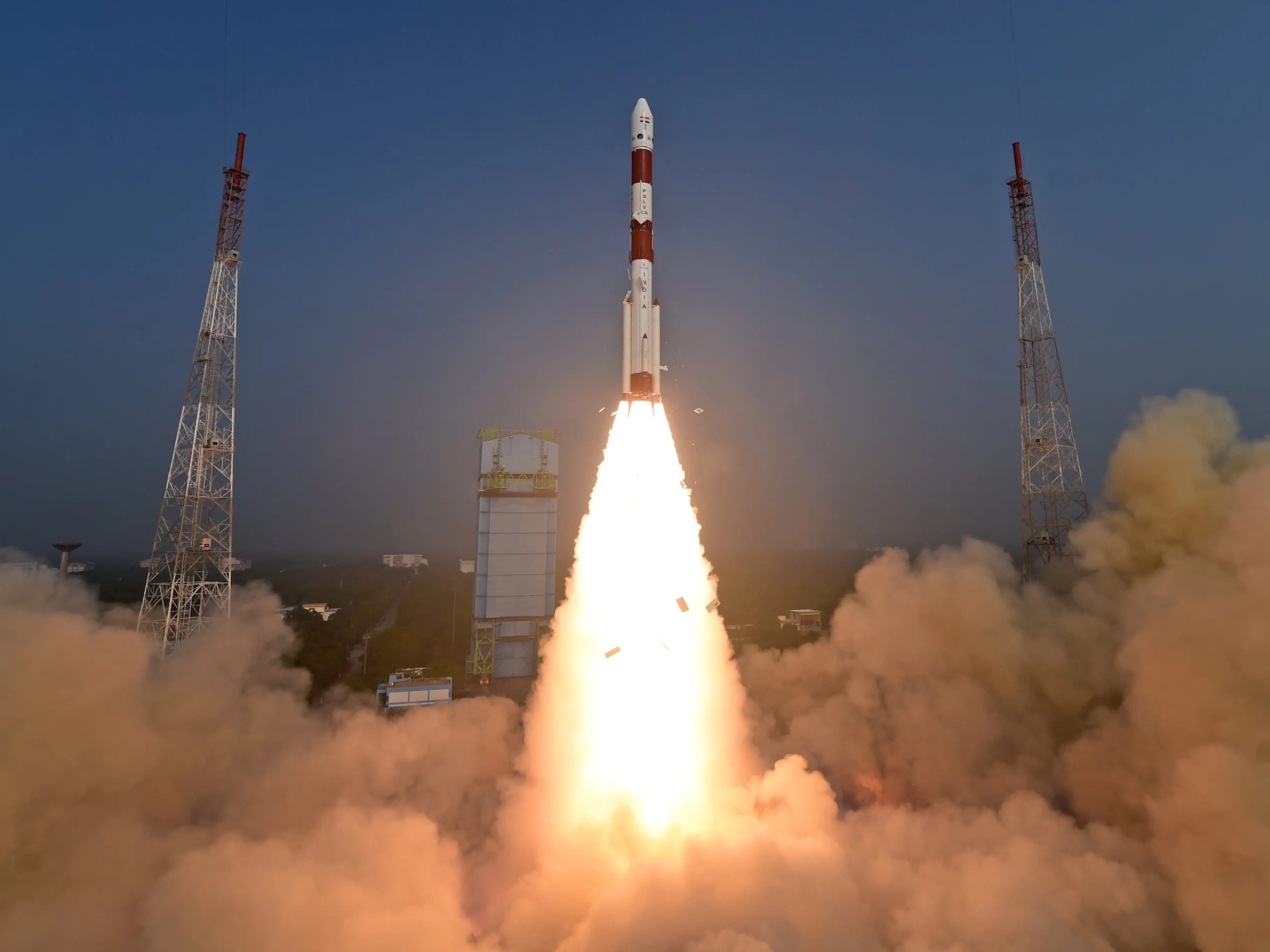
Of the six space launch missions that the Indian space agency ISRO performed from home soil in the last 12 months, three have failed. These are: GSLV-F15/NVS-02(satellite failure) in Jan 2025, PSLV-C61/EOS-09(mid-flight rocket failure and satellite loss) in May 2025, and the PSLV-C62/EOS-N1(mid-flight rocket failure and satellite loss) in January 2026. All three Government-funded satellites lost in these failed missions were critical for India's national security. While it is certain that ISRO will return with successful missions and replace these satellites, it is estimated that India would need between two to three years to replace all three national security satellites lost in the past year.
50-55% of an ISRO satellite's parts are imported
According to ISRO, while Indian industries supply majority of the materials that go into the country's rockets and satellites, few critical materials and space-grade electronics components are still being imported. The import component is around 10% for a rocket and around 50 - 55% for a satellite. This includes memory chips, sensors, onboard computers, relays and other items. These are imported predominantly because of non-availability of certain critical technologies in India.
While some of these parts are available off-the-shelf from international vendors, some are custom-made and take time to be delivered, and are vulnerable to supply chain disruptions. It must be emphasized that each satellite that ISRO lost due to failures in the last year is a unique version: each one is of a different size, different mass, different technological capability, which warrants different types of components from various sources.
Satellite assembly, integration and testing
Even when all these parts are available, it takes several months, even years, for a whole satellite to be assembled, integrated and tested. Given that ISRO builds and assembles most of its satellites at its own facilities, ISRO would have to re-allocate its human resources to work on re-doing failed missions, while prioritizing various missions that are in different stages of implementation.
Trending Stories
&imwidth=180&imheight=135&format=webp&quality=medium)
'Hire the robot, fire the human': Bill Gates's words hint at a bleak future
&imwidth=180&imheight=135&format=webp&quality=medium)
'Hell of a beautiful a**': Trump compliments Nicki Minaj as rapper joins him in Michigan rally
&imwidth=180&imheight=135&format=webp&quality=medium)
Clayface tops North American box office, Elizabeth Holmes documentary follows close behind
&imwidth=180&imheight=135&format=webp&quality=medium)
Harry Kane favourite to win 2026 Ballon d’Or ahead of Lamine Yamal and Kylian Mbappé
&imwidth=180&imheight=135&format=webp&quality=medium)
WATCH | Virat Kohli returns to training ahead of New Zealand ODI series
&imwidth=180&imheight=135&format=webp&quality=medium)
Fire breaks out at Delhi’s North Block, thick black smoke seen | VIDEO
&imwidth=180&imheight=135&format=webp&quality=medium)
Nagpur man fails to pay rent, allegedly prints fake Rs 500 notes worth Rs 37 lakh
&imwidth=180&imheight=135&format=webp&quality=medium)
IND vs NZ: Tilak Varma sets world record with most T20I catches in a year
&im=FitAndFill=(700,400)&imwidth=180&imheight=135&format=webp&quality=medium)
Why does this fighter jet have a golden window that looks like alien technology?
&imwidth=180&imheight=135&format=webp&quality=medium)
'I've done my work sincerely': AR Rahman on facing backlash over Ramayana soundtrack
&imwidth=180&imheight=135&format=webp&quality=medium)
Serbia’s student-led movement defeats Vucic’s party after 14 years in power: Why it matters
&imwidth=180&imheight=135&format=webp&quality=medium)
'He is a red flag': Ex-India strength and conditioning coach on Rohit's fitness regime
&im=FitAndFill=(700,400)&imwidth=180&imheight=135&format=webp&quality=medium)
Armoured vehicles vs main battle tanks: What is the real difference?
&imwidth=180&imheight=135&format=webp&quality=medium)
Brazil re-elects factory worker Lula for fourth term; Indian PM Modi congratulates 'dear friend'
&imwidth=180&imheight=135&format=webp&quality=medium)
Netanyahu warns Israelis of ‘existential threat’ from Iran, posts AI image of nuclear strike
&imwidth=180&imheight=135&format=webp&quality=medium)
Telangana unveils AI avatar of IT minister D Sridhar Babu at Hyderabad DevFest 2026
&imwidth=180&imheight=135&format=webp&quality=medium)
FIR filed against opposition MPs for ‘trespassing’ amid Jamia Millia students’ protest
&imwidth=180&imheight=135&format=webp&quality=medium)
‘That is a miss’: Ravi Ashwin questions Sooryavanshi’s demotion to No. 3 in 2nd T20I vs NZ
&im=FitAndFill=(700,400)&imwidth=180&imheight=135&format=webp&quality=medium)
Why do some fighter jets have two engines while others use one?
&imwidth=180&imheight=135&format=webp&quality=medium)
Who is Eyal Zamir, Israeli army chief, who reportedly clashed with Netanyahu over Iran?
&imwidth=180&imheight=135&format=webp&quality=medium)
'Already tired of his 9-to-5': Baby born with a moustache becomes internet sensation, video goes viral | Watch
&imwidth=180&imheight=135&format=webp&quality=medium)
Delhi's new entry rules for vehicles begin November 1. Here's all you need to know about the ban
&imwidth=180&imheight=135&format=webp&quality=medium)
Maldives opposition leader demands transparency on Muizzu Govt's Pakistan defence, security deals
&im=FitAndFill=(700,400)&imwidth=180&imheight=135&format=webp&quality=medium)
New OTT releases this week (October 26-November 1, 2026): Baththa, Akka, The One About Matthew Perry- 7 titles coming on Netflix, Prime Video and more
&imwidth=180&imheight=135&format=webp&quality=medium)
'I promised Gautam & Kotak Sir that...': Tilak Varma opens up on match-winning mindset against NZ
&imwidth=180&imheight=135&format=webp&quality=medium)
Donald Trump targets Bill Maher in lengthy post after White House dinner, says ‘Don’t call anymore’
&imwidth=180&imheight=135&format=webp&quality=medium)
Daler Mehndi controversy: Mika Singh’s team confirms Subodh Uniyal’s apology
&imwidth=180&imheight=135&format=webp&quality=medium)
'Clear overkill': Putin rejects claims Russia is behind mass protests in Europe
&imwidth=180&imheight=135&format=webp&quality=medium)
Pakistan airline PIA unveils new crew uniforms, faces online criticism
&imwidth=180&imheight=135&format=webp&quality=medium)
Elon Musk’s Grok releases first AI-generated Odyssey episode, months after promising ‘historically accurate’ full-length film
&imwidth=180&imheight=135&format=webp&quality=medium)
Israel elections 2026: How the country is gearing up for a crucial vote
&imwidth=180&imheight=135&format=webp&quality=medium)
Formula 1: Mercedes' Kimi Antonelli one race and ninth spot finish away from title after US Grand Prix win
&im=FitAndFill=(700,400)&imwidth=180&imheight=135&format=webp&quality=medium)
How do army night-vision systems see in almost complete darkness?
&imwidth=180&imheight=135&format=webp&quality=medium)
Can Putin cheat death? All about his daughter’s billion-dollar quest for immortality
ISRO must also carry out parallel design, development, testing of its ambitious scientific and exploratory satellite-specific missions such as Chandrayaan-4(to bring back samples from the moon) and Chandrayaan-5(also called LUPEX which is being developed with Japan's JAXA).
ISRO would need few months to identify, rectify PSLV failures
The PSLV-C61 rocket failed in May 2025. Since then, the rocket had not been flown(it was grounded for almost 8 months). The PSLV-C62 launch of January 2026 was the comeback flight of the workhorse rocket, but that has also suffered a failure. Going forward, ISRO would need to identify the root cause, rectify the issues, before flying the PSLV again.
ISRO does barely 6-8 launches in a year, must accommodate Gaganyaan
While ISRO has been saying that it would perform more than 10 launches in a year, this has never been demonstrated. Of the handful of launches that ISRO performs in a year, few tend to be commercial launches implemented for foreign customers. Therefore, ISRO must prioritize its launches to balance between requirements of Indian Government satellites and foreign commercial ones.
For the foreseeable future, ISRO is the only entity in India that will be able to launch satellites that weigh over 500kg. While private firms are making efforts to develop and fly rockets that can launch 100-300kg to low earth orbit, they have not flown to space till date. Even when they start launching, it would take a few successful launches before they are entrusted with national security satellites.
In the coming years, ISRO would have to perform a few test launches, unmanned launches in preparation for the Gaganyaan human spaceflight programme. For this, ISRO needs the all-new Human-rated LVM3 rocket(known as HLVM3). ISRO plans at least three unmanned HLVM3 flights(where a robot would be carried in the space capsule). This would place further stress on the limited number of launches that ISRO does annually, and could lead to further delays in the overall timeline.
ISRO's recent record of satellite replacement after failure
In August 2021, ISRO's launch of Earth-imaging Geostationary satellite GISAT-1 failed mid-flight, due to a malfunction in the Cryogenic stage of the GSLV rocket. As of January 2026, its replacement satellite has not been placed in orbit. It is being estimated that the replacement could be launched sometime in 2026. Weighing over 2,200kg, GISAT-1 is the largest Earth-imaging satellite to be built by ISRO. Almost four-and-a-half years after the GISAT-1 launch failure, the replacement is not in space .
In January 2025, ISRO's NVS-02 Navigation satellite could not be pushed to its destination orbit, after a thruster valve failed to open. Due to this, the satellite was stuck in its initial orbit and remains in an unusable condition. NVS-02 weighs over 2,200kgs and is part of a series of five NVS-series Position, Navigation, Timing satellites that ISRO is building. Despite having a couple of NVS-series satellites that are being built, ISRO has not been able to replace the failed NVS-02 by January 2026(within a one year period). NVS-02 is expected to be launched sometime in 2026.
Lost opportunities, financial losses
Going by rocket and satellite cost estimates, these three mission failures in the bygone year would have cost the Indian Government well over a hundred million dollars. Further, the Government would have to spend the same amount of money(adjusted for inflation) to re-do these missions. Also, one must factor in the cost of the lost opportunities. Because, in the absence of these indigenously developed strategic satellites, India would have to purchase similar satellite-based services from foreign firms.
