India-Japan Summit: How global energy shocks are bringing India and Japan closer

&imwidth=600&imheight=450&format=webp&quality=medium "India-Japan Summit: How global energy shocks are bringing India and Japan closer")
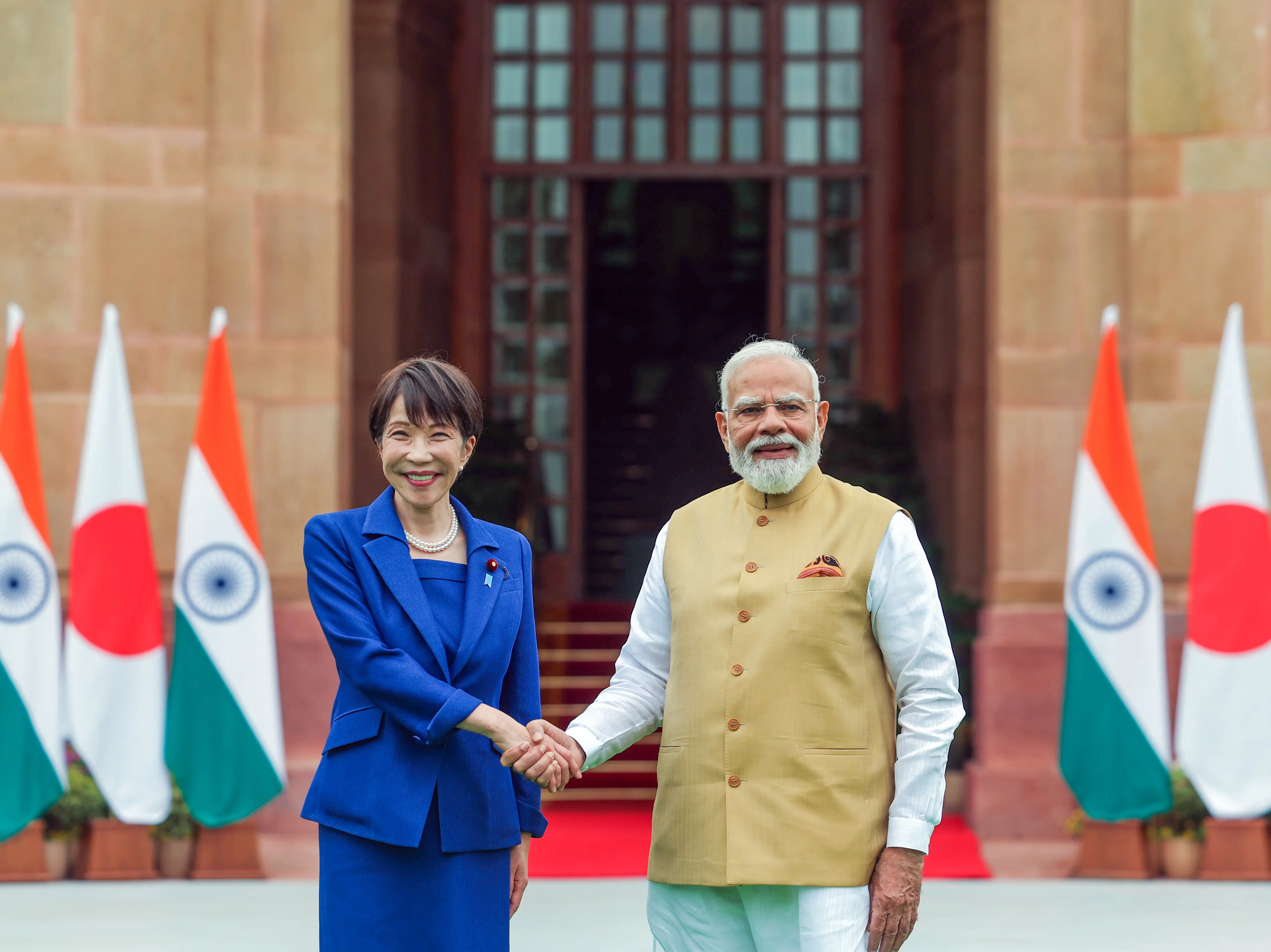
Prime Minister Narendra Modi and Japan’s Prime Minister Sanae Takaichi exchange a handshake ahead of bilateral talks at Hyderabad House, in New Delhi on Thursday. Photograph: (AFP)
India and Japan deepened energy cooperation at the 2026 summit, unveiling initiatives on energy resilience, petroleum stockpiling and clean energy amid global oil supply disruptions caused by Russia and Iran.
As Japanese Prime Minister Sanae Takaichi marks her first India visit for the 16th India-Japan Annual Summit, she is set to hold bilateral talks with Indian Prime Minister Narendra Modi. The two leaders are set to hold discussions over a range of topics on Thursday (Jul 2), aiming to strengthen ties between the two nations. Key areas of talks are expected to be economic security, investment growth, innovation and energy. As the high-stakes summit takes place in New Delhi, focus has also shifted to how global energy shocks are influencing the relations between the two countries.
The Russia-Ukraine conflict and Iran war have reshaped traditional energy supply routes, triggering uncertainty over global oil prices. These disruptions have prompted India and Japan, which are heavily dependent on oil imports, to look for alternative solutions to navigate the crisis.
India and Japan: Shared vulnerabilities
India imports 85-90 per cent of its crude oil needs, relying on supplies from the Middle East and discounted Russian oil. Japan also imports more than 85 per cent of its total energy needs, depending on crude and LNG supplies from the Middle East.
In response to the global energy shocks, India has diversified suppliers, expanded strategic petroleum reserves and increased refining exports. Meanwhile, Japan has focused on long-term LNG contracts, stockpiling, and energy efficiency measures.
How Russia-Ukraine war re-routed oil flows
Trending Stories
&imwidth=280&imheight=210&format=webp&quality=medium)
&imwidth=280&imheight=210&format=webp&quality=medium)
&imwidth=280&imheight=210&format=webp&quality=medium)
&imwidth=280&imheight=210&format=webp&quality=medium)
&imwidth=280&imheight=210&format=webp&quality=medium)
&imwidth=280&imheight=210&format=webp&quality=medium)
&imwidth=280&imheight=210&format=webp&quality=medium)
&imwidth=280&imheight=210&format=webp&quality=medium)
&imwidth=280&imheight=210&format=webp&quality=medium)
&imwidth=280&imheight=210&format=webp&quality=medium)
&imwidth=280&imheight=210&format=webp&quality=medium)
&imwidth=280&imheight=210&format=webp&quality=medium)
&imwidth=280&imheight=210&format=webp&quality=medium)
&imwidth=280&imheight=210&format=webp&quality=medium)
&imwidth=280&imheight=210&format=webp&quality=medium)
&imwidth=280&imheight=210&format=webp&quality=medium)
&imwidth=280&imheight=210&format=webp&quality=medium)
&imwidth=280&imheight=210&format=webp&quality=medium)
&imwidth=280&imheight=210&format=webp&quality=medium)
&imwidth=280&imheight=210&format=webp&quality=medium)
&imwidth=280&imheight=210&format=webp&quality=medium)
&imwidth=280&imheight=210&format=webp&quality=medium)
&imwidth=280&imheight=210&format=webp&quality=medium)
&imwidth=280&imheight=210&format=webp&quality=medium)
&imwidth=280&imheight=210&format=webp&quality=medium)
&imwidth=280&imheight=210&format=webp&quality=medium)
&im=FitAndFill=(700,400)&imwidth=280&imheight=210&format=webp&quality=medium)
&im=FitAndFill=(700,400)&imwidth=280&imheight=210&format=webp&quality=medium)
&imwidth=280&imheight=210&format=webp&quality=medium)
&imwidth=280&imheight=210&format=webp&quality=medium)
&imwidth=280&imheight=210&format=webp&quality=medium)
&imwidth=280&imheight=210&format=webp&quality=medium)
&imwidth=280&imheight=210&format=webp&quality=medium)
&imwidth=280&imheight=210&format=webp&quality=medium)
Western sanctions on Russia have pushed the majority of its crude supply towards Asia, with India becoming a key exporter, deepening its exposure to geopolitical discount-driven supply chains. In recent years, Russia’s share in Indian crude imports rose to 35-50 per cent from below 1 per cent before 2022.
Meanwhile, Japan has largely avoided the purchase of Russian oil due to sanctions, and has shifted its reliance on Middle Eastern suppliers and long-established LNG contracts.
Iran war and Strait of Hormuz disruption
The second energy supply shock came after disruption of maritime traffic of commercial vessels in the Strait of Hormuz due to the conflict in the Middle East. The blockade of the strategic waterway, the only maritime outlet for ports located in the Persian Gulf accounting for a quarter of global oil trade and one-fifth of LNG flows, has triggered a sharp rise in oil prices.
Both India and Japan have faced delays in supplies and price spikes due to the tension in the region.
India-Japan cooperation
Amid the volatile global situation, both India and Japan are increasing cooperation in energy diversification, maritime security, and clean energy transition technologies. Reaffirming their commitment to work on shared goals, Indian Prime Minister Narendra Modi and Japanese Prime Minister Sanae Takaichi announced key initiatives to strengthen energy security at the India-Japan Summit 2026 in New Delhi on Thursday (Jul 2).
“In today’s era of uncertainty, both India and Japan fully understand the importance of economic and energy security,” PM Modi said.
“We have launched a key initiative on energy resilience to tackle situations like oil shocks. Furthermore, our cooperation in batteries, green hydrogen, and nuclear energy will make a significant contribution to the global clean energy future. India and Japan view economic security as shared security and energy transition as a shared opportunity; we are committed to advancing this agenda together,” the prime minister added.
Speaking on the matter, PM Takaichi said, “In the area of energy security impacted by the Middle East situation, both Japan and India bear the responsibility to provide for region-wide energy security as I presented in Power Asia. That is why we have released a document for the public and private sectors, a joint statement to engage in concrete action for economic security cooperation under the Power Asia Initiative; we will launch a bilateral dialogue to strengthen India’s petroleum stockpiling system.”
Both leaders also announced launching the Japan-India Cooperative Biogas for Growth or CBG initiative. Takaichi added that Japan supports India’s membership of the International Energy Agency. “In the area of energy transition, India has set a goal of leveraging cooperatives to secure energy from cow faeces to build 1,000 biogas plants.”

