

&imwidth=800&imheight=600&format=webp&quality=medium "How is Shri Ram Janmabhoomi Teerth Kshetra Trust structured and governed?")
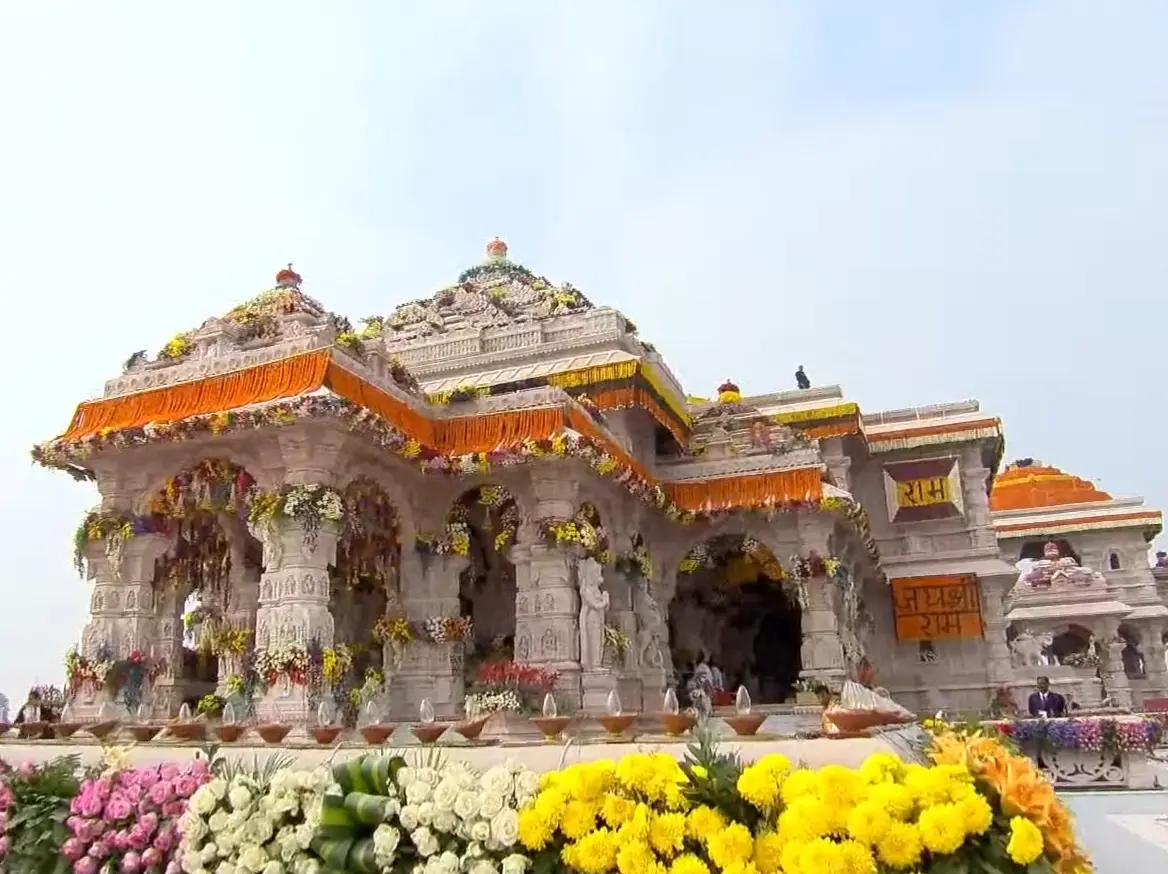
The Shri Ram Janmabhoomi Teerth Kshetra Trust (SRJTK Trust) is an autonomous body constituted by the Government of India on 5 February 2020, following the 2019 Supreme Court Ayodhya verdict. Its decision-making process is governed by the Trust's scheme and trust deed rather than by the Central or Uttar Pradesh governments.
In the order titled Neeraj Sharma vs Ministry of Home Affairs passed on 6 June, 2025, the Central Information Commission (CIC) stated that Shri Ram Janmabhoomi Teerth Kshetra Trust (SRJBTK) is an independent trust, which is neither owned, controlled, nor financed by the Central government and state government. They also don't release funds to the Trust.
The government has no administrative or financial involvement in the Shri Ram Janmabhoomi Teerth Kshetra Trust. Its role was limited to constituting the Trust in line with the Supreme Court's directions. Since the Trust functions independently without financial assistance or administrative control from either the Centre or any state government, it does not fall under the ambit of the Right to Information (RTI) Act, 2005.
During proceedings before the Central Information Commission (CIC), counsel for the Trust argued that it was created through a trust deed rather than by a government notification. They also stated that the Trust receives no direct or indirect government funding, while the government's notification merely transferred the rights, title and interests in the acquired land to the Trust. The advocates further submitted that government nominees and the district collector do not have voting rights in the Trust's meetings.
The Ministry of Home Affairs (MHA) has clarified that the Shri Ram Janmabhoomi Teerth Kshetra Trust was constituted in line with the Supreme Court's Ayodhya verdict as an independent body, free from government financial or administrative control. Under the Trust rules, the Settler's role ends once the Trust is formed. As defined under Section 3 of the Indian Trusts Act, a trust is a legal arrangement to manage property for beneficiaries.
Also read: Ram Temple Trust appoints Krishna Mohan as acting general secretary after Champat Rai’s resignation
Trending Stories
&imwidth=180&imheight=135&format=webp&quality=medium)
Elon Musk pumps $276 million into Republican campaigns ahead of US midterm elections
&imwidth=180&imheight=135&format=webp&quality=medium)
'I will not be silenced': Ilhan Omar alleges political intimidation after federal officers search her Washington home
&imwidth=180&imheight=135&format=webp&quality=medium)
'I am thoroughly unamused': Judge slams Trump administration after 400 trees cut at Washington golf course
&imwidth=180&imheight=135&format=webp&quality=medium)
Apple HomeView smart home hub may launch soon with A18 chip, display and Siri controls: What to expect
&imwidth=180&imheight=135&format=webp&quality=medium)
Sidhu Moose Wala’s younger brother wins hearts by recreating late singer’s signature move at Toronto Hologram Show
&imwidth=180&imheight=135&format=webp&quality=medium)
BCCI rejects venue shift reports, India vs Sri Lanka 1st ODI to remain in Delhi
&im=FitAndFill=(700,400)&imwidth=180&imheight=135&format=webp&quality=medium)
How does a robot decide what to do next?
&imwidth=180&imheight=135&format=webp&quality=medium)
Pakistan's government blames PTI for rise of terrorism in Khyber Pakhtunkhwa
&imwidth=180&imheight=135&format=webp&quality=medium)
India Rejects Pakistan-China Boundary Commission, Tells Islamabad to Drop 'Theatrics' | GRAVITAS
&imwidth=180&imheight=135&format=webp&quality=medium)
'Absolutely disgusting': Australia slams US plan to livestream Nidal Hasan's execution; Mike Johnson raises concerns, warns of terrorist propaganda
&imwidth=180&imheight=135&format=webp&quality=medium)
'Turn approver, resign, we'll forgive you': Rahul Gandhi claims receiving messages from CEC Gyanesh Kumar
&imwidth=180&imheight=135&format=webp&quality=medium)
Korean peninsula tensions escalate as North Korea launches multiple ballistic missiles, PACOM says 'no threat to US personnel'
&imwidth=180&imheight=135&format=webp&quality=medium)
'Almost certainly': UK Prime Minister Andy Burnham says Iran's IRGC behind RAF Fairford threat
&imwidth=180&imheight=135&format=webp&quality=medium)
Trump weighs firing Kimberly Guilfoyle as US ambassador to Greece amid misconduct allegations: Report
&imwidth=180&imheight=135&format=webp&quality=medium)
India's Ajit Doval, Iran's Mohsen Rezaei hold talks amid escalating West Asia tensions, discuss 'issues of mutual interest'
&imwidth=180&imheight=135&format=webp&quality=medium)
'Ouch!!! That must hurt': Kangana Ranaut hails Kamal Haasan's sharp reply to Elon Musk over Starlink row
&imwidth=180&imheight=135&format=webp&quality=medium)
‘This is just the start’: Maaya Rajeshwaran on historic ITF title, confidence boost and future goals
&imwidth=180&imheight=135&format=webp&quality=medium)
Congress demands action against chief election commissioner
&imwidth=180&imheight=135&format=webp&quality=medium)
Rahul Gandhi's plea against Election Commission delayed as Supreme Court registry flags 14 ‘defects’
&imwidth=180&imheight=135&format=webp&quality=medium)
Portugal Federation confirms Cristiano Ronaldo’s return to national team despite suspension
&imwidth=180&imheight=135&format=webp&quality=medium)
Houthis warns US of 'painful response' if Washington joins Saudi war in Yemen as airlines suspend flights to Saudi Arabia
&im=FitAndFill=(700,400)&imwidth=180&imheight=135&format=webp&quality=medium)
New OTT releases this week (October 12-18, 2026): Sacrifice, Koffee with Karan S9, Roadies Rebirth- 6 titles coming on Netflix, JioHotstar and more
&imwidth=180&imheight=135&format=webp&quality=medium)
1,500 drones illuminate Mumbai sky as Cordelia Cruises unveils second ship, Cordelia Sky
&imwidth=180&imheight=135&format=webp&quality=medium)
UK school ditches technology, shifts from screen to pen and paper for learning
&imwidth=180&imheight=135&format=webp&quality=medium)
Anti-SIR protest in Mumbai: Protestors wear black masks & ribbons in Mumbai
&imwidth=180&imheight=135&format=webp&quality=medium)
Robotic surgery, advanced treatment: What is coming to this small Gujarat town?
&im=FitAndFill=(700,400)&imwidth=180&imheight=135&format=webp&quality=medium)
Navratri 2026: 9 days, 9 forms of Goddess Durga and 9 colours- Check the complete list
&imwidth=180&imheight=135&format=webp&quality=medium)
UK PM Andy Birnham renews claims of Russian meddling in Brexit vote
&imwidth=180&imheight=135&format=webp&quality=medium)
Opposition’s 10 demands in Supreme Court petition range from stay on SIR to audit of voter rolls
&imwidth=180&imheight=135&format=webp&quality=medium)
Trump says he 'may' meet North Korean leader Kim Jong Un during upcoming Asia trip
How are key decisions made?
The Trust is governed by a Board of Trustees, which discusses and approves major decisions during formal meetings. These decisions include temple construction and infrastructure, appointment or resignation of key office-bearers, financial approvals, management of donations, administrative restructuring, and future development projects. Meanwhile, resolutions are passed during Trust meetings, with trustees exercising voting powers under the Trust's governing rules.
Permanent trustees hold the primary decision-making authority
According to submissions made by the Ministry of Home Affairs before the Central Information Commission (CIC), all substantive decisions rest with the Trust's permanent trustees. Government nominees and certain ex officio members have limited roles under the Trust deed, while the permanent trustees control internal governance.
Decisions are implemented through meetings and resolutions
Major administrative actions are approved during Trust meetings. For example, in July 2026, the Trust accepted the resignations of General Secretary Champat Rai and trustee Anil Mishra, decided to appoint a Chief Executive Officer (CEO), and initiated governance reforms after allegations relating to donations. These decisions were collectively approved during a scheduled meeting of the Trust.
Financial decisions are approved internally
The Trust decides how donations are utilised. It recently disclosed that:
- Donations received since inception have exceeded Rs 3,200 crore
- More than Rs 2,300 crore had been allocated towards temple construction and capital expenditure
- Financial disclosures and expenditure approvals are made by the Trust during its meetings

