Explained | India: ISRO tests cryogenic engine for Chandrayaan-3. Significance and tech

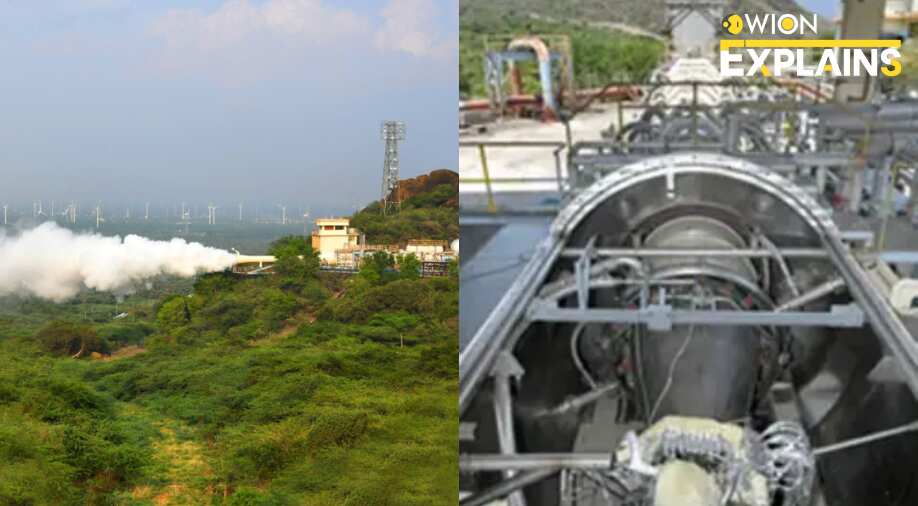
Cryogenic engine
The Indian space agency has successfully conducted a hot test of its CE-20 Cryogenic Engine for the soon-to-be third mission to Moon, Chandrayaan-3. The Indian Space Research Organisation (ISRO) is in the midst of carrying out some of the most crucial tests for the upcoming lunar mission.
What happened during the recent test?
The hot test for the CE-20 Cryogenic Engine which will power the Cryogenic Upper Stage (CUS) of the LVM3 launch vehicle during the Chandrayaan-3 mission was successfully conducted at the space agency’s Propulsion Complex, Mahendragiri in the Indian state of Tamil Nadu, said ISRO.

The “hot test” on February 24 was done for a planned duration of 25 seconds at the High Altitude Test Facility. A hot test is an assessment of an engine’s performance under conditions which are similar to when it is running in a real vehicle and checks all the parameters to ensure that the engine is working properly.
ALSO WATCH |Cryogenic engine for ISRO's third lunar mission
“All the propulsion parameters during the test were found satisfactory and closely matched with predictions,” said ISRO. The cryogenic engine will be further integrated with the propellant tanks, stage structures and associated fluid lines to realise the fully integrated flight cryogenic stage.
)
'Lot of things to learn from experienced players': Jayasuriya backs Rohit, Virat for 2027 ODI World Cup
&im=FitAndFill=(700,400))
Kareena Kapoor birthday special: Inside her net worth, best movies, luxurious lifestyle and love story with Saif Ali Khan
)
Trump says he'll build an 'AI Force' and appoint a czar, for 'high IQ' people only
)
Punjab man consumes poison outside DC office; Congress, BJP target AAP government
)
SNL UK takes aim at Ed Sheeran with AI Princess Diana sketch
)
Iran sets 7 conditions to end war with US: What are Tehran’s demands?
)
AI actress Tilly Norwood glitches mid-interview, switches from English to Chinese | Watch
)
Mahabharat actor Saurav Gurjar arrested in Hyderabad, sent to 14-day judicial custody in sexual exploitation case
)
Chancellor Friedrich Merz vows to stay on as exit polls signal major poll setback
)
J&K Assembly Session begins amid chaos: BJP, ruling alliance clash as statehood demand dominates
)
Taylor Swift has a 'proud wife' moment as Travis Kelce scores first touchdown of season: 'That’s my husband!'
)
'Were you here to sell chickpeas?': Wasim Akram criticises Babar Azam's captaincy
&im=FitAndFill=(700,400))
New OTT releases this week (September 21-27, 2026): Shaque: Trust No One, Hunkkaar, Don’t Be Shy- 5 new titles coming to Netflix, Prime Video and more
)
Noel Tata challenges Chandrasekaran’s reappointment as Tata Sons chairman. What happened at the board meeting
)
Italy moves to ban face veils in schools as Meloni pushes new integration measures
)
TIFF 2026: Theja Rio’s Angh wins Platform Prize, puts Nagaland story on global stage
)
Delhi: Flagged voters remain on the draft roll but face hearings
)
Saudi Arabia exits China-led mBridge digital currency platform amid Saudi-Houthi conflict
)
40-foot waves crash into cruise ship in dangerous stretch near Antarctica. Watch
)
Jailer 2: Vidya Balan joins Rajinikanth's upcoming film as Kantha | Watch
)
‘0% chance’: Nvidia CEO Jensen Huang dismisses AI extinction fears by 2030
)
Samsung raises Galaxy S26 prices by Rs 20,000: Here’s what each model now costs
)
Bessent meets China’s He Lifeng to prepare for Trump-Xi summit
)
CDU suffers historic defeat in eastern Germany as AfD surges, Merz vows to stay on
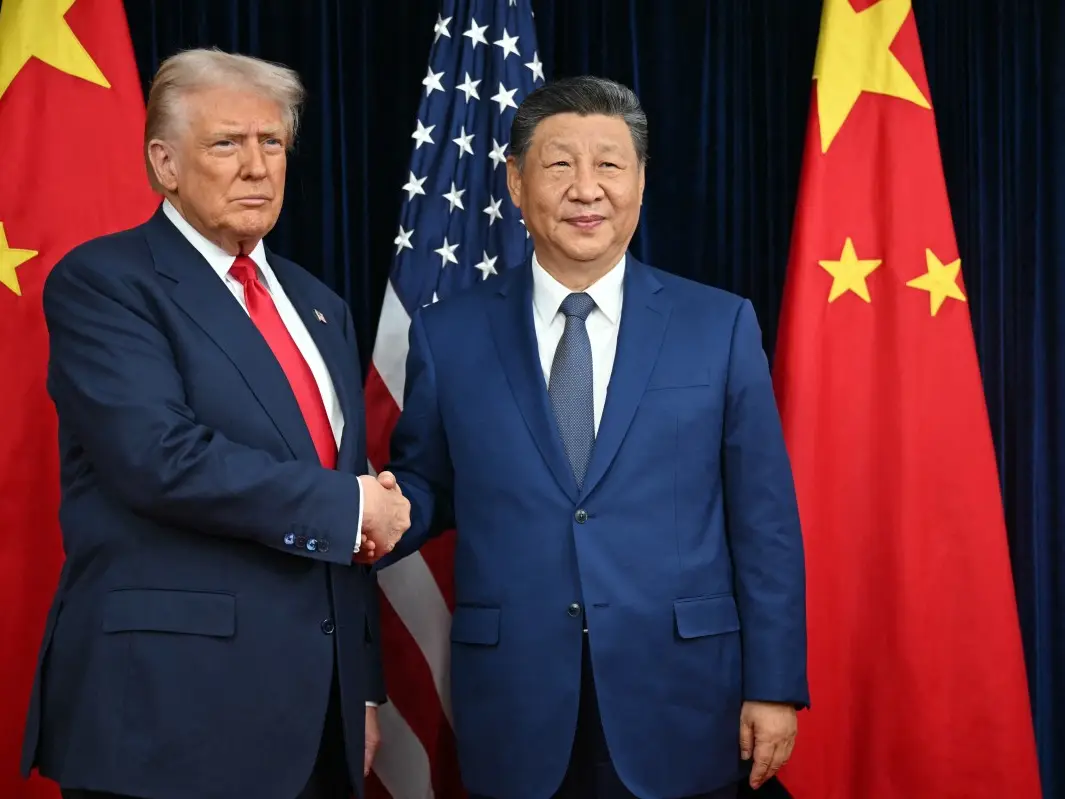)
China now makes advanced memory chips without the machines it was banned from buying
)
Arvind Kejriwal, family members, Delhi CM Rekha Gupta get SIR notices
)
Trump-Xi summit: US Treasury Secretary holds meeting with Chinese Vice Premier
)
Fleming's aspirations as England Test coach include WTC, top ranking and Ashes
)
Saudi vs Houthis: Houthis claim missiles & drones used in attack on key Saudi sites
)
Delhi Air pollution: Strict crackdown on waste burning
)
Apple reportedly building AI server with M8 Ultra chips, may use Nvidia technology
&im=FitAndFill=(700,400))
What TSMC's 2nm technology means for Apple
)
Glitch in the matrix caught on camera: Woman vanishes after talking to reporter
)
Several petrol pumps, other businesses to refuse UPI payments above Rs 2,000 from Oct 16: Is it legal?
)
AI kill switch explained: Why shutting down a dangerous AI may not be as simple as pressing a button
)
Microsoft executive called AI training the ‘largest theft of labour in human history’
)
Pilot recreates Mona Lisa in sky over Oklahoma and Arkansas in four-hour flight: VIDEO
)
US ships in Indian Ocean ‘will be attacked’ if war resumes, warns Iran
)
Samay Raina-Mukesh Chhabra controversy explained: What happened over girlfriend joke on India's Got Latent?
)
Putin's United Russia party wins 355 seats in Duma election; 4 other parties cross threshold to enter parliament
)
S Jaishankar, former Army chief among high-profile names issued Delhi SIR notices
What is a cryogenic engine/cryogenic stage?
Cryogenics refers to the study of the change in chemical properties and behaviour of materials at very low temperatures of at least -150 degree Celsius. The engines created using this technology are among some of the most powerful ones. The cryogenic stage is a very complex system, but is more efficient and provides more thrust for every kilogram of propellant it burns compared to solid and earth-storable liquid propellant rocket stages.
Cryogenic engines carry liquid propellants at extremely low temperatures and typically make use of liquid oxygen (LOX) and liquid hydrogen (LH2). While the former liquefies at -183 degrees Celsius, the latter liquifies at -253 degree Celsius. ISRO’s cryogenic stage is powered by a CE-20 engine which works with the LOX-LH2 propellants combination.
ALSO READ |ISRO successfully test fires cryogenic engine that will help Chandryaan-3 begin journey to Moon
It is designed by the Liquid Propulsion Systems Center, in collaboration with Vikram Sarabhai Space Centre, ISRO Propulsion Complex and Satish Dhawan Space Centre. The tanks can carry over 27,000 kg of fuel and fire for at least 720 seconds.
Cryogenic engines are highly efficient rocket propulsion systems and suitable for the upper stages of a rocket since they have a higher specific impulse (a measure of the efficiency or thrust) which enhances its payload capacity.
Major components of a cryogenic rocket engine include an igniter, combustion chamber (thrust chamber), fuel cryo pumps, fuel injector, oxidiser cryo pumps, gas turbine, cryo valves, regulators, fuel tanks and a rocket engine nozzle.
How does it work?
The cryogenic stage is the last stage of the launch of a space vehicle where the fuel LOX and LH2 stored using cryogenics is released from their respective tanks and are fed by individual booster pumps to the main turbopump to ensure a high flow rate of propellants into the combustion chamber.
ALSO READ |Explained: Why ISRO again test-fired its CE-20 Cryogenic Engine, ahead of next flight in 2023
While the LH2 acts as the fuel, the LOX acts as the oxidiser which explosively reacts with the hydrogen.
In simple terms, since there is no air in space, it is impossible to burn anything. Therefore, rockets carry their own oxidiser, which when mixed with fuel, burns and produces thrust (the force which moves a rocket through the air).
Cryogenic engines: India’s ordeal and success story
Today, India is one of the only six countries including the US, France (European Space Agency), Russia, China, and Japan which have developed their own cryogenic engines.
However, the Indian journey to become a part of this exclusive group was marked by global politics and decades of hard work spearheaded by ISRO.
In the early 1990s, the erstwhile Soviet Union Space Agency had agreed to transfer the cryogenic technology held by the five aforementioned countries except for India.
But the US, Japan, Europe and China were against it. It was seen as an aspect of Cold War politics prevalent at the time.
Eventually, the move was blocked by the US by invoking the Missile Technology Control Regime (MTCR) (an association to stop the proliferation of missiles that could be used for mass destruction) and imposed sanctions on both India and the Soviet Union space agencies.
ALSO READ |India: ISRO’s Chandrayaan-3 successfully undergoes key test ensuring it can function in space
This came after the Soviet Union had reportedly said that it considered India an exception and both countries assured that the technology would not be used for the military but only for communication and weather satellites.
Years later, the then US President Bill Clinton and his Russian (since the Soviet Union had disintegrated) counterpart Boris Yeltsin came to a decision about Moscow selling seven cryogenic engines to India but not transferring the technology.
When ISRO was founded in 1969, it undertook the task of developing cryogenic engines.
Decades later, the Indian space agency successfully conducted its first cryogenic engine test in 2003.
However, the first successful flight was not until 2014 when the Indian space agency launched the GSLV-DF rocket powered by its indigenous-produced cryogenic engine from Sriharikota, an island off the Bay of Bengal coast and dubbed as the spaceport of the country.
About Chandrayaan-3
The Chandrayaan-3 mission will follow Chandrayaan-2 and demonstrate end-to-end capability in safe landing and roving on the lunar surface, the Indian space agency had said previously. It will comprise a lander and rover configuration and will be launched by GSLV MkIII from the Satish Dhawan Space Centre in Sriharikota.
ALSO READ |India's third Lunar mission Chandrayaan-3 almost ready, launch in June-July: ISRO Chairman
The propulsion module will carry the lander and rover configuration to 100 km of the Moon’s orbit and will also study the spectral and polarimetric measurements of Earth from there with the help of Spectro-polarimetry of Habitable Planet Earth (SHAPE) payload. However, the final launch date of the mission is yet to be announced but is said to be towards the second or third quarter of this year.
(With inputs from agencies)
WATCH WION LIVE HERE
You can now write for wionews.com and be a part of the community. Share your stories and opinions with us here.