Delhi-Mumbai expressway: Everything you need to know about one of India’s largest infrastructure projects

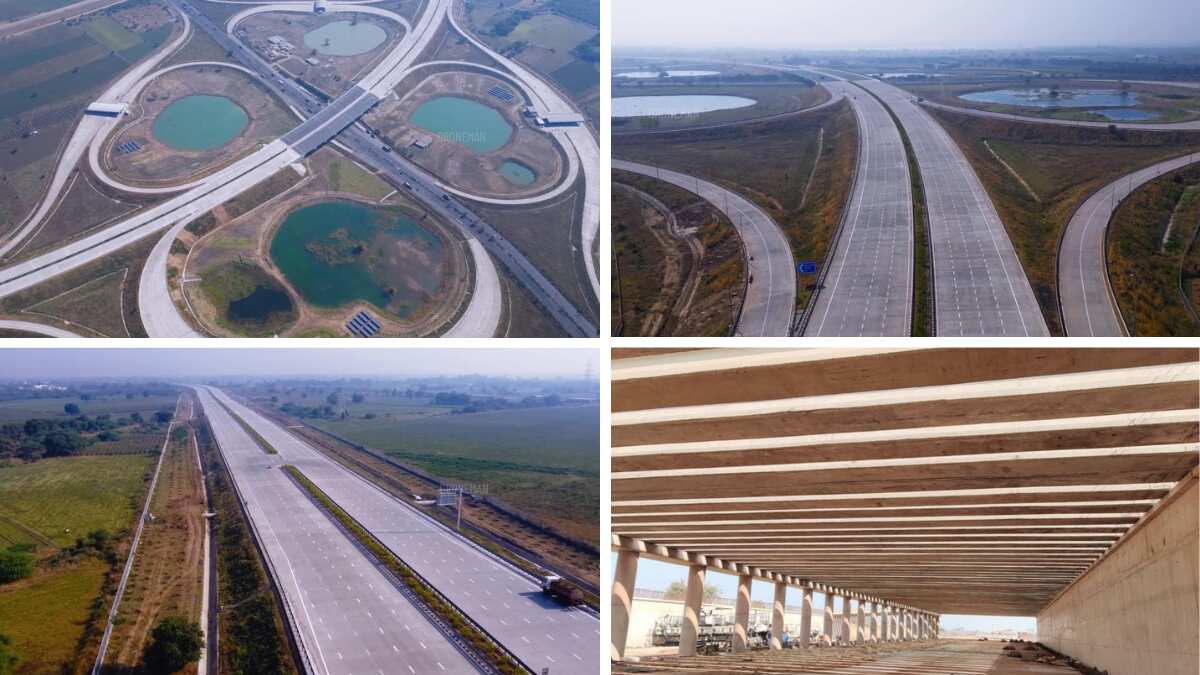
Delhi-Mumbai Expressway
The construction of India’s Ministry of Road Transport and Highways’ flagship project, the Delhi-Mumbai Expressway is underway. OnSaturday (January 21), the Union Minister for Road Transport and National Highways, Nitin Gadkari, took to Twitter and shared images of a section of the 1,386 km (861 miles)-long roadway. Once completed it will connect the country’s national capital and its financial capital reducing the total travel time to a mere 12 hours. The project which began in 2018 with the foundation laid in March 2019, should be almost completed by December, later this year, Gadkari announced in 2022.
India’s largest expressway: Connectivity and cost
The eight-lane Delhi-Mumbai highway is poised to become the largest expressway in the country and one of the fastest-built expressways in the world connecting major cities and states across India. In addition to the two capitals, the expressway will also connect five states, Rajasthan, Haryana, Madhya Pradesh, Gujarat, and Maharashtra.

The over 1,300 km highway will also pass through the country’s economic hubs like Jaipur, Kishangarh, Ajmer, Kota, Chittorgarh, Udaipur, Bhopal, Ujjain, Indore, Ahmedabad, Vadodara, and Surat. The soon-to-be-inaugurated roadway will start from DND flyway, Delhi and Sohna, Haryana and end at Virar, Maharashtra, and Jawaharlal Nehru Port Trust, Mumbai.
ALSO WATCH |India celebrates 'Parakram Divas', PM Modi honours Netaji Subhash Chandra Bose
&imwidth=180&imheight=135&format=webp&quality=medium)
Rahul Gandhi's plea against Election Commission delayed as Supreme Court registry flags 14 ‘defects’
&im=FitAndFill=(700,400)&imwidth=180&imheight=135&format=webp&quality=medium)
Navratri 2026: 9 days, 9 forms of Goddess Durga and 9 colours- Check the complete list
&imwidth=180&imheight=135&format=webp&quality=medium)
Korean peninsula tensions escalate as North Korea launches multiple ballistic missiles, PACOM says 'no threat to US personnel'
&imwidth=180&imheight=135&format=webp&quality=medium)
Trump weighs firing Kimberly Guilfoyle as US ambassador to Greece amid misconduct allegations: Report
&imwidth=180&imheight=135&format=webp&quality=medium)
Anti-SIR protest in Mumbai: Protestors wear black masks & ribbons in Mumbai
&imwidth=180&imheight=135&format=webp&quality=medium)
UK PM Andy Birnham renews claims of Russian meddling in Brexit vote
&imwidth=180&imheight=135&format=webp&quality=medium)
BCCI rejects venue shift reports, India vs Sri Lanka 1st ODI to remain in Delhi
&imwidth=180&imheight=135&format=webp&quality=medium)
'Absolutely disgusting': Australia slams US plan to livestream Nidal Hasan's execution; Mike Johnson raises concerns, warns of terrorist propaganda
&imwidth=180&imheight=135&format=webp&quality=medium)
1,500 drones illuminate Mumbai sky as Cordelia Cruises unveils second ship, Cordelia Sky
&imwidth=180&imheight=135&format=webp&quality=medium)
Houthis warns US of 'painful response' if Washington joins Saudi war in Yemen as airlines suspend flights to Saudi Arabia
&imwidth=180&imheight=135&format=webp&quality=medium)
Congress demands action against chief election commissioner
&imwidth=180&imheight=135&format=webp&quality=medium)
Robot gropes girl, makes thrusting movements in bizarre crime in Germany
&imwidth=180&imheight=135&format=webp&quality=medium)
'Turn approver, resign, we'll forgive you': Rahul Gandhi claims receiving messages from CEC Gyanesh Kumar
&imwidth=180&imheight=135&format=webp&quality=medium)
'I will not be silenced': Ilhan Omar alleges political intimidation after federal officers search her Washington home
&imwidth=180&imheight=135&format=webp&quality=medium)
Pakistan's government blames PTI for rise of terrorism in Khyber Pakhtunkhwa
&imwidth=180&imheight=135&format=webp&quality=medium)
‘This is just the start’: Maaya Rajeshwaran on historic ITF title, confidence boost and future goals
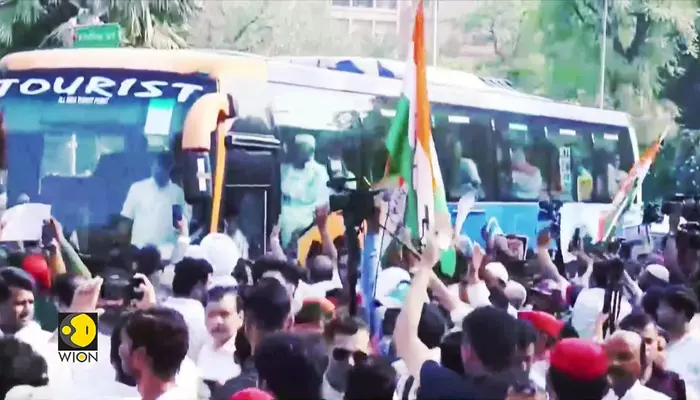&imwidth=180&imheight=135&format=webp&quality=medium)
I.N.D.I.A. Bloc lists 10 requests to Supreme Court
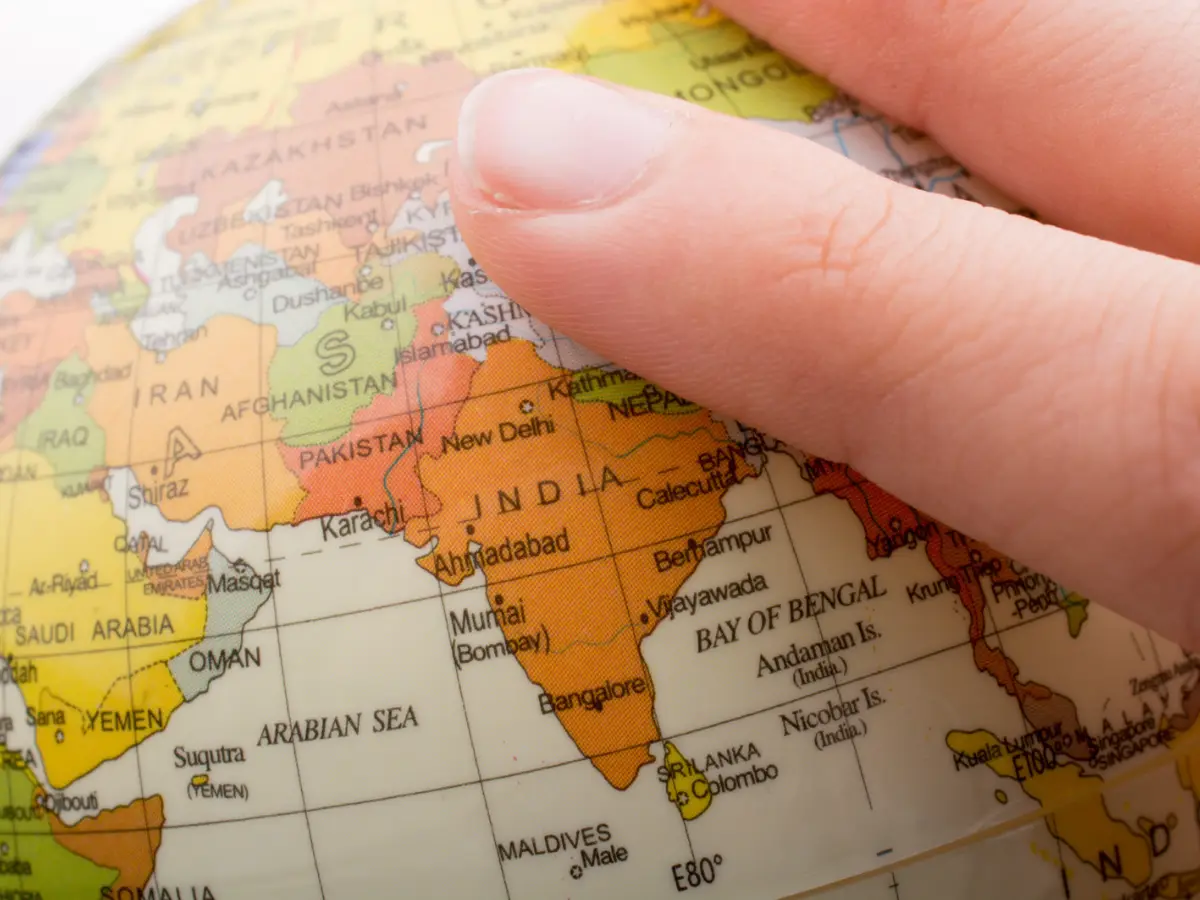&im=FitAndFill=(700,400)&imwidth=180&imheight=135&format=webp&quality=medium)
IMF World Economic Outlook: 10 economies to watch for growth in FY27 and FY28 - Where does India stand?
&im=FitAndFill=(700,400)&imwidth=180&imheight=135&format=webp&quality=medium)
How does a robot decide what to do next?
&imwidth=180&imheight=135&format=webp&quality=medium)
Is the AI chip boom already over? Global semiconductor stocks slide as investors question unbridled spending
&imwidth=180&imheight=135&format=webp&quality=medium)
L Murugan resigns as Union Minister, expresses wish to return to grassroots
&imwidth=180&imheight=135&format=webp&quality=medium)
Trump says he 'may' meet North Korean leader Kim Jong Un during upcoming Asia trip
&imwidth=180&imheight=135&format=webp&quality=medium)
'Ouch!!! That must hurt': Kangana Ranaut hails Kamal Haasan's sharp reply to Elon Musk over Starlink row
&imwidth=180&imheight=135&format=webp&quality=medium)
Sidhu Moose Wala’s younger brother wins hearts by recreating late singer’s signature move at Toronto Hologram Show
&imwidth=180&imheight=135&format=webp&quality=medium)
Girl 'dead' for 8 hours wakes up at her own funeral, dad insists she wasn't breathing
&imwidth=180&imheight=135&format=webp&quality=medium)
UK school ditches technology, shifts from screen to pen and paper for learning
&imwidth=180&imheight=135&format=webp&quality=medium)
Opposition’s 10 demands in Supreme Court petition range from stay on SIR to audit of voter rolls
&imwidth=180&imheight=135&format=webp&quality=medium)
'I am thoroughly unamused': Judge slams Trump administration after 400 trees cut at Washington golf course
&im=FitAndFill=(700,400)&imwidth=180&imheight=135&format=webp&quality=medium)
New OTT releases this week (October 12-18, 2026): Sacrifice, Koffee with Karan S9, Roadies Rebirth- 6 titles coming on Netflix, JioHotstar and more
&imwidth=180&imheight=135&format=webp&quality=medium)
China’s gold rush puts billion in focus
&imwidth=180&imheight=135&format=webp&quality=medium)
India's Ajit Doval, Iran's Mohsen Rezaei hold talks amid escalating West Asia tensions, discuss 'issues of mutual interest'
&imwidth=180&imheight=135&format=webp&quality=medium)
New Cold War: Why is China buying more gold? Explained
&imwidth=180&imheight=135&format=webp&quality=medium)
Anupam Kher joins Ranbir Kapoor's Ramayana as Jatayu, new poster unveiled
&imwidth=180&imheight=135&format=webp&quality=medium)
'Almost certainly': UK Prime Minister Andy Burnham says Iran's IRGC behind RAF Fairford threat
&imwidth=180&imheight=135&format=webp&quality=medium)
Elon Musk pumps $276 million into Republican campaigns ahead of US midterm elections
The total cost of constructing the ambitious expressway is more than Rs 1 lakh crore (approximately US$12 billion) and it will reportedly use 80 lakh tons of cement and 10 lakh tons of steel. The 1,368 km expressway’s eight lanes can also be expanded into 12 lanes depending on the requirement, while the entire roadway is divided into four sections, DND-Faridabad-KMP Route (Delhi-Haryana), Sohna–KMP–Vadodara Route (Haryana, Rajasthan, Madhya Pradesh, and Gujarat), Vadodara–Virar Route (Gujarat and Maharashtra), and Virar–JNPT Route (Maharashtra)
Delhi-Mumbai expressway: Here are some of the key features
Along with a number of amenities including hotels, gas stations, food hubs, retail shops, and so on, the expressway will also include charging stations and a separate lane for electric vehicles. Additionally, reports suggest that the Delhi-Mumbai Expressway will include a heliport for emergency evacuations and a first-of-its-kind trauma centre in case of accidents.
ALSO READ |Reach Delhi to Mumbai in 12 hours, check the top speed limit and route details of the new expressway
Furthermore, the expressway is expected to cut at least 850 million tons of carbon dioxide emissions and save more than 300 million litres of fuel every year. It will also have multiple animal overpasses making it the first in Asia and second in the world to include such a feature for the uninterrupted movement of wildlife. According to the ministry, over two million trees and shrubs will also be planted along the highway.
The expressway includes two iconic eight-lane tunnels one of which will pass through the Mukundra sanctuary in the Indian state of Rajasthan, while the other four kilometres will be tunnelling through an eco-sensitive zone in Maharashtra’s Matheran. Notably, the highway has also created tens of thousands of jobs for daily workers as well as trained civil engineers.
Recent developments
Last week, the National Highways Authority of India (NHAI) said that they will implement the Advance Traffic Management System (ATMS) on national highways and expressways which will include enforcement of speed limits and other regulations for better managing road accidents. Reportedly, the maximum speed on the Delhi-Mumbai Expressway will be 120 km per hour.
ALSO READ |Explained: Everything you need to know about the Noida Supertech twin towers demolition
The NHAI, on January 16, also said that they are looking to leverage GIS technology for analysing drone videos and Network Survey Vehicle data for identifying safety issues on highways. ATMS is also being installed on projects under implementation such as Delhi-Mumbai Expressway, in addition to already being implemented for around 3,000 kilometres of national highways, said the NHAI.
(With inputs from agencies)
WATCH WION LIVE HERE
You can now write for wionews.com and be a part of the community. Share your stories and opinions with us here.