

&imwidth=800&imheight=600&format=webp&quality=medium "BRICS Summit 2026: From Delhi to G20 in Florida, is India emerging as the voice of the Global South?")
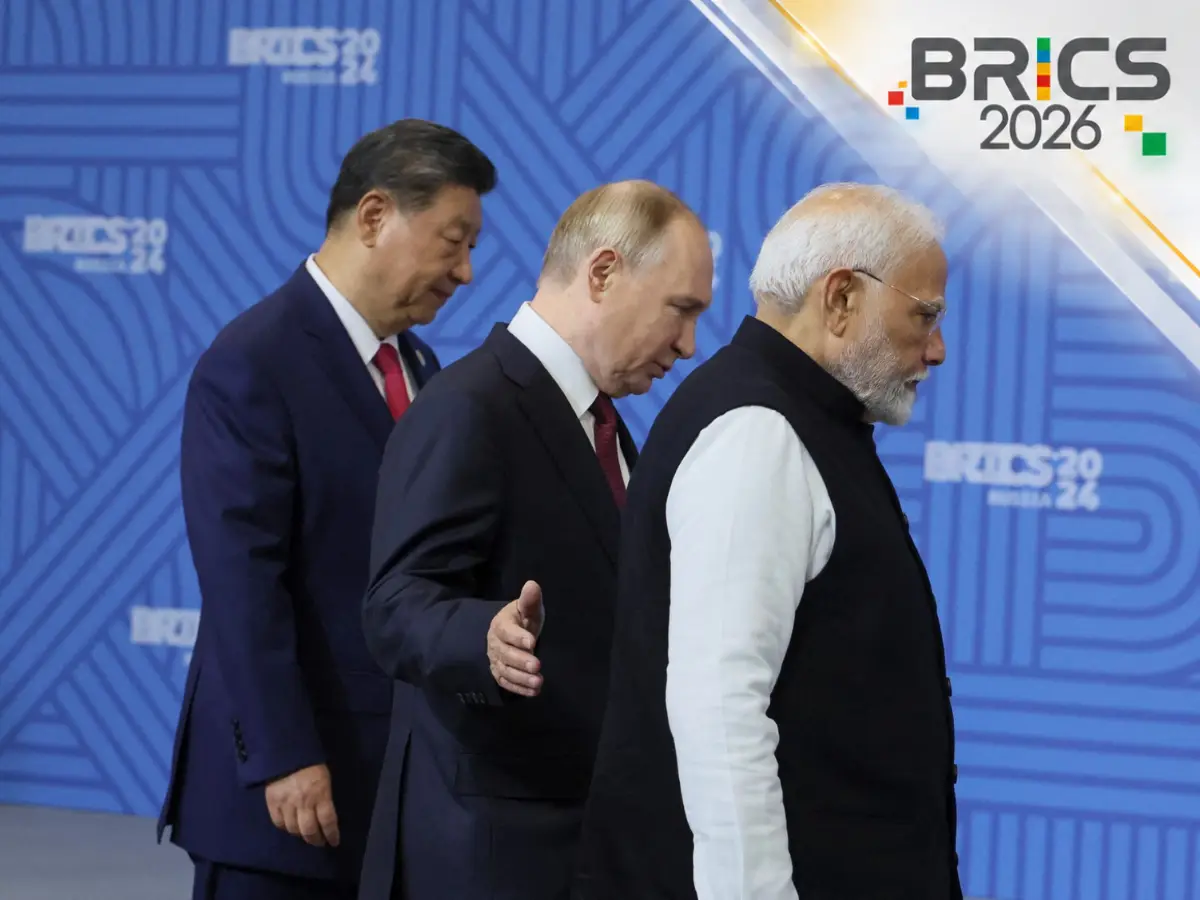
India's BRICS presidency is giving New Delhi another opportunity to test something it began building at the G20 summit in Delhi in 2023: a larger diplomatic role as a voice for the Global South. The question is no longer simply whether India can host another major international summit. It is whether New Delhi can turn its ability to bring developing and emerging economies together into lasting influence on the global agenda.
The road to BRICS 2026 runs through Delhi's G20 moment.
When India hosted the G20 in September 2023, it put developing countries' concerns at the centre of its presidency. The inclusion of the African Union as a permanent G20 member was one of the clearest symbols of that approach. India also convened the Voice of Global South Summit, seeking to bring the concerns of countries outside the traditional centres of global power into major international discussions. Three years later, the setting has changed, but the broad ambition remains.
India is hosting the 18th BRICS Summit in New Delhi on September 12-13, bringing together an expanded group of emerging economies and developing countries. Under India's chairship, more than 350 meetings and high-level engagements have already been held across more than 25 Indian cities. The official theme, “Building for Resilience, Innovation, Cooperation and Sustainability”, reflects New Delhi's attempt to present BRICS as a practical platform for development and cooperation rather than simply an alternative to the West. That distinction is important. BRICS today is much larger and more diverse than the original grouping of Brazil, Russia, India and China. Its expansion has brought in countries with different political systems, economic interests and relationships with the United States and Europe. That makes it difficult to turn BRICS into a single geopolitical bloc.
Also Read: 'Relations continue to develop': Iran hails India ties ahead of BRICS Summit as US keeps close watch
India appears more interested in using that diversity to its advantage. New Delhi wants BRICS to push for greater representation for developing economies in institutions such as the UN, IMF and World Bank, while also focusing on issues such as trade, development finance, technology, food and energy security and resilient supply chains. India's recent BRICS trade agenda has also focused on MSME finance, services trade and diversified global value chains. This is where India's Global South pitch becomes different from a straightforward China-Russia narrative.
Trending Stories
&imwidth=180&imheight=135&format=webp&quality=medium)
'My name has always been Ilhan Omar': Congresswoman hits back at Trump, calls him a 'creep'
&imwidth=180&imheight=135&format=webp&quality=medium)
Gravitas | US attack could trigger WW III: Russian planes in Tehran, Israeli jets, US warships in action
&imwidth=180&imheight=135&format=webp&quality=medium)
Viral video shows cross falling on Colombia priest, no official confirmation | WATCH
&imwidth=180&imheight=135&format=webp&quality=medium)
'This is humiliation': Vijay Deverakonda under fire over controversial marriage proposal remark on Koffee With Karan 9
&imwidth=180&imheight=135&format=webp&quality=medium)
US Navy, Marine Corps boards defy Trump's transgender military ban, vote to retain troops
&imwidth=180&imheight=135&format=webp&quality=medium)
Will the US attack Iran this weekend? Trump's envoy says, 'absolutely'
&im=FitAndFill=(700,400)&imwidth=180&imheight=135&format=webp&quality=medium)
Why do army tanks have different types of armour?
&imwidth=180&imheight=135&format=webp&quality=medium)
India-China face-off continues near Arunachal’s Taksing, reveals ITBP chief in first official confirmation of tensions
&imwidth=180&imheight=135&format=webp&quality=medium)
Nairobi building collapse: Several feared trapped after 16-storey structure crumbles; rescue operation underway
&imwidth=180&imheight=135&format=webp&quality=medium)
Pakistan airline PIA unveils new crew uniforms, faces online criticism
&imwidth=180&imheight=135&format=webp&quality=medium)
Did Neha Bora call for Bangladesh-like GenZ protest, 'anarchy' in India? WION Fact-checks viral claim
&imwidth=180&imheight=135&format=webp&quality=medium)
'Already tired of his 9-to-5': Baby born with a moustache becomes internet sensation, video goes viral | Watch
&imwidth=180&imheight=135&format=webp&quality=medium)
Horrific video shows the moment 18-year-old fell to her death from Mexico amusement park ride
&imwidth=180&imheight=135&format=webp&quality=medium)
IND-W vs ZIM-W, 1st ODI: Rawal, Charani star in India’s nine-wicket win over Zimbabwe
&imwidth=180&imheight=135&format=webp&quality=medium)
Massive 7.2 magnitude quake off Vanuatu triggers tsunami warning for coasts within 300 km
&imwidth=180&imheight=135&format=webp&quality=medium)
Microsoft AI diagnoses complex medical cases more than twice as accurately as doctors, study finds
&imwidth=180&imheight=135&format=webp&quality=medium)
Google Fitbit Air’s new health guardian feature tracks trends: How it works
&imwidth=180&imheight=135&format=webp&quality=medium)
US midterms 2026: Trump revises Canada tariffs as Susan Collins faces tight re-election race in Maine
&imwidth=180&imheight=135&format=webp&quality=medium)
US midterms 2026: Viral video claims Lindsey Graham paid underage men for sex; clip released weeks before his sister's Senate race
&imwidth=180&imheight=135&format=webp&quality=medium)
IND vs NZ 2nd T20I: Shreyas Iyer on brink of breaking Rohit Sharma’s record
&imwidth=180&imheight=135&format=webp&quality=medium)
AI deepfakes are spreading online: Why is removing them so difficult?
&imwidth=180&imheight=135&format=webp&quality=medium)
China's dancing robot turns violent bodyguard, lifts cars and fights intruders - Watch
&imwidth=180&imheight=135&format=webp&quality=medium)
Global cybersecurity alert: PHP flaws trigger website shutdowns as hack attempts surge into millions
&imwidth=180&imheight=135&format=webp&quality=medium)
'You’re a horrible little reporter, aren’t you?': Trump snaps at NBC reporter questioning his support for Ramaswamy's campaign ad
&imwidth=180&imheight=135&format=webp&quality=medium)
Chemical warehouse explosion in Mexico: Several injured in multiple blasts, 1,000 evacuated in León
&imwidth=180&imheight=135&format=webp&quality=medium)
US charges two former FBI officials with lying to Congress about Hunter Biden probes. 'Politically motivated' Trump grievance or something else?
&im=FitAndFill=(700,400)&imwidth=180&imheight=135&format=webp&quality=medium)
New Friday OTT releases (October 23, 2026): Gajab Raat, Dorothy, Chaar Yaar- Watch these 6 new movies and TV shows on Netflix, Prime Video and more
&imwidth=180&imheight=135&format=webp&quality=medium)
Anthropic security chief issues grim cyberattack warning: ‘It’s going to get a lot worse’
&imwidth=180&imheight=135&format=webp&quality=medium)
Tu Hai Meri Kiran film review: Sonakshi Sinha and Zaheer Iqbal's thriller gets tangled in its own twists
&imwidth=180&imheight=135&format=webp&quality=medium)
First Lady Melania Trump secures ceasefire between Russia, Ukraine in Oleshky: White House
&imwidth=180&imheight=135&format=webp&quality=medium)
US-Russia relations: Is Putin playing Trump 'like a fiddle'?
&imwidth=180&imheight=135&format=webp&quality=medium)
One man, 8 months of work, and a river dirty again: Why Bittu Tabahi may quit
&imwidth=180&imheight=135&format=webp&quality=medium)
Jenna Ortega plans TV break after Wednesday: ‘I want to leave time for new things’
&imwidth=180&imheight=135&format=webp&quality=medium)
Five killed, several injured after explosion in Bihar's Siwan as firecrackers catch fire
&imwidth=180&imheight=135&format=webp&quality=medium)
Iran targeting US diplomats? Intelligence warns of 'advanced' assassination plots: Report
&imwidth=180&imheight=135&format=webp&quality=medium)
Emmanuel Macron calls Paris suburb shooting a 'racist terrorist attack' after one killed, several injured
For Beijing and Moscow, BRICS can be part of a broader push towards a more multipolar international system. For New Delhi, however, the grouping must also remain useful to countries that do not want to choose sides between Washington and Beijing. India's strength lies precisely in that space.
It can sit with China and Russia in BRICS, engage the US and its Western partners through other platforms, and simultaneously speak about the priorities of developing economies. That multi-alignment gives New Delhi diplomatic room that few other major powers possess. Recent analysis has described this approach as strategic multi-engagement, allowing India to work across competing power centres without formally joining any one bloc. The BRICS summit in Delhi, therefore, should be seen as more than a two-day diplomatic event.
It is a test of whether India can move from being a country that hosts conversations to one that shapes them. And the next test comes just three months later. The 2026 G20 Leaders' Summit will be held in Miami on December 14-15 under the US presidency. That puts India in an interesting position. After hosting BRICS and making the Global South a central part of its diplomatic messaging, New Delhi will enter a G20 setting led by Washington, where the agenda and political tone could be very different.
That transition could reveal the real extent of India's diplomatic influence. Can India carry the concerns it raises in BRICS into the G20? Can it push for a stronger voice for developing economies without allowing the Global South agenda to become a contest between China and the United States? And can New Delhi persuade countries across Asia, Africa, Latin America and the Middle East that India's version of multipolarity is about giving them greater agency rather than asking them to pick a camp?
That is the larger story behind BRICS 2026. India's G20 presidency in 2023 gave it the platform. The Voice of Global South initiative gave the idea political shape. BRICS 2026 allows New Delhi to expand that role across a much broader coalition of emerging economies. The real measure of success, however, may come in Miami. If India can carry its Global South agenda from Delhi's BRICS table into the US-led G20, it would suggest that New Delhi is not merely seeking a larger seat at the global table. It is learning how to influence what is discussed at that table.

