Bengal to vote on April 23, 29; Tamil Nadu on April 23; Kerala, Assam, Puducherry on April 9; results on May 4

&imwidth=600&imheight=450&format=webp&quality=medium "Bengal to vote on April 23, 29; Tamil Nadu on April 23; Kerala, Assam, Puducherry on April 9; results on May 4")
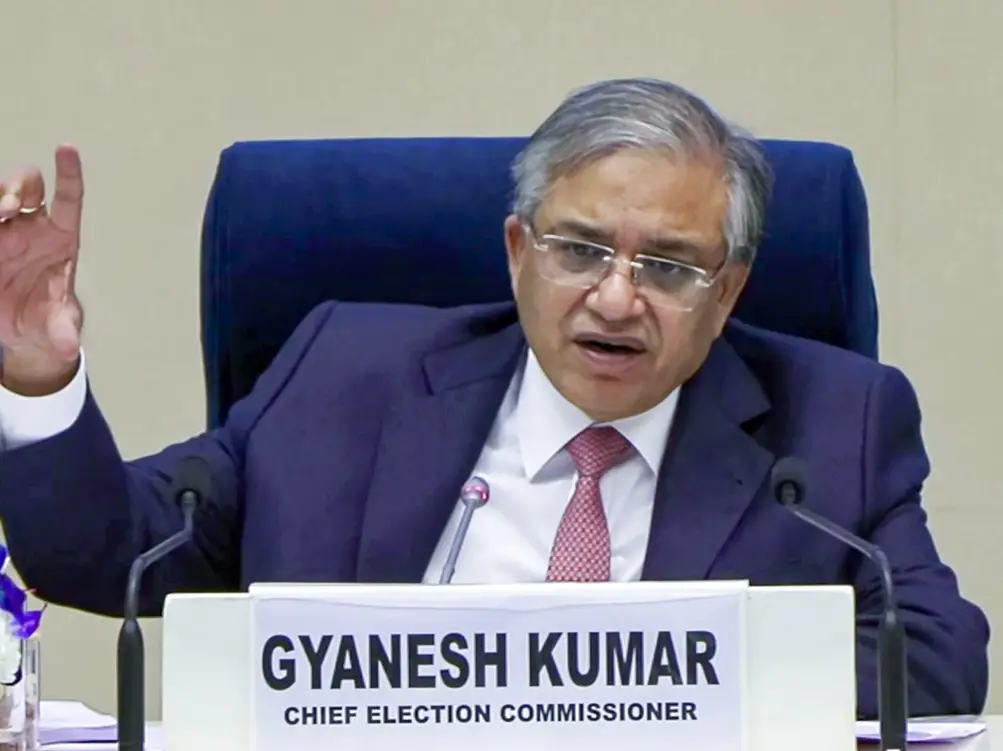
Chief Election Commissioner Gyanesh Kumar addresses a press conference to announce the schedule for assembly elections in Assam, Kerala, Puducherry, Tamil Nadu, and West Bengal, at Vigyan Bhawan in New Delhi on Sunday. Photograph: (ANI)
With the formal announcement, the Model Code of Conduct has come into effect immediately across all poll-bound regions.
The Election Commission of India (ECI) on Sunday (March 15) officially released the schedule for the 2026 Assembly elections. Chief Election Commissioner Gyanesh Kumar announced that voting will take place throughout April, with the counting of votes set for May 4 for all five regions.
Voting in Kerala, Assam and Puducherry will be held in a single phase on April 9, while Tamil Nadu will head to the polls in a single phase on April 23.
The poll body announced the schedule for two-phase elections in West Bengal, with polling dates set for April 23 and April 29, marking a significant reduction from the eight phases held during the 2021 elections.
Votes for all 824 constituencies across the four states and one Union Territory will be counted on May 4, and results will be announced on the same day.
With the formal announcement, the Model Code of Conduct has come into effect immediately across all poll-bound regions.
Key players across states
Trending Stories
)
)
)
)
)
)
)
&im=FitAndFill=(700,400))
)
)
)
)
)
)
&im=FitAndFill=(700,400))
)
)
)
)
)
&im=FitAndFill=(700,400))
)
)
)
)
)
)
)
)
)
)
)
)
)
)
)
)
)
In West Bengal, the 294-seat assembly will see a direct face-off between the ruling Trinamool Congress (TMC) and the Bharatiya Janata Party (BJP). TMC, led by Mamata Banerjee, has been in power in the state since 2011.
Assam will witness a fight between the incumbent BJP-led NDA government and Congress for 126 state assembly seats.
In Kerala, the traditional rivalry between the Left Democratic Front (LDF) and the United Democratic Front (UDF) for 140 seats has expanded into a three-way contest, as the BJP-led NDA plans to contest 100 seats, leaving the remaining 40 to its allies, BDJS and Twenty20.
The contest for Tamil Nadu’s 234 seats has intensified with the ruling DMK-led Progressive Alliance recently sealing a pact to give the Congress 28 seats. They face the AIADMK-led front, which includes the PMK and BJP, while new players like actor Vijay’s TVK and Seeman’s NTK also emerged as significant challengers.
In Puducherry, the ruling NDA has finalised a 16-14 seat-sharing split between the AINRC and BJP for the 30-member assembly, as they prepare to defend their turf against the Congress-DMK-led alliance.