Approved in 2024, Indian Govt’s ₹1000cr Space VC fund delayed till 2027

&imwidth=600&imheight=450&format=webp&quality=medium "Approved in 2024, Indian Govt’s ₹1000cr Space VC fund delayed till 2027")
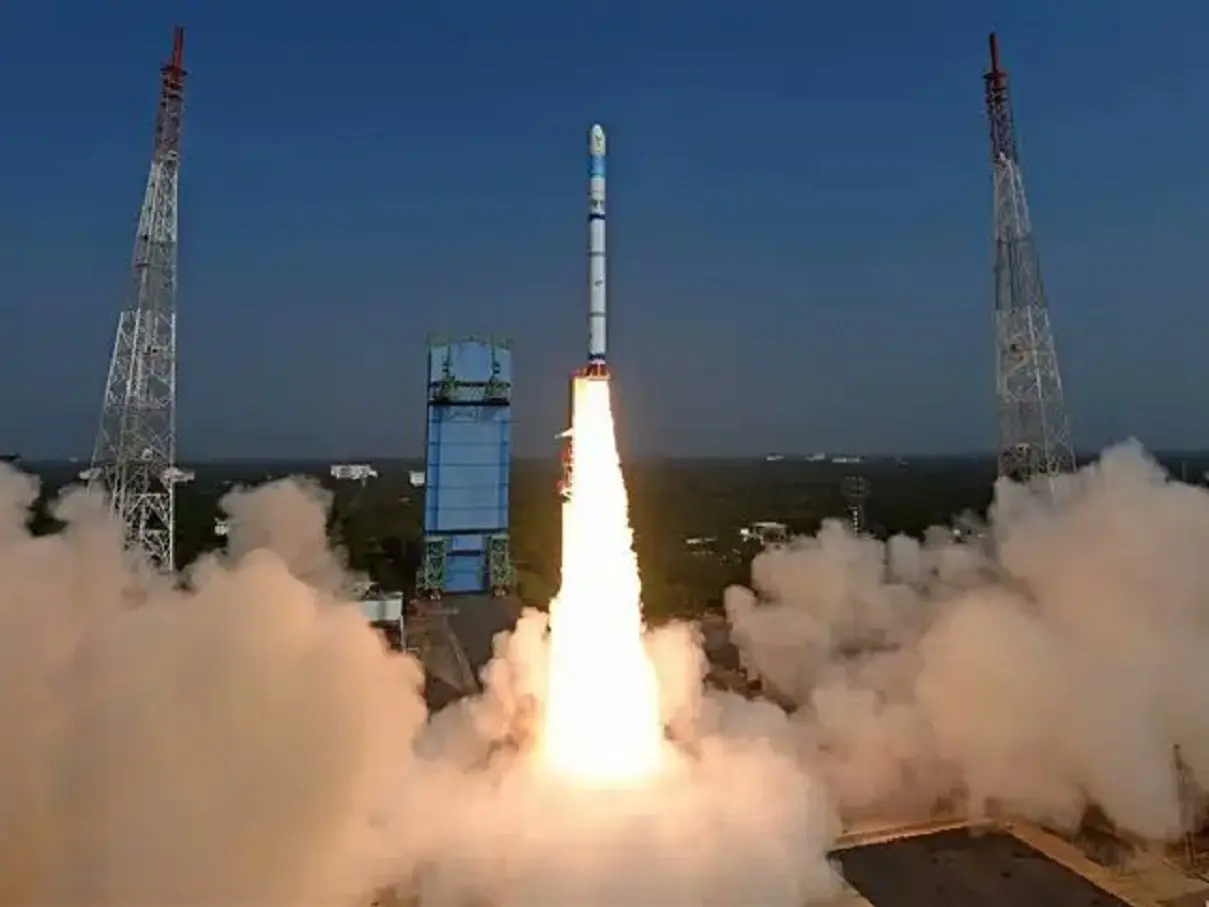
Representative image of a spacefaring rocket launch from India Photograph: (Courtesy: ISRO)
Until 2020, the Indian space sector was a government monopoly, where only ISRO could build and launch rockets and satellites and offer associated services. After space sector reforms in 2020, IN-SPACE was established to promote and oversee private sector participation in space activities.
The Indian government’s venture capital fund meant for the space sector, which was approved in October 2024, is expected to begin investments only from April 2027, the country's Space Minister revealed in Parliament. The ₹1,000 crore (approx. $107 million) fund was announced in October 2024, following the approval of the Union Cabinet, chaired by Prime Minister Narendra Modi. It was officially touted that the fund would “support 40 space startups, accelerate private industry’s growth, drive advancements in space technology, support ‘Atmanirbhar Bharat’ (Self-reliant India)”.
As per the official announcement, the ₹1,000 crore sum was to be disbursed in a phased manner between 2025 and 2030. The government planned to invest the sum as follows: ₹150cr in FY2025-26, ₹250cr each in FY2026-27, FY2027-28, FY2028-29, and ₹100cr in FY2029-30.
With FY2025-26 having come to a close, the first tranche of ₹150crore remains unspent. Given that the fund is expected to commence after April 2027, it is evident that the ₹250cr allocation for 2026-27 will also remain unspent. In total, the 400cr that was to be invested in the first two years remains unspent, affecting the overall progress of the first-of-its-kind Government initiative.
“Allocation of funds for the private space industry are most crucial and important. Their timely and early manifestation is very critical for the nascent and fragile startups to grow and prosper,” an industry representative told this author on the condition of anonymity.
While the Space VC fund was established under the aegis of India's space sector regulator and Government body IN-SPACE, SIDBI Venture Capital Limited (SVCL) has been made the investment manager. The Fund received SEBI’s registration on October 31, 2025 and declared its initial closing on November 10, 2025 at ₹1,005 crores. Subsequently, post SEBI registration activities, appointment of the custodian, registration with depositories for issuance of AIF units, and constitution of the Screening Committee and Investment Committee (IC), were completed, Minister Jitendra Singh revealed in Parliament.
"Subsequently, post SEBI registration activities including appointment of the custodian, registration with depositories for issuance of AIF units, and constitution of the Screening Committee and Investment Committee (IC), were completed. In parallel, evaluation of Space startups has been continuing and four proposals are at an advanced stage following the Pre-IC approval," stated the Parliament reply.
Trending Stories
&im=FitAndFill=(700,400)&imwidth=280&imheight=210&format=webp&quality=medium)
&imwidth=280&imheight=210&format=webp&quality=medium)
&imwidth=280&imheight=210&format=webp&quality=medium)
&imwidth=280&imheight=210&format=webp&quality=medium)
&imwidth=280&imheight=210&format=webp&quality=medium)
&imwidth=280&imheight=210&format=webp&quality=medium)
&imwidth=280&imheight=210&format=webp&quality=medium)
&imwidth=280&imheight=210&format=webp&quality=medium)
&imwidth=280&imheight=210&format=webp&quality=medium)
&imwidth=280&imheight=210&format=webp&quality=medium)
&imwidth=280&imheight=210&format=webp&quality=medium)
&imwidth=280&imheight=210&format=webp&quality=medium)

&imwidth=280&imheight=210&format=webp&quality=medium)
&imwidth=280&imheight=210&format=webp&quality=medium)
&imwidth=280&imheight=210&format=webp&quality=medium)
&imwidth=280&imheight=210&format=webp&quality=medium)
&im=FitAndFill=(700,400)&imwidth=280&imheight=210&format=webp&quality=medium)
&im=FitAndFill=(700,400)&imwidth=280&imheight=210&format=webp&quality=medium)
&imwidth=280&imheight=210&format=webp&quality=medium)
&im=FitAndFill=(700,400)&imwidth=280&imheight=210&format=webp&quality=medium)
&imwidth=280&imheight=210&format=webp&quality=medium)
&imwidth=280&imheight=210&format=webp&quality=medium)
&imwidth=280&imheight=210&format=webp&quality=medium)
&imwidth=280&imheight=210&format=webp&quality=medium)
&imwidth=280&imheight=210&format=webp&quality=medium)
&imwidth=280&imheight=210&format=webp&quality=medium)
&im=FitAndFill=(700,400)&imwidth=280&imheight=210&format=webp&quality=medium)
&imwidth=280&imheight=210&format=webp&quality=medium)
&imwidth=280&imheight=210&format=webp&quality=medium)
&imwidth=280&imheight=210&format=webp&quality=medium)
&im=FitAndFill=(700,400)&imwidth=280&imheight=210&format=webp&quality=medium)
&imwidth=280&imheight=210&format=webp&quality=medium)

&imwidth=280&imheight=210&format=webp&quality=medium)
&imwidth=280&imheight=210&format=webp&quality=medium)
&im=FitAndFill=(700,400)&imwidth=280&imheight=210&format=webp&quality=medium)
Given the nascent stage of the Space tech ecosystem, particularly in cases where startups have had limited or no prior exposure to institutional investors, there is a need felt to provide handholding to such startups, in order for them to organize their data better and share the requisite information with SVCL for the sanction process, it was added.
With the handholding, SVCL is hopeful to complete the detailed appraisal shortly and place it before the Investment Committee for its consideration. It is expected that SVCL will be in a position to fund the approved startups in the first quarter of FY2027 after satisfactory completion of the third party due-diligence and execution of definitive documentation, concluded the Minister's reply in Parliament.
Until the year 2020, the Indian space sector was a Government monopoly, where only the Government-run space agency ISRO could build and launch rockets, satellites, offer associated services. As part of space sector reforms rolled out in the year 2020, the Government established IN-SPACE to promote and oversee private sector participation in end-to-end space activities.
According to the Government, the space VC fund aims to address the critical need for risk capital, as traditional lenders are hesitant to fund startups in this high-tech sector. With nearly 250 space startups emerging across the value chain, timely financial support is crucial to ensure their growth and prevent talent loss overseas, reads the Government's vision. This government-backed fund was meant to boost investor confidence, attract private capital, and signal the government's commitment to advancing space reforms. However, the significantly delayed deployment of the fund is a serious cause for concern in the industry.
