An Infrastructure Arms race quietly reshaping AI power. Where does India stand?

&imwidth=600&imheight=450&format=webp&quality=medium "An Infrastructure Arms race quietly reshaping AI power. Where does India stand?")
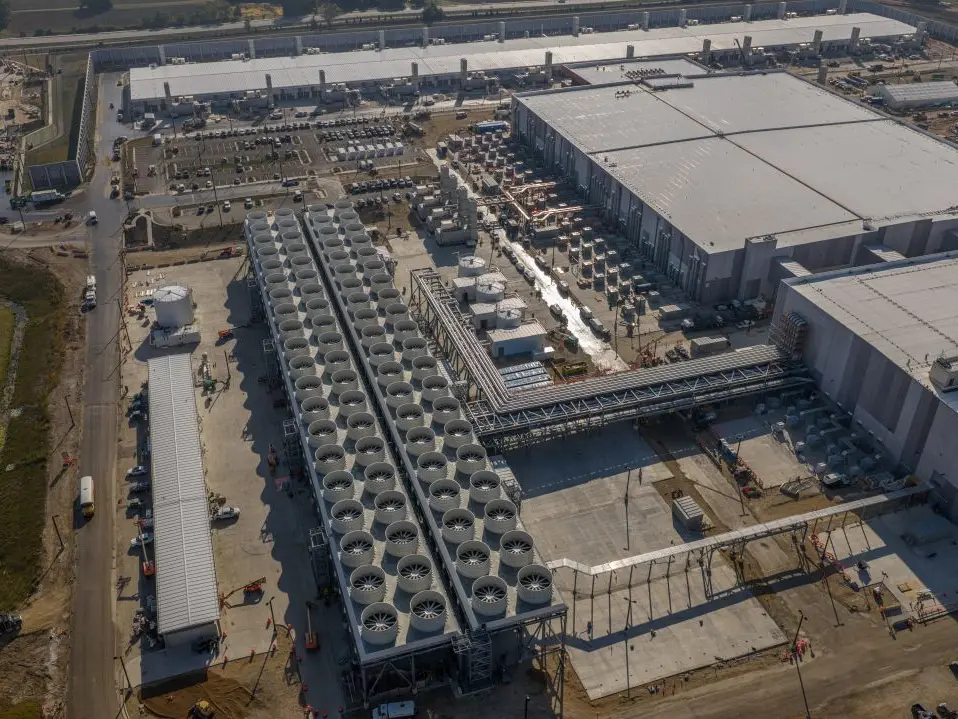
Aerial view of Microsoft’s new AI datacenter campus in Mt Pleasant, Wisconsin. Photograph: (Microsoft)
The AI race is no longer primarily about models, algorithms or research output, but about who builds the physical ecosystems to run them at scale. While India ranks third most digitalised economy globally by scale, it is 11th in AI research output and 16th in AI infrastructure.
The Bigger picture
Data centres attracted more than one-fifth of all global greenfield foreign direct investment in 2025, with announced investment exceeding $270 billion, according to a United Nations Conference on Trade and Development (UNCTAD) report published in January 2026, a figure that signals a fundamental shift in how nations are now competing for dominance in the artificial intelligence era.
The top recipients of that investment were France, the United States and South Korea. India did not feature in the top tier.
That gap sits at the centre of a debate being pressed by industry leaders and backed by a growing body of data, that the AI race is no longer primarily about models, algorithms or research output, but about who builds the physical ecosystems to run AI at scale.
"AI is often spoken about as a software revolution, but its growth is fundamentally tied to physical infrastructure," said Vikas Garg, Co-founder and Chief Product Officer at Kapture CX. "Every AI interaction depends on massive compute capacity, data centres, energy systems, networking infrastructure and hardware supply chains working seamlessly in the background. As AI adoption scales globally, the countries and enterprises investing in this foundational infrastructure today will shape the next era of digital leadership."
India's structural strengths
Trending Stories
&imwidth=280&imheight=210&format=webp&quality=medium)
&imwidth=280&imheight=210&format=webp&quality=medium)
&imwidth=280&imheight=210&format=webp&quality=medium)
&imwidth=280&imheight=210&format=webp&quality=medium)
&imwidth=280&imheight=210&format=webp&quality=medium)
&imwidth=280&imheight=210&format=webp&quality=medium)
&imwidth=280&imheight=210&format=webp&quality=medium)
&imwidth=280&imheight=210&format=webp&quality=medium)
&imwidth=280&imheight=210&format=webp&quality=medium)
&imwidth=280&imheight=210&format=webp&quality=medium)
&imwidth=280&imheight=210&format=webp&quality=medium)
&im=FitAndFill=(700,400)&imwidth=280&imheight=210&format=webp&quality=medium)
&imwidth=280&imheight=210&format=webp&quality=medium)
&imwidth=280&imheight=210&format=webp&quality=medium)
&imwidth=280&imheight=210&format=webp&quality=medium)
&imwidth=280&imheight=210&format=webp&quality=medium)
&imwidth=280&imheight=210&format=webp&quality=medium)
&im=FitAndFill=(700,400)&imwidth=280&imheight=210&format=webp&quality=medium)
&imwidth=280&imheight=210&format=webp&quality=medium)
&imwidth=280&imheight=210&format=webp&quality=medium)
&imwidth=280&imheight=210&format=webp&quality=medium)
&imwidth=280&imheight=210&format=webp&quality=medium)
&imwidth=280&imheight=210&format=webp&quality=medium)
&imwidth=280&imheight=210&format=webp&quality=medium)
&imwidth=280&imheight=210&format=webp&quality=medium)
&imwidth=280&imheight=210&format=webp&quality=medium)
&imwidth=280&imheight=210&format=webp&quality=medium)
&imwidth=280&imheight=210&format=webp&quality=medium)
&imwidth=280&imheight=210&format=webp&quality=medium)
&im=FitAndFill=(700,400)&imwidth=280&imheight=210&format=webp&quality=medium)
&imwidth=280&imheight=210&format=webp&quality=medium)
&imwidth=280&imheight=210&format=webp&quality=medium)
&imwidth=280&imheight=210&format=webp&quality=medium)
&imwidth=280&imheight=210&format=webp&quality=medium)
&imwidth=280&imheight=210&format=webp&quality=medium)
India enters this contest with a recognised structural asset: its Global Capability Centre ecosystem. The country hosts over 1,700 GCCs employing 1.9 million professionals and generating $64.6 billion in revenue in FY24, up from $40.4 billion in FY19, according to the Economic Survey 2024-25 and a government press release from November 2025.
India's GCC count is projected to cross 2,400 centres by 2030, according to a joint report by the Federation of Indian Chambers of Commerce and Industry and real estate consultancy ANAROCK, released in February 2026.
Data centre capacity has followed a parallel growth curve. India's installed capacity grew from 350 megawatts in 2019 to 917 megawatts in 2024 and is projected to reach 1.8 gigawatts by 2027, at a compound annual growth rate of approximately 21 per cent since 2019, according to JLL India's April 2025 market research.
"India is uniquely positioned at the centre of this shift," said Kunal Sharma, Founder and CEO of Flipspaces, an enterprise infrastructure firm. "The country's GCC ecosystem is projected to cross 2,400 centres by 2030, while data centre capacity is expected to grow at over 20 per cent CAGR, driven by cloud expansion, AI workloads and data localisation mandates."
The capacity gap
The growth trajectory, however, sits against a stark structural imbalance. India currently holds approximately three per cent of global data centre capacity, according to Deloitte India's 2025 analysis, a share that stands in sharp contrast to its scale as a digital economy.
The UNCTAD findings underline the competitive pressure. With more than $270 billion in announced data centre FDI concentrating in a handful of markets in 2025, the investment gap between leading and emerging economies is widening, not closing.
The UAE comparison
The United Arab Emirates offers a pointed parallel. Microsoft committed $15.2 billion in UAE data centre investment, according to a Microsoft press release from April 2025, a single bilateral commitment that illustrates the scale of capital now moving into sovereign AI infrastructure strategies.
India's equivalent policy framework, the Ministry of Electronics and Information Technology's draft National Data Centre Policy, which proposes a 20-year income tax exemption for data centre developers, remains a consultation draft and has not been officially gazetted as law.
Competitiveness picture
India's position in global AI rankings reflects both its progress and the distance still to cover. Stanford University's Global AI Vibrancy Tool ranked India third globally in AI competitiveness in 2025, up from seventh in 2023. ICRIER's State of India's Digital Economy 2025 report confirmed India as the third most digitalised economy globally by scale, but flagged that the country ranks 11th in AI research output and 16th in AI infrastructure.
Kunal Sharma argues the conversation must extend beyond data centres into the broader enterprise environment. "What is particularly interesting is how the definition of infrastructure itself is evolving. Enterprises today are no longer looking at office spaces as static real estate assets. They are becoming dynamic, technology-enabled operating environments built around data, automation and workforce agility," he said.
"Across markets like India, the UAE and the US, there is a growing demand for integrated execution models that combine technology, spatial intelligence and faster delivery cycles. The next decade of AI leadership will belong not just to companies building models, but to nations and enterprises capable of building the infrastructure ecosystems that allow AI to scale sustainably."
About the Author
