15 satellites lost, but 'KID' survives ISRO's PSLV-C62 rocket failure

&imwidth=600&imheight=450&format=webp&quality=medium "15 satellites lost, but 'KID' survives ISRO's PSLV-C62 rocket failure")
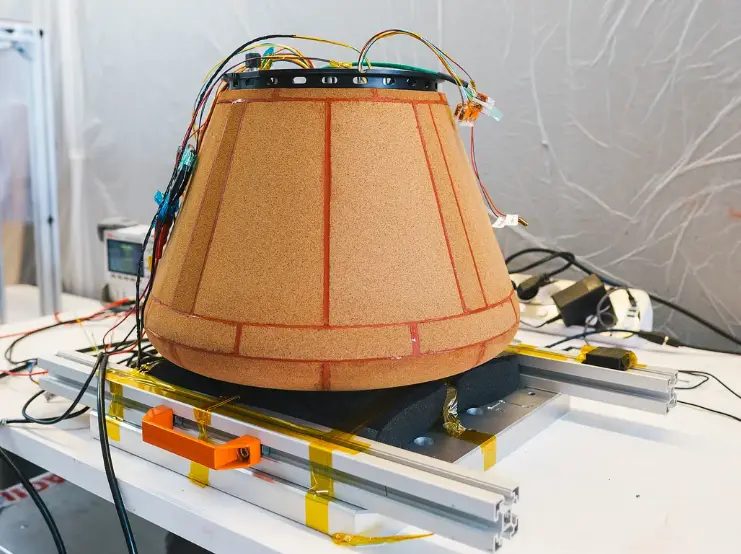
Photograph: (Orbital Paradigm)
Kestrel Initial Demonstrator(KID), a lampshade-shaped capsule, was one of the 16 passengers aboard the PSLV rocket.
One 'survivor' has miraculously emerged from the Indian PSLV-62 rocket launch that failed mid-flight on Monday, (12 Jan). While it was initially assumed that the rocket and its 16 passenger satellites had been lost within seven minutes of launch, Spanish firm Orbital Paradigm announced on Tuesday that their KID capsule had survived the ill-fated mission. "Our kid capsule, against all odds, separated from PSLV-C62, switched on, and transmitted data," they announced on social media.
Kestrel Initial Demonstrator(KID), a lampshade-shaped capsule, was one of the 16 passengers aboard the PSLV rocket. KID was not a standalone satellite that was designed to spend its lifetime in space. Instead, it was made as a re-entry vehicle, which means, it would make a short trip around the Earth in space(during which certain on-board experiments or data collection would take place), and the capsule would fall back to the home planet.
If the mission had gone as per plan, KID would have hung on to the rocket until 108minutes after liftoff. KID was meant to be separated from the rocket only after the rocket aligned into a re-entry trajectory, one that heads back towards the Earth. However, KID did not reach the intended altitude or speed, due to the rocket's mid-flight failure, which left it at the mercy of Earth's gravity. Therefore, KID went tumbling down towards Earth, along with the remnants of the rocket.
KID was meant to survive this fiery process known as re-entry, when temperatures on the re-entering object rapidly rise from 300 degrees Celsius to 2,500 degrees Celsius, as it falls through the Earth's atmosphere between altitudes of 100 and 70 kilometres. At such extreme temperatures and speeds, rocket parts and satellites break and burn up. Only specially designed capsules or space vehicles with adequate thermal protection, special coatings and purpose-built materials can survive re-entry. This is how astronaut-carrying space vehicles also travel back to Earth.
Also Read: Trump warns ‘DAY OF RECKONING & RETRIBUTION IS COMING!’ in Minnesota after ICE agent shooting
According to Francesco Cacciatore, CEO, Orbital Paradigm, the KID separated from the remnants of the PSLV rocket and switched on, and transmitted a few minutes of valuable re-entry data before falling back on Earth. The firm is trying to reconstruct the flight path from the data that the KID transmitted, and has said that it would offer a detailed update in the coming days.
Trending Stories
&imwidth=280&imheight=210&format=webp&quality=medium)
&imwidth=280&imheight=210&format=webp&quality=medium)
&imwidth=280&imheight=210&format=webp&quality=medium)
&imwidth=280&imheight=210&format=webp&quality=medium)
&imwidth=280&imheight=210&format=webp&quality=medium)
&imwidth=280&imheight=210&format=webp&quality=medium)
&im=FitAndFill=(700,400)&imwidth=280&imheight=210&format=webp&quality=medium)
&imwidth=280&imheight=210&format=webp&quality=medium)
&imwidth=280&imheight=210&format=webp&quality=medium)
&imwidth=280&imheight=210&format=webp&quality=medium)
&imwidth=280&imheight=210&format=webp&quality=medium)
&imwidth=280&imheight=210&format=webp&quality=medium)
&imwidth=280&imheight=210&format=webp&quality=medium)
&imwidth=280&imheight=210&format=webp&quality=medium)
&imwidth=280&imheight=210&format=webp&quality=medium)
&imwidth=280&imheight=210&format=webp&quality=medium)
&imwidth=280&imheight=210&format=webp&quality=medium)
&imwidth=280&imheight=210&format=webp&quality=medium)
&imwidth=280&imheight=210&format=webp&quality=medium)
&imwidth=280&imheight=210&format=webp&quality=medium)
&imwidth=280&imheight=210&format=webp&quality=medium)
&imwidth=280&imheight=210&format=webp&quality=medium)
&imwidth=280&imheight=210&format=webp&quality=medium)
&imwidth=280&imheight=210&format=webp&quality=medium)
&imwidth=280&imheight=210&format=webp&quality=medium)
&imwidth=280&imheight=210&format=webp&quality=medium)
&imwidth=280&imheight=210&format=webp&quality=medium)
&imwidth=280&imheight=210&format=webp&quality=medium)
&imwidth=280&imheight=210&format=webp&quality=medium)
&imwidth=280&imheight=210&format=webp&quality=medium)
&imwidth=280&imheight=210&format=webp&quality=medium)
&imwidth=280&imheight=210&format=webp&quality=medium)
&imwidth=280&imheight=210&format=webp&quality=medium)
&imwidth=280&imheight=210&format=webp&quality=medium)
&imwidth=280&imheight=210&format=webp&quality=medium)
&imwidth=280&imheight=210&format=webp&quality=medium)
The primary satellite of this PSLV-C62 mission was the 'EOS-N1' or 'Anvesha', an Earth Observation satellite built by India's Defence Research and Development Organisation (DRDO). In addition to 'EOS-N1', there were 15 co-passenger satellites aboard the PSLV-C62. Seven satellites are from India, while two of them are from Europe, five of them are from Brazil, and one is from Nepal. Many of these satellites were from academia or startups, and were to demonstrate unique experiments in space.