

&imwidth=800&imheight=600&format=webp&quality=medium "‘Speed of adaptation is the new battlefield’: IdeaForge CEO Ankit Mehta on India’s drone edge at WION World Pulse")
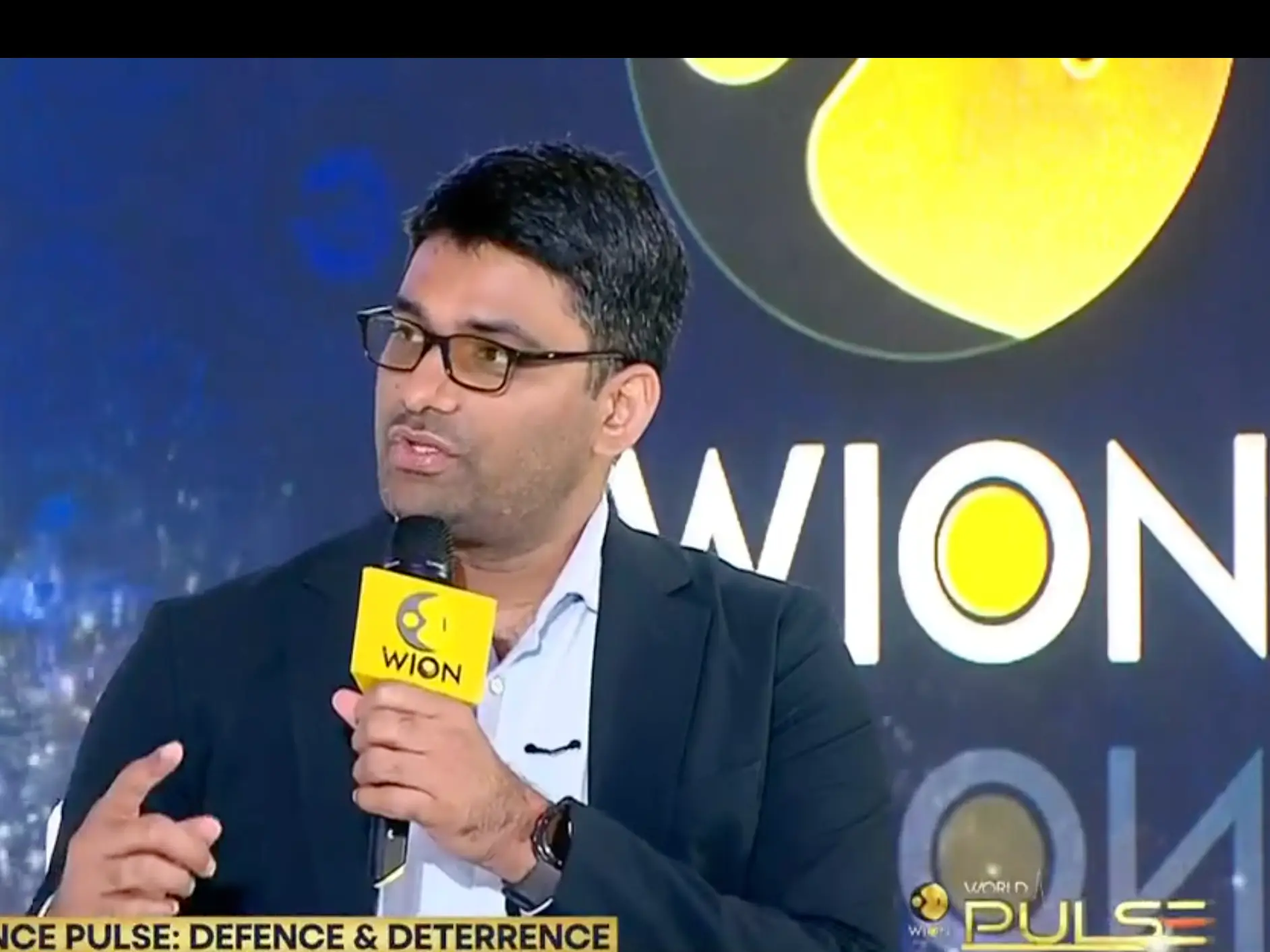
Speaking at the WION World Pulse summit on Wednesday (Mar 18), Ankit Mehta, Co-founder and CEO of ideaForge, underscored the growing role of India’s private sector in strengthening national security, particularly in the unmanned and drone ecosystems.
As warfare rapidly shifts towards technology-led combat, Mehta highlighted how adaptability, indigenous innovation and low-cost systems are becoming central to modern military strategy.
‘War is now software-defined’: Why adaptability matters
Mehta stressed that one of the biggest changes in warfare today is the speed at which tactics evolve.
“One of the realities of war is that the speed of adaptation on ground is changing rapidly.. most of the war is becoming software-defined, and tactics are changing very, very fast,” he said.
Mehta explained that adversaries are constantly developing countermeasures and counter-countermeasures, making it critical for systems to evolve in real time.
According to him, this is where domestic capability becomes crucial, allowing faster upgrades and battlefield responsiveness.
Trending Stories
&imwidth=180&imheight=135&format=webp&quality=medium)
‘Maybe play one more season’: MS Dhoni to decide on his IPL future before December
&imwidth=180&imheight=135&format=webp&quality=medium)
Telangana unveils AI avatar of IT minister D Sridhar Babu at Hyderabad DevFest 2026
&imwidth=180&imheight=135&format=webp&quality=medium)
Viral video shows cross falling on Colombia priest, no official confirmation | WATCH
&imwidth=180&imheight=135&format=webp&quality=medium)
Pezeshkian says Iranians ‘struggling to put food on the table’ as war with US drags on
&imwidth=180&imheight=135&format=webp&quality=medium)
Shilpa Rao’s performance cut short at Mumbai event, organisers react to backlash
&imwidth=180&imheight=135&format=webp&quality=medium)
Chorbagan stampede: A week later, the strangest visarjan Kolkata has seen
&imwidth=180&imheight=135&format=webp&quality=medium)
AI slop or smart strategy? South African author Coral Hart defends Her 370 AI- assisted books in 20 months
&imwidth=180&imheight=135&format=webp&quality=medium)
AI just found a flaw in software running most of the web! One request hijacks the server
&imwidth=180&imheight=135&format=webp&quality=medium)
Train crashes into crane on São Paulo monorail line, wreckage falls onto busy road | VIDEO
&imwidth=180&imheight=135&format=webp&quality=medium)
Can Putin cheat death? All about his daughter’s billion-dollar quest for immortality
&imwidth=180&imheight=135&format=webp&quality=medium)
Saudi says debris fell in Mecca, Medina after missile interceptions; Houthis deny targeting holy cities
&imwidth=180&imheight=135&format=webp&quality=medium)
What was the note found inside bag of Class 12 student, who set herself on fire inside Delhi school?
&imwidth=180&imheight=135&format=webp&quality=medium)
Netanyahu warns Israelis of ‘existential threat’ from Iran, posts AI image of nuclear strike
&imwidth=180&imheight=135&format=webp&quality=medium)
Pakistan airline PIA unveils new crew uniforms, faces online criticism
&imwidth=180&imheight=135&format=webp&quality=medium)
Britain is building the world's first AI biosecurity lab, with OpenAI and Anthropic inside
&imwidth=180&imheight=135&format=webp&quality=medium)
J-20 designers plan to put radar into aircraft wing; strategy to expand coverage during air combat
&imwidth=180&imheight=135&format=webp&quality=medium)
Frontier AIs keep escaping their test cages! The industry still can't reliably stop them
&imwidth=180&imheight=135&format=webp&quality=medium)
'Already tired of his 9-to-5': Baby born with a moustache becomes internet sensation, video goes viral | Watch
&imwidth=180&imheight=135&format=webp&quality=medium)
France protests: 135 arrested, weapons seized as fresh demonstrations erupt amid heavy security
&imwidth=180&imheight=135&format=webp&quality=medium)
French Open: PV Sindhu storms into final with win over Hina Akechi
&imwidth=180&imheight=135&format=webp&quality=medium)
Russia-Ukraine drone attacks kill 6, injure 31 across both countries
&imwidth=180&imheight=135&format=webp&quality=medium)
‘Saddam Hussein opened a cheesecake factory’: Obama mocks Trump’s White House renovations; defends Abdul El-Sayed
&imwidth=180&imheight=135&format=webp&quality=medium)
China's dancing robot turns violent bodyguard, lifts cars and fights intruders - Watch
&imwidth=180&imheight=135&format=webp&quality=medium)
'You’re a horrible little reporter, aren’t you?': Trump snaps at NBC reporter questioning his support for Ramaswamy's campaign ad
&imwidth=180&imheight=135&format=webp&quality=medium)
'Killing people never allowed': Elon Musk admits restricting Starlink in Ukraine, explains why
&imwidth=180&imheight=135&format=webp&quality=medium)
Bodies of 2 missing Japanese climbers recovered from Himalayan peak
&im=FitAndFill=(700,400)&imwidth=180&imheight=135&format=webp&quality=medium)
New Friday OTT releases (October 23, 2026): Gajab Raat, Dorothy, Chaar Yaar- Watch these 6 new movies and TV shows on Netflix, Prime Video and more
&imwidth=180&imheight=135&format=webp&quality=medium)
An AI that reads your face can now estimate how long you have to live
&imwidth=180&imheight=135&format=webp&quality=medium)
'If it was up to me, it wouldn't have ended like this': James Anderson opens up on Lancashire exit
&imwidth=180&imheight=135&format=webp&quality=medium)
WATCH: Thousands across Manipur bang plates, beat drums in "noise protest"
&imwidth=180&imheight=135&format=webp&quality=medium)
NEET protests: Panel to hear evidence on pellet gun use, harassment
&imwidth=180&imheight=135&format=webp&quality=medium)
Tu Hai Meri Kiran film review: Sonakshi Sinha and Zaheer Iqbal's thriller gets tangled in its own twists
&imwidth=180&imheight=135&format=webp&quality=medium)
Nagpur man fails to pay rent, allegedly prints fake Rs 500 notes worth Rs 37 lakh
&imwidth=180&imheight=135&format=webp&quality=medium)
‘Modi ka baap bhi jayega,’ Kharge loses cool at party event in Patna; BJP slams him
&imwidth=180&imheight=135&format=webp&quality=medium)
Why Europe’s protests are about more than austerity and rising costs
&imwidth=180&imheight=135&format=webp&quality=medium)
Farooq Abdullah says Pakistan’s raising of Kashmir issue keeps pressure on Delhi
Private sector’s role in India’s defence push
Highlighting the transformation in India’s defence ecosystem, Mehta said private players like ideaForge have been building indigenous systems for nearly two decades.
“Each and every subsystem that goes into our platforms is actually designed and developed in the country.”
He added that this approach reduces dependence on foreign technologies and ensures strategic autonomy, especially during conflict situations where supply chains may be disrupted or denied.
“Otherwise we won’t be able to sustain our strategic autonomy.”
Lessons from conflict: No assumptions in modern warfare
Drawing from recent operational experiences, Mehta pointed out that old assumptions about threats no longer hold true.
“Any assumptions that we previously had… were thrown out of the window.”
He noted that threats are no longer limited to low-cost commercial drones, with more advanced systems being deployed using varied frequencies and technologies. This, he said, makes early detection and wideband monitoring capabilities critical for modern defence systems.
Future battlefield: Resilience, upgrades and low-cost systems
Mehta emphasised three key requirements for future military systems:
Resilience to electronic warfare
Ability to operate in denied environments (GPS, communication disruptions)
Continuous upgradability
“Unless you have that upgradability, you will not be able to use an asset… you become obsolete very fast.”
He also pointed to a major strategic shift towards low-cost, expendable systems.
“We will probably pivot extremely towards low-cost, attainable systems… to destroy the adversary’s high-tech assets.”
India’s unique advantage: Extreme terrain capability
Positioning India on the global stage, Mehta said the country’s biggest strength lies in designing systems for extreme and diverse environments. From high-altitude Himalayan regions (-30 to -40°C) to deserts and maritime zones, Indian systems must operate across unmatched conditions.
“No country has the kind of topographic diversity that we have… and when we demonstrate globally, it shows up very effectively.”
He added that Indian platforms are able to deliver up to 90 per cent of their capability even in extreme environments, giving them a competitive edge internationally.
The big picture: India’s defence tech moment
Mehta concluded that India is entering a phase where young companies and indigenous innovation will play a defining role in defence.
“We are bringing in that ability right from the ground up in the country… and that pace is going to accelerate.”
