Fitna Al-Khawarij: Decoding biggest security threat to Pakistan | Gravitas

&imwidth=600&imheight=450&format=webp&quality=medium "Fitna Al-Khawarij: Decoding biggest security threat to Pakistan | Gravitas")
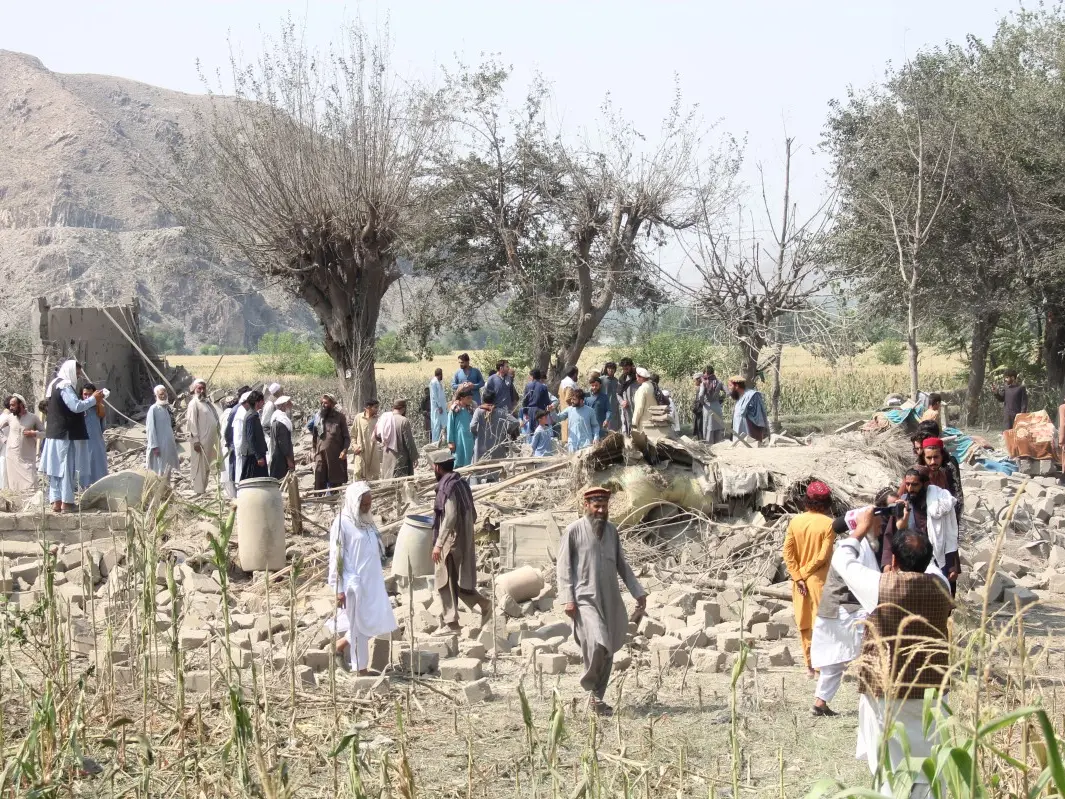
Afghans gather to clear rubble in the aftermath of a Pakistani airstrike in the Nurgal district of Afghanistan's Kunar province on September 21, 2026. Pakistan "bombarded civilian homes" in two eastern provinces of Afghanistan, killing three people, the Taliban government in Kabul said on September 21. Photograph: (AFP)
Pakistan has labelled Tehrik-e-Taliban Pakistan as Fitna Al-Khawarij. Here's what the group is, why Islamabad considers it a major threat and its role in rising terror attacks.
Despite Pak army chief Asim Munir's attempt to project Pakistan as a security provider in West Asia, the ground reality is stark. The internal security situation has deteriorated under his watch, with a spike in terrorism.
Pak authorities have largely attributed this to Fitna al-Khawarij. Holding it responsible for the recent terror incidents in Khyber Pakhtunkhwa, Pakistan claimed to have targeted its terrorist camps and hideouts in Afghanistan a few hours earlier.
While Islamabad declared the killing of 28 terrorists, the Taliban stated that three civilians lost their lives...
Now, it is worth noting that Pakistan announced that Tehrik-e-Taliban Pakistan or TTP, will be officially referred to as Fitna al-Khawarij in July 2024.
What was the rationale behind this move?
The name change was a bid to delegitimise this outfit, which Pakistan claimed had distorted the image of Islam.
Trending Stories
)
)
)
)
)
)
)
&im=FitAndFill=(700,400))
)
)
)
)
)
)
)
)
)
)
)
)
)
)
)
)
)
)
)
)
)
)
&im=FitAndFill=(700,400))
)
)
&im=FitAndFill=(700,400))
)
)
)
)
)
)
)
)
A notification issued by Pakistan's interior ministry stated that TTP's activities are detrimental and in contradiction to the true teachings of Islam. It also directed that religious titles such as Mufti and Hafiz should not be used for those associated with TTP.
Let's break this down further.
Formed in 2007 under Baitullah Mehsud's leadership, TTP saw disparate terror outfits coming together, with an aim of overthrowing the Pakistani government and ruling as per its interpretation of Islamic law.
It is widely regarded as one of the deadliest terror groups operating on Pakistani soil, having killed hundreds of military personnel and civilians.
In 2011, TTP was added to the UNSC sanctions list.
Since the Taliban returned to power in Afghanistan in 2021, Pakistan has accused it of supporting TTP, leading to a further rise in terror attacks. But the Afghan Taliban has denied this claim.
TTP is believed to have an estimated strength of up to five thousand fighters at present.
Now, Pakistan's deteriorating security situation is also evident from hard data.
According to the South Asia Terrorism Portal, Pakistan has already witnessed 1,880 terrorism-related incidents this year.
This marks the highest tally since 2014, which saw over 2,700 such incidents.
662 civilians and over 1,020 security personnel have lost their lives.
As Pakistan struggles to deal with this and backs cross-border terrorism at the same time, it would do well to recall a warning issued in 2011.
The then US Secretary of State Hillary Clinton said, and I quote her, 'you can't keep snakes in your backyard and expect them only to bite your neighbours'.