
&imwidth=800&imheight=600&format=webp&quality=medium "What is Kankana Shikhari? The hidden chapter in Lord Jagannath's history explained")
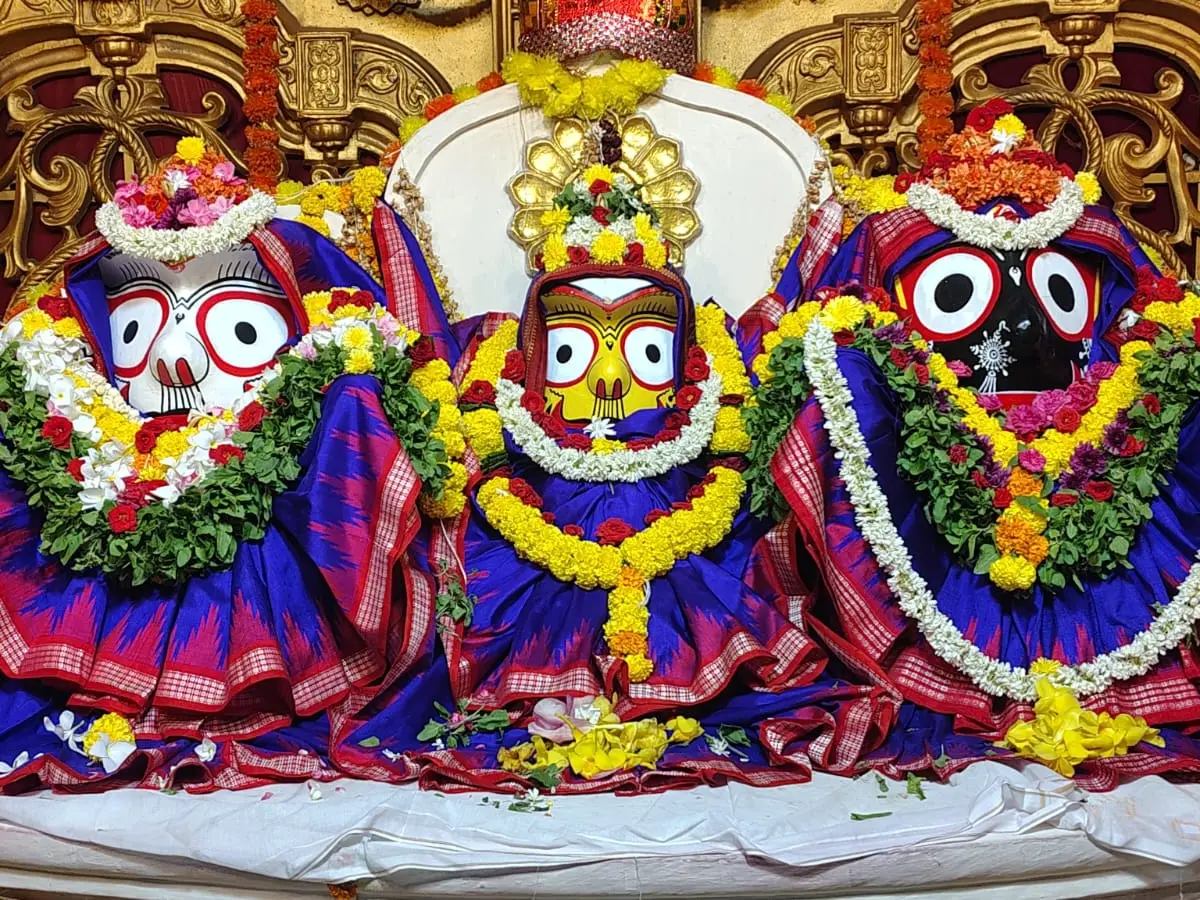
Every Rath Yatra, millions of devotees celebrate Lord Jagannatha's grand journey from Jagannath Temple, Puri, Odisha (a south-eastern state in India), to the Gundicha Temple. While the festival is known for its towering chariots and centuries-old rituals, it also brings renewed interest in the lesser-known chapters of Jagannath's history. One such forgotten story is that of Kankana Shikhari, a sacred refuge where the deities were believed to have been protected and worshipped during times of invasion, preserving one of Hinduism's most revered traditions through periods of crisis.
What is Kankana Shikhari?
Kankana Shikhari is remembered in Jagannath tradition as a sacred refuge where Lord Jagannath, Lord Balabhadra and Devi Subhadra were temporarily shifted during periods when the Puri Jagannath Temple faced attacks or political unrest. Rather than allowing the deities to fall into the hands of invaders, temple servitors secretly moved them to safer locations so that daily rituals and worship could continue uninterrupted.

Kankana Shikhari is not just a place of worship, it is a symbol of faith, heritage, and the deep-rooted culture of Odisha. Over the centuries, this temple has been a spiritual anchor for the community, offering peace, blessings, and connection to the divine.
Although Kankana Shikhari is not as widely known as the Gundicha Temple or the main Jagannath Temple, it occupies an important place in Odisha's religious history. Kankana Shikhari is a sacred islet and temple in Odisha, located near Nairi village on the banks of Chilika Lake.
Significance and history behind Kankana Shikhari
Trending Stories
)
Extreme warming in Indian Ocean added 695 billion tons of ice to Antarctica ice sheet
&im=FitAndFill=(700,400))
Ananya Panday to Sharvari: 5 actresses serving major princess vibes
)
‘Will go to any extent’: Pakistan vows to defend Saudi Arabia amid Houthi attacks
66 years of the Indus Waters Treaty: How India and Pakistan settled a bitter river dispute
)
Trump bans CNN, MS NOW and Politico from White House over ‘FAKE NEWS’
)
Flying cars in UAE: Ras Al Khaimah signs deal with Chinese company to test new transport
)
IIT Bombay student dies by suicide, was caught seeking AI help during exams
)
Brigitte Bardot’s private collection set for Paris auction; key items and prices revealed
)
Claude led 26% of Anthropic's AI R&D work
)
Reacher star Alan Ritchson opens up about alleged blackmail, suicide attempt during difficult period
)
It's a girl! Deepika Padukone and Ranveer Singh welcome their second child
)
Pak: A series of counter terrorism operations in Khyber Pakhtunkhwa
)
How did an Australian river with 500 crocodiles pass the Olympic test? Here's how
&im=FitAndFill=(700,400))
How many F-35s does Britain, Japan and Israel have?
&im=FitAndFill=(700,400))
Meet top 5 Indian batters with fastest T20I centuries
)
Mark Carney mimics Trump in hilarious moment over C$70 billion clean-energy investment; room erupts in laughter
)
Putin: European leaders using war rhetoric to save falling ratings
)
Ajit Agarkar’s future as chief selector to be decided at right time, says BCCI secretary
)
China may have gained access to US's classified F-35 jets; parts meant for repairs diverted to Hong Kong, sparking Pentagon inquiry
)
Tirupati Laddu ghee adulterated with chemicals, says ED, supplier arrested
)
Trump signs Russia sanctions bill into law, targets Moscow’s energy sector
)
Africa is splitting, and a lot sooner than estimated, giving way to a new ocean
)
Pentagon revives mandatory testosterone testing for male troops aged 30 and above
)
Cochin shipyard starts building Indian Navy's next-gen missile vessels
)
Russia holds first parliamentary elections since the beginning of the Ukraine war
)
FACT CHECK: Why did PM Modi ask Xi ‘is it okay’ at BRICS Summit? New video reveals...
)
The Verdict | When precision fails: US commits war crime in Minab school strike, UN finds
)
Why Ranveer Singh’s Dhurandhar missed India’s Oscar entry; FFI jury member reveals what happened
Russia attacks Ukraine with 174 drones, kills 8; 2 vessels hit in Black Sea
)
Trump 2.0: Dark days ahead for America’s ‘imperial presidency’
)
New brain discovery could aid neurological disease studies
)
Oxford United's new clothing line featured 'United 93' phase
)
Trump extends H-1B visa's $100,000 fee until September 2027: What it means for Indians?
)
Iran rebuilding nuclear facilities? New satellite images show Tehran may be rapidly restoring bombed Parchin base
)
Arvind Kejriwal, family members, Delhi CM Rekha Gupta get SIR notices
)
)
Reportedly, as per history, it states that between the 13th and 18th centuries, the Puri Srimandir (Temple) was attacked multiple times, prompting priests to relocate the sacred deities to ensure their safety. In 1731, during a devastating attack led by the Mughal Subedar Taqi Khan, the servitors secretly transferred the Chaturdha Murtis (the four deities) via boats to Kankana Shikhari.
The deities were hidden on the island for over four months, turning the remote site into a temporary, clandestine Srikhetra (holy abode). Several reports state that servitors had to fetch fresh drinking water from the nearby Jamuna Nirjhara spring, as Chilika's waters were brackish. The local populace harvested kankada (a type of spiny gourd) to offer as prasad to the deities, which locals and chronicles say inspired the name "Kankana Shikhari".
To preserve this historic chapter, Kankana Shikhari is celebrated for hosting a rare, centuries-old floating Rath Yatra. Because they lacked massive wooden chariots during their exile, the priests historically utilised interconnected boats to move the deities. Today, this tradition lives on, with the Holy Trinity placed on specialised chariots built over joined boats.

