Shahbad Dairy Murder: Decoding the 'Bystander Effect' and why nobody helped the 16-year-old

Bystander Effect: What exactly it is?
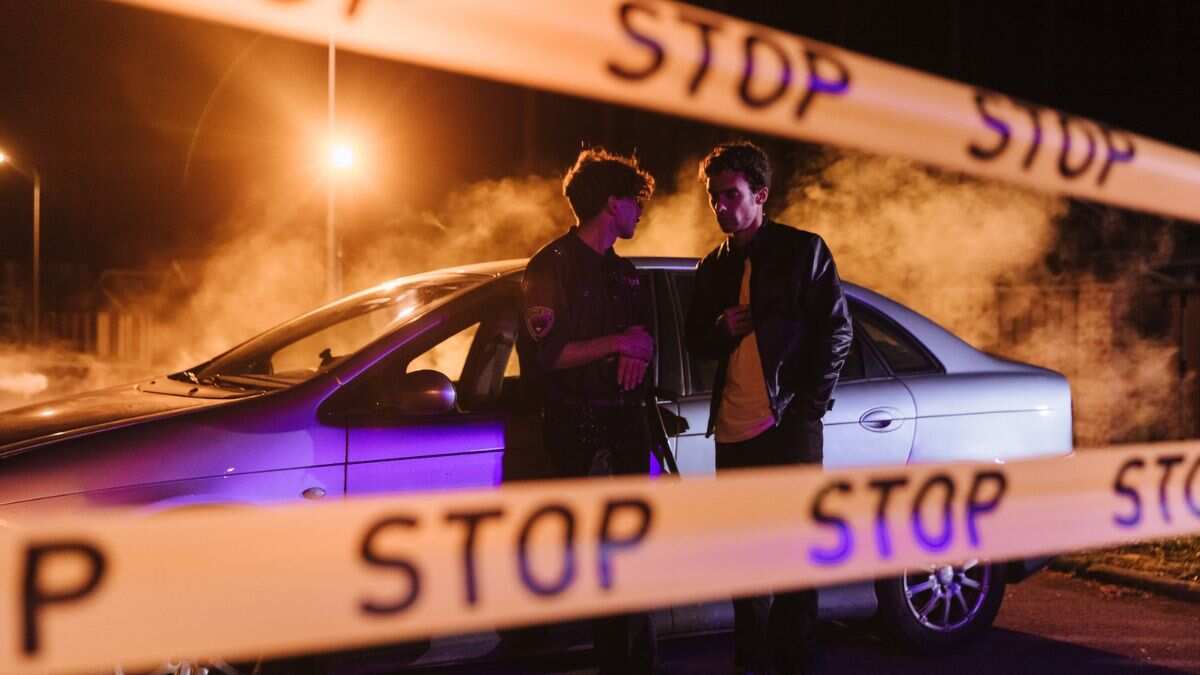
A 16-year-old girl was recently stabbed at least 20 times and then bludgeoned to death by her 20-year-old-boyfriend, who was later identified as Sahil Khan, in Outer Delhi's Shahbad Dairy area. Almost as shocking as the horrific killing of the minor is the fact that no pedestrianor bystander intervened ortried to help the girl as the crime unfolded in front of their own eyes. Nobody even dared to call the police for 25 to 30 minutes after the killer ran from the crime scene.Many experts blame the 'Bystander Effect' for the same. Let's understand what exactly it is!
'Bystander Effect' was first demonstrated by psychologists John Darley and Bibb Latané in 1968, after the infamous murder of Kitty Genovese in 1964 in Queens, New York.
The bystander effect is a captivating psychological phenomenon that sheds light on our intriguing social dynamics. Picture this: you find yourself in a bustling crowd, witnessing a person in need of assistance. Surprisingly, you notice that nobody is rushing to help. What sorcery is at play here?

Enter the bystander effect, a curious twist in human behaviour. When faced with emergencies in the presence of others, we often hesitate to take action. Why? It's like a cloak of responsibility is split among the bystanders, making everyone feel less accountable. "Someone else will help," we subconsciously think, slipping into a state of inaction.
But wait, there's more; social influence enters the stage, captivating our minds. Arouba Kabir, Mental Health Counsellor & Founder ofEnso Wellness, says,"We surreptitiously glance around, searching for cues on how to respond. If the crowd seems unperturbed or unmoving, we interpret it as a sign that everything is under control. 'No need to panic,'we convince ourselves, remaining statuesque."
)
Lady Gaga is a mom! Oscar-winning singer welcomes first child with fiance Michael Polansky
)
BRICS Summit 2026: Iran's Pezeshkian praises PM Modi at BRICS
)
Karthik Subbaraj’s Dorothy gets a standing ovation at TIFF world premiere
)
North Korea fires missiles after US, South Korea and Japan military drills but America says 'does not pose immediate threat'
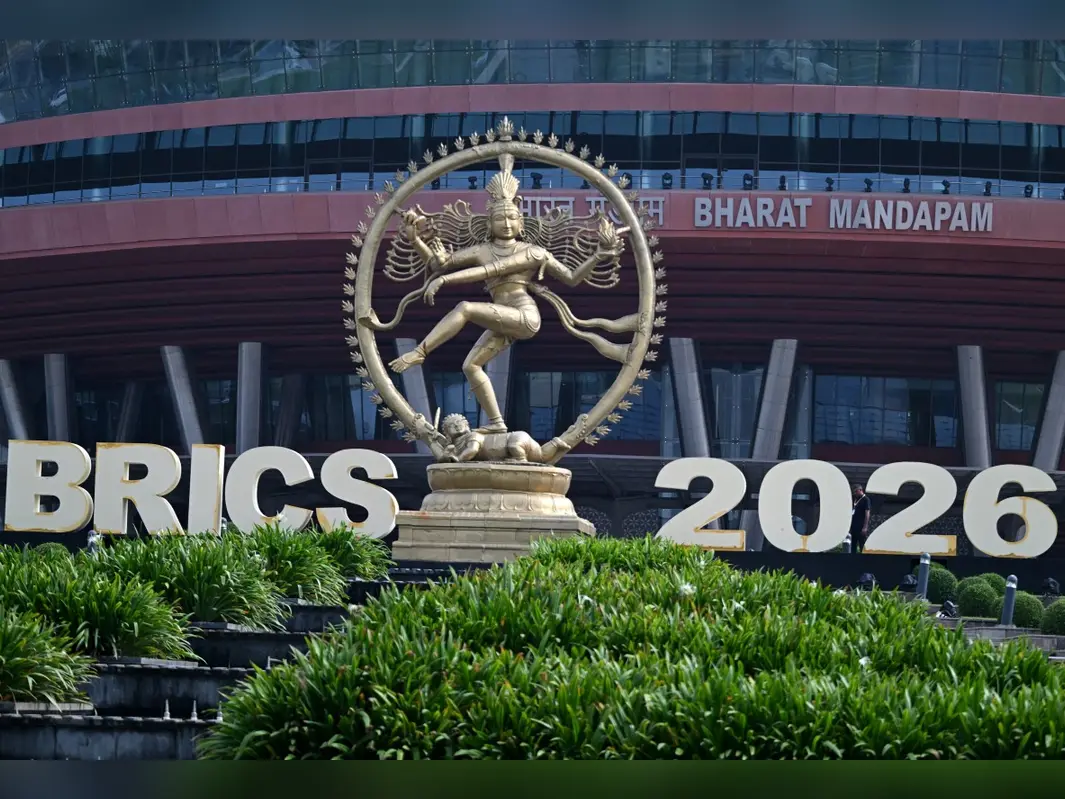)
Delhi's top luxury hotels turn into high-security fortress hubs for BRICS 2026 delegations
)
BRICS Summit 2026: 30+ countries seek BRICS membership
)
Frustrated man demolishes his kitchen after thousands flock to see Mother Mary his wife spotted on the wall
)
BRICS summit: India faces delicate Iran-UAE diplomatic test
)
After praising Modi, Pezeshkian meets Indian religious leaders, Hurriyat's Mirwaiz Umar Farooq
)
Manipuri singer Chongtham Vikram Singh beaten to death: Autopsy reveals internal bleeding, fractured ribs
)
Houthis vs Saudi Arabia: East-west oil pipeline shut after drone attacks from Iraq
)
South Africa batter Jordan Hermann hits highest individual score on ODI debut
)
800 million years old - Scientists discover 'fingerprints' of supercontinent Gondwana in ancient rocks
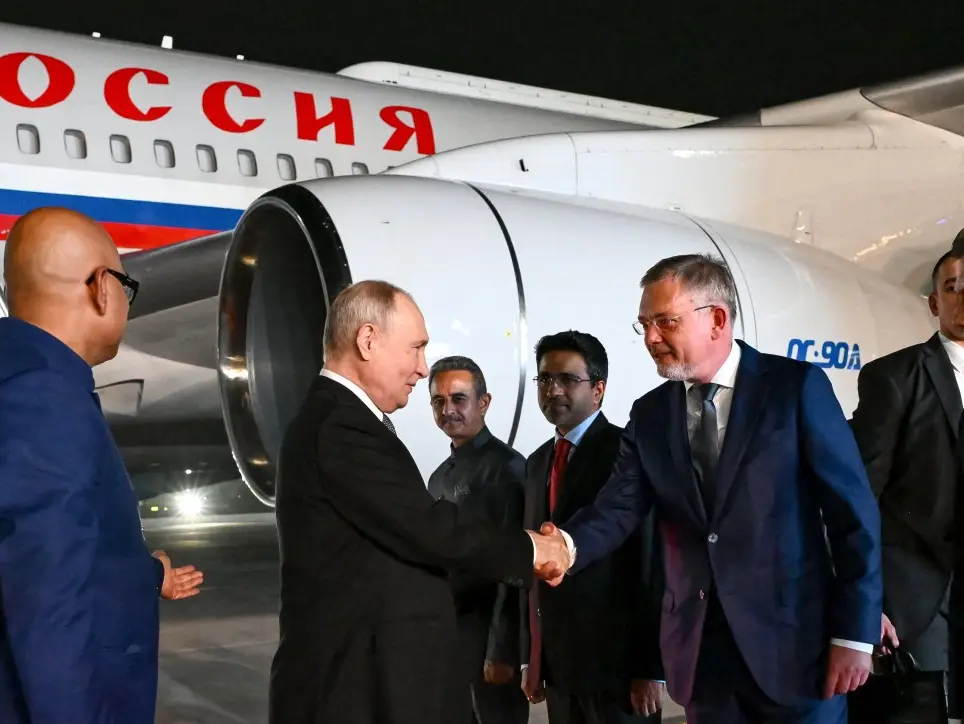)
Vladimir Putin in New Delhi for BRICS Summit: Russia-India defence, energy and nuclear ties in focus ahead of meeting with PM Modi
)
Osama Bin Laden's son ALIVE? Al-Qaeda releases video 7 years after US declared him dead
)
BRICS Summit 2026: South Africa says it will use the summit to advance its economic priorities
)
Gravitas | Iran hammers US air power in West Asia after Navy badly hit
)
Did you know THIS actor narrowly escaped the 9/11 terror attacks due to a last-minute change of travel plans?
)
Israel spent nearly $470,000 on PM's hair, makeup since 2019, data shows
)
BRICS Summit 2026: Rivals in West Asia, partners in BRICS, UAE, Iran, and Saudi delegations in Delhi
)
BRICS Summit 2026: PM Modi meets Malaysia, Ethiopia leaders; defence ties, trade in focus
)
9-year-old Chennai prodigy clears Cambridge IGCSE grade 10 exams
)
BRICS Summit: China resumes Guangzhou-New Delhi flight, issues 'good-neighbourliness' remark ahead of Xi-Modi meet
)
Satya Niketan horror: Who is responsible?
)
BRICS Summit 2026: Top world leaders in New Delhi; West Asia war casts shadow on BRICS Summit
&im=FitAndFill=(700,400))
New Friday OTT releases (September 11, 2026): The Revolutionaries, Vishwanath & Sons, Ghamasaan- 6 new titles coming on Netflix, Prime Video and more
)
Years before 9/11, CIA warned Clinton, Bush of 'explosive-packed airplane attack': What newly released files reveal
)
In first of its kind, Trump admin deports Afghan woman via Alien Terrorist Court
)
Baba Vanga's first prophecy for 2027 is out, and straight out of science fiction
)
Saudi Arabia shuts East-West oil pipeline, key Hormuz bypass, after attacks
)
WION Expertspeak: Understanding India's BRICS presidency amid wars, trade tensions and global turmoil
)
Satellite images show construction surge at Iran’s Pickaxe nuclear site amid US war
Lastly, the fear of social mishaps. We, humans, are wired to dread embarrassment like a medieval dragon. The mere thought of making a social blunder, drawing unwanted attention, or facing potential criticism can freeze us in our tracks. We become trapped within the walls of our own hesitation.
But fear not! Understanding the bystander effect offers us a key to unlocking pro-social behaviour. By raising awareness about this psychological quirk, fostering personal responsibility, and providing bystander training, we can break the spell of inaction. Together, let's transform the crowd into a collective force of compassion, ready to spring into action and make a positive impact when it matters the most.
WATCH WION LIVE HERE
You can now write for wionews.com and be a part of the community. Share your stories and opinions with us here.