Navigating breast cancer during pregnancy: Challenges and considerations

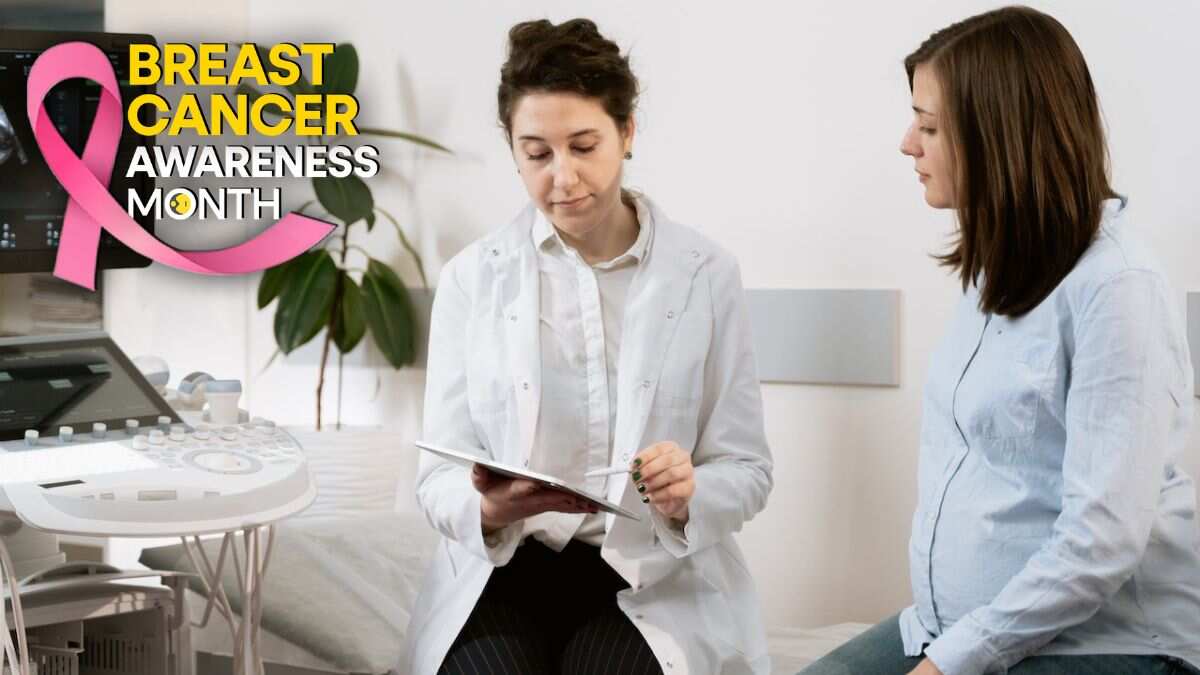
Breast Cancer Awareness Month
Breast cancer during pregnancy, known as pregnancy-associated breast cancer (PABC), presents formidable diagnostic hurdles. PABC can happen during pregnancy or within a year following childbirth. The conundrum arises because pregnant women's breasts are actively preparing for lactation, causing engorgement. This makes it difficult for women to feel any lumps, and doctors may not suspect cancer due to the patient's young age and other pregnancy-related changes. As a result, cancer is often detected at later stages when it's more advanced and aggressive. Alarmingly, PABC tumours are more likely to be hormone receptor negative, further complicating prognosis.
Speaking exclusively to WION,Dr Sushruta Mysore Shankar, consultant in Breast Surgery and Surgical Oncology at SPARSH Hospital, sheds light on the intricacies of this delicate situation.
How does this affect the mother and the unborn child?

The timing of breast cancer diagnosis during pregnancy has significant implications for both the mother and the unborn child. "If breast cancer is diagnosed in the third trimester, treatment is usually delayed until after childbirth. In some cases, the delivery may be expedited once the baby is mature enough, allowing the mother to receive treatment sooner," saysDr Sushruta.
"However, if breast cancer is detected in the first trimester, there are challenges. Surgery is an option, but breast-conserving surgery (lumpectomy) is limited because it requires radiation therapy, which is unsafe during pregnancy. Therefore, removal of the breast (modified radical mastectomy) may be necessary in the first trimester. Chemotherapy is also contraindicated in the first trimester due to its potential harm to the fetus, but it can be administered safely in the second trimester," adds the medical expert.
"Surgery can be performed in the first and second trimesters, and in the third trimester, it can be combined with chemotherapy and radiation if needed. However, some chemotherapy drugs carry risks of preterm delivery, low birth weight, and intrauterine growth retardation, requiring careful monitoring during pregnancy."
&imwidth=180&imheight=135&format=webp&quality=medium)
Viral video shows cross falling on Colombia priest, no official confirmation | WATCH
&imwidth=180&imheight=135&format=webp&quality=medium)
Rafale Marine fighter begins flight trials in Goa ahead of Indian Navy induction
&imwidth=180&imheight=135&format=webp&quality=medium)
Ranbir Kapoor apologises for Dussehra speech slip, clarifies remark at Ramayana event
&imwidth=180&imheight=135&format=webp&quality=medium)
Meta slapped with $25 billion fine in New Mexico over Facebook data practices, company plans appeal
&imwidth=180&imheight=135&format=webp&quality=medium)
WATCH: Woman IPS officer fires several rounds of AK-47, ignites debate online
&imwidth=180&imheight=135&format=webp&quality=medium)
EU probes Booking.com under Digital Services Act
&imwidth=180&imheight=135&format=webp&quality=medium)
Pakistan signs another defence pact even as Makkah Alliance shows no teeth. This time, it's with Qatar, Indonesia, Turkey
&imwidth=180&imheight=135&format=webp&quality=medium)
Ilhan Omar breaks silence over alleged marriage to her brother; Trump thinks it's 'really good answer'
&imwidth=180&imheight=135&format=webp&quality=medium)
US-Iran war: Bibi, Trump gamble on new Iran war to save themselves in polls
&imwidth=180&imheight=135&format=webp&quality=medium)
From Agni-V to Project Kusha: How are India’s indigenous missile systems and defence shield reshaping modern warfare
&imwidth=180&imheight=135&format=webp&quality=medium)
Will Rohit and Kohli play ODI World Cup 2027? BCCI president Manhas says board 'not in a position to comment'
&imwidth=180&imheight=135&format=webp&quality=medium)
Why websites around the world are suddenly going offline? What you need to know about PHP
&imwidth=180&imheight=135&format=webp&quality=medium)
US midterms 2026: What polls and prediction markets indicate about Congress
&imwidth=180&imheight=135&format=webp&quality=medium)
'You are a dummy, you are a stupid person': Trump loses temper with CNN, ABC reporters after questions about Russia sanctions
&imwidth=180&imheight=135&format=webp&quality=medium)
China's dancing robot turns violent bodyguard, lifts cars and fights intruders - Watch
&imwidth=180&imheight=135&format=webp&quality=medium)
16-foot doomsday fish in Chile triggers fears that the next earthquake is coming
&imwidth=180&imheight=135&format=webp&quality=medium)
US to get 850 F-35 stealth fighter jets under 10-year Pentagon-Lockheed deal
&imwidth=180&imheight=135&format=webp&quality=medium)
Are the US and Israel preparing for another major attack on Iran? Here's what report claims
&imwidth=180&imheight=135&format=webp&quality=medium)
Priyanka Chopra celebrates Dussehra 2026 with Nick Jonas and daughter Malti Marie | See pics
&im=FitAndFill=(700,400)&imwidth=180&imheight=135&format=webp&quality=medium)
New OTT releases this week (October 19-25, 2026): Gajab Raat to Chaar Yaar-8 titles to watch during Dussehra week on Netflix, Prime Video and more
&imwidth=180&imheight=135&format=webp&quality=medium)
‘I caution the president...’: Trump’s ex-press secretary warns after Zacharia’s exit
&imwidth=180&imheight=135&format=webp&quality=medium)
'Father of all bombs' vs 'mother of all bombs': Iran threatens US with new weapon as Trump hints at MOAB strike
&imwidth=180&imheight=135&format=webp&quality=medium)
Diljit Dosanjh's Oct 30 Delhi show hits roadblock, Delhi Police denies permission
&imwidth=180&imheight=135&format=webp&quality=medium)
Australia police arrest former national 100m champ Jake Doran for alleged child abuse
&imwidth=180&imheight=135&format=webp&quality=medium)
'Gyanu must go': CJP's Saurav Das, Ashutosh Ranka after release, despite Jantar Mantar protest undertaking
&imwidth=180&imheight=135&format=webp&quality=medium)
Kolkata airport: CISF detects ₹1.13 crore in US dollars hidden in bags of 2 Bangkok-bound passengers
&imwidth=180&imheight=135&format=webp&quality=medium)
Feds obtain DNA evidence that could prove Ilhan Omar married her brother: Report
&imwidth=180&imheight=135&format=webp&quality=medium)
US midterms 2026: Trump's approval rating hits record low as Democrats gain ground
Other risk factors
There's a risk of leukopenia (low white blood cell count) during chemotherapy, which affects both the mother and the unborn child.
Chemotherapy is not recommended after 35 weeks of gestation because leukopenia can occur up to three weeks after treatment, coinciding with the delivery period.
Leukopenic newborns are vulnerable to infections. Cesarean sections also pose infection risks for the mother. Frequent ultrasound checks are needed for pregnant patients on chemotherapy due to potential low birth weight or growth issues.
Radiation is strictly avoided during pregnancy and lactation. It's only considered once lactation is complete and when the patient chooses not to continue breastfeeding. Otherwise, radiation is not used during pregnancy or lactation to protect the unborn child's health.
Diagnosis
During the diagnostic phase of breast cancer in pregnancy, standard staging procedures are crucial. Typically, breast cancer can spread to the lungs, liver, and bones, requiring a PET CT scan for comprehensive evaluation. However, a PET CT scan is not safe during pregnancy. Instead, we use alternative methods: a chest X-ray with abdominal shielding for the chest, an abdominal ultrasound for liver evaluation, and an MRI for suspected bone involvement. These tests help doctors determine the cancer stage accurately, allowing themto customise the treatment plan for each patient's specific needs.
Disclaimer: Please note that the information provided on this website is for informational purposes only and is not intended as a substitute for professional medical advice, diagnosis, or treatment. Always seek the advice of your physician or other qualified healthcare providers with any questions you may have regarding a medical condition. The content provided on this website should not be used to diagnose or treat any health problem or disease. If you have or suspect that you have a medical problem, please contact your healthcare provider immediately. Never disregard professional medical advice or delay in seeking it because of something you have read on a website.
WATCH WION LIVE HERE
You can now write for wionews.com and be a part of the community. Share your stories and opinions with us here.