
&imwidth=800&imheight=600&format=webp&quality=medium "When munitions start thinking: How India is turning conventional weapons ‘smart’")
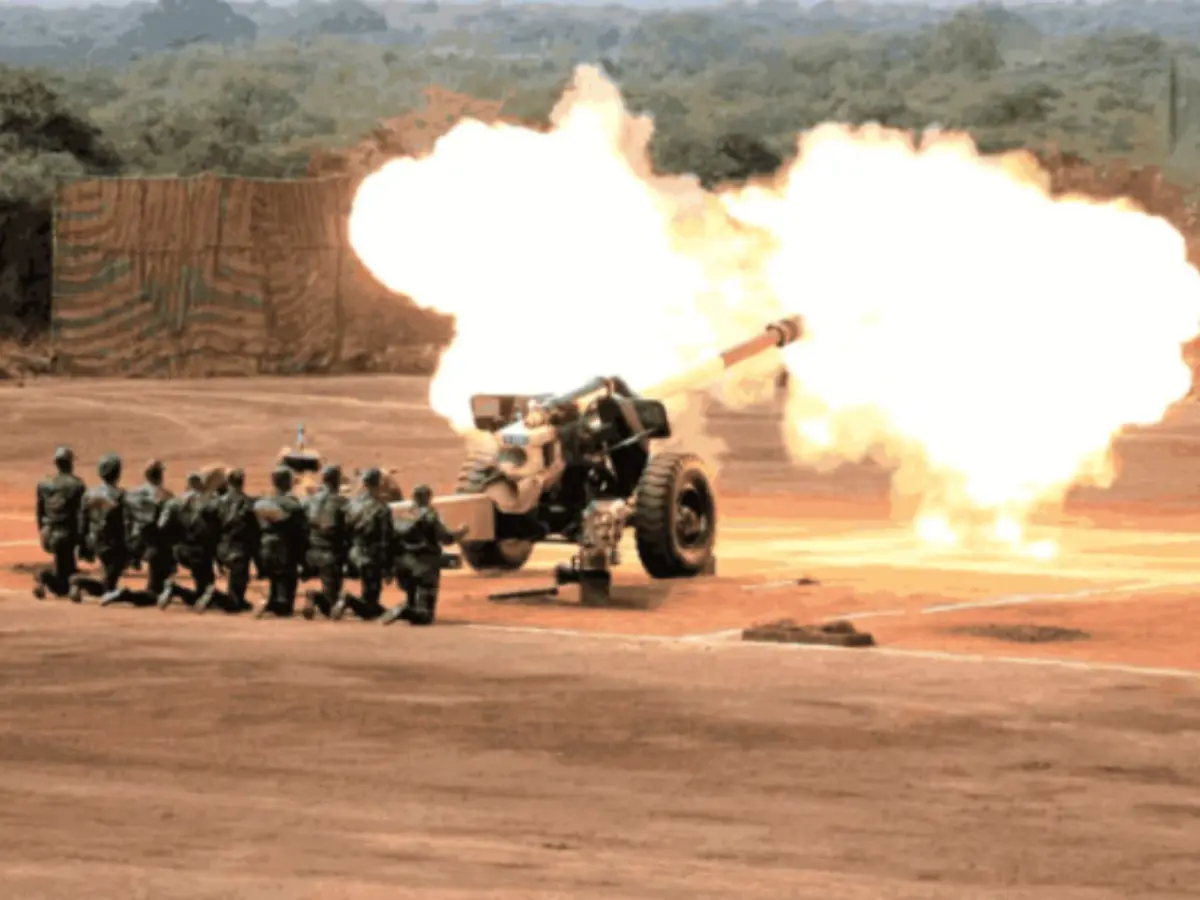
For decades, battlefield firepower depended largely on weapons that followed a predetermined path once fired. Mortar rounds travelled along ballistic trajectories, artillery shells followed their calculated arcs and unguided bombs depended heavily on the conditions at the moment of release.
Modern warfare is changing that equation. Guidance systems, sensors and increasingly sophisticated onboard electronics are allowing munitions to correct their flight after launch and strike targets with far greater precision.
India is also working on technologies aimed at bringing precision to existing classes of weapons, including mortar and artillery ammunition. The broader objective is significant: instead of relying only on expensive missiles or entirely new weapon systems, intelligence can increasingly be incorporated into the munition itself.

Speaking to WION, Abhishek Jain, Chief Business Officer of Zeus Numerix, said the distinction between conventional and smart ammunition can be surprisingly simple. “Smart basically means, can the munition decide for itself what to do in flight?”
Jain explained that this intelligence exists at different levels. A relatively simple system might correct only its range. More sophisticated weapons can correct both range and direction, while additional sensors can enable still greater precision.
But how much intelligence should actually be packed into a projectile? Jain says the answer depends on the mission. “Can we do more? Yes. Should we do more? Depends on the CONOPS, whether we require it or not.”
Trending Stories
)
‘Kill all in the name of...’: FBI arrests 21-year-old over alleged ISIS-inspired mass-casualty attack plot
)
'She married her brother': Ilhan Omar faces criminal probe over immigration fraud claims
)
Bitter Zelensky snubs Trump for playing politics with Ukraine war | Gravitas
)
India’s imports from Russia jump 57% in five months; China remains top import source
)
‘US military task force aiding Saudi Arabia forces with intel, planning support’: Official
)
Top military commanders from US, Israel, and 7 Arab nations held secret meeting on Iran War
)
A big shift in modern air power & control
)
'Definitely feel bad for yourself': Kuldeep Yadav opens up on India Test snubs
)
Delhi schools receive bomb threats in Punjabi, security checks find nothing suspicious
)
China's property crisis deepens as investment plunges nearly 20%
)
800 million years old - Scientists discover 'fingerprints' of supercontinent Gondwana in ancient rocks
)
Russia proposes to build 360 kmph Ivolga FG trains in India: What happened on sidelines of BRICS
)
Saudi turns to Israel for intelligence help as Houthi attacks intensify: Report
)
Trump's name cannot return to Kennedy Center, US judge rules
)
Amid AI safety fears, OpenAI, Anthropic and Google move to create standards body
)
2026 El Niño will create new extreme weather patterns. Worse, no one can predict them
)
1,200 Indian and US troops begin high-altitude and desert drills
)
Water equivalent to two Pacific Oceans could be stashed 2,900 km inside Earth
)
Ex-CIA officer caught with gold bars worth $40 million seeks plea deal | Gravitas
)
Imran Khan’s sons accuse Asim Munir of holding ‘personal grudge’ against imprisoned father
&im=FitAndFill=(700,400))
New OTT releases this week (September 14-20, 2026): Lust Stories 3, Waiting Hai, Irumudi- 5 new titles coming on Netflix, Prime Video and more
)
US Treasury yields cross 5% as Scott Bessent warns of ‘global issues’ impacting bonds
)
Who is Kalyan Bainsla, accused in the Gurugram hit-and-run case involving woman biker?
)
Saudi Arabia discovers 110 million tonnes of Uranium-rich ore in Madinah region
)
'Now Trump is copying us': Shivakumar links US $5,000 plan to Congress guarantees
)
Elephants hide behind trees, stage surprise attack on poachers targeting rhinos in South Africa
)
West Bengal IPS officer Bushra Bano transferred after objections to ‘Assalamualaikum’, ‘Inshallah’
)
Trump downplays China's alleged 'help' to Iran in strike on Jordan base | Gravitas
)
Spanish officer sent home from NATO base over affair with 'Russian spy' | Gravitas
)
IND vs AFG, 2nd T20I: Reddy, Samson shine as India defeat Afghanistan by 7 wickets to clinch series
)
'Like a thug you are using agency to go after..': Kash Patel grilled by Senate Democrats over FBI firings, journalist investigations and hiring policy
)
Extreme warming in Indian Ocean added 695 billion tons of ice to Antarctica ice sheet
He said Zeus is working with navigation-based guidance in which a munition can detect that it is deviating from its intended trajectory and autonomously correct its course without further input from the operator. He also referred to multi-constellation satellite navigation, including Indian navigation capabilities, and systems combining satellite navigation with terminal laser guidance.
Yet greater sophistication comes at a price. “The moment you include more sensors, it becomes more and more expensive, so we have to be careful about that.”
That trade-off could become increasingly important on battlefields where militaries need both mass and precision. The future may therefore not simply belong to the smartest weapon available, but to one carrying exactly as much intelligence as the mission requires.

