

&imwidth=800&imheight=600&format=webp&quality=medium "Japan rearms: 'Drone 40' offers a glimpse into Tokyo’s new military")
For decades after the Second World War, Japan built its security identity around a pacifist constitution that renounced war. Today, that posture is undergoing its biggest transformation in generations.
More drones, missiles, artificial intelligence and ammunition are entering Japan’s defence calculus as Tokyo responds to a rapidly changing security environment in the Indo-Pacific.
The transformation was on display in northern Japan during the Brunet-Takamori 26 joint military exercise, where Japanese troops trained alongside French forces based in New Caledonia.
The exercise simulated urban and guerrilla warfare, with reconnaissance drones flying overhead and loitering munitions incorporated into operations.
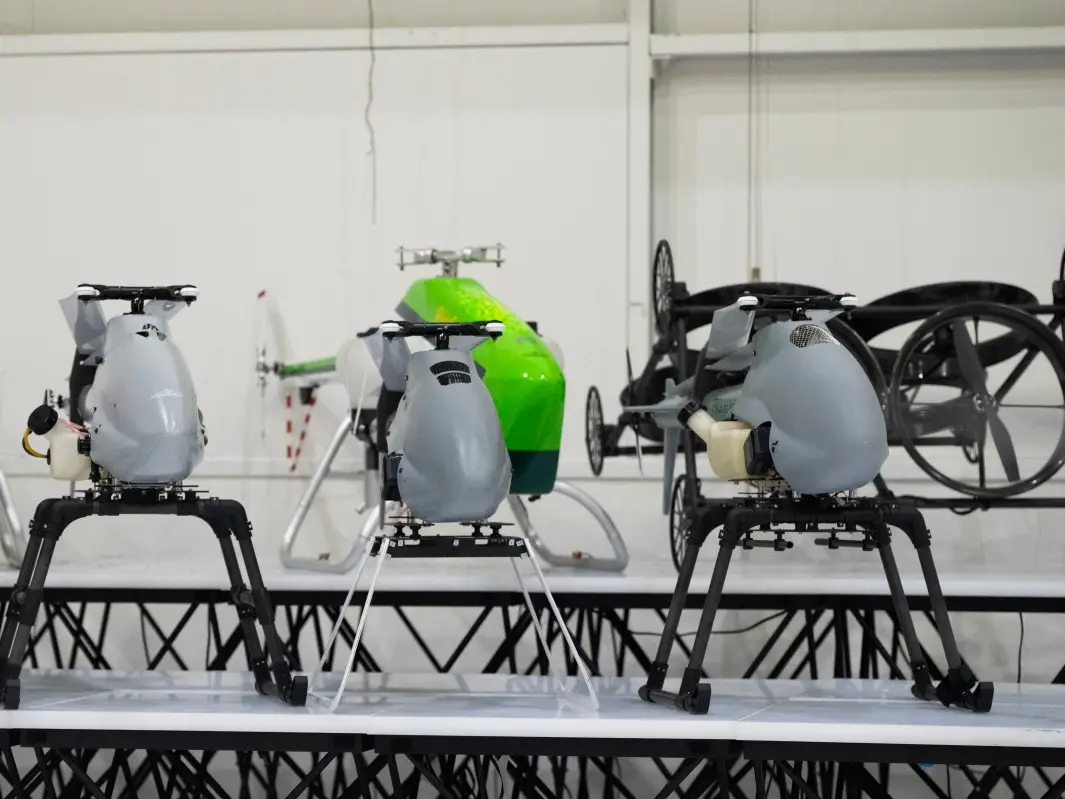
Among the systems demonstrated was the Drone 40, developed by Australian defence company DefendTex. Small enough to be carried by an individual soldier, Drone 40 can be configured for reconnaissance or equipped with an effector payload, giving troops the ability to first locate a target and then potentially strike it.
The demonstration comes as Japan dramatically increases investment in its military.
Trending Stories
&imwidth=180&imheight=135&format=webp&quality=medium)
'We feel like Mr India': Gujarat’s undercover SHE team guard garba nights at Navratri
&imwidth=180&imheight=135&format=webp&quality=medium)
Russian woman and Bihar boy's love story goes viral after she reaches India to marry him
&imwidth=180&imheight=135&format=webp&quality=medium)
Israel examines Russia's Shahed-type drones sent by Ukraine to combat Iran | Gravitas
&imwidth=180&imheight=135&format=webp&quality=medium)
AI decodes Napoleon-era secret letter unsolved for more than 200 years. What was hidden in the ciphers?
&imwidth=180&imheight=135&format=webp&quality=medium)
China responds to Trump's Press Secretary Katie Zacharia after toilet remark: 'Visit China more often'
&imwidth=180&imheight=135&format=webp&quality=medium)
SC panel launches portal to submit evidence of July Jantar Mantar violence
&imwidth=180&imheight=135&format=webp&quality=medium)
Ankita Bhandari murder case: Parents meet CBI, seek impartial investigation
&imwidth=180&imheight=135&format=webp&quality=medium)
China’s ‘dark tourism’ boom: Why are young travelers paying to experience simulated disasters?
&imwidth=180&imheight=135&format=webp&quality=medium)
COVID-19 pandemic led to increase in divorce cases, observes Madras High Court
&imwidth=180&imheight=135&format=webp&quality=medium)
13 dead after truck mows down devotees, crashes into temple gate in Madhya Pradesh's Gwalior
&imwidth=180&imheight=135&format=webp&quality=medium)
Lizard people? Ex-US Army sniper claims soldier killed by 'reptilian beings' in battle near Area 51
&imwidth=180&imheight=135&format=webp&quality=medium)
WATCH | Zelensky gives cheeky response when asked if Trump is making him a scapegoat ahead of US midterms
&imwidth=180&imheight=135&format=webp&quality=medium)
WATCH | iPhones, luxury perfumes floating in Hormuz? Iranian fishermen make bizarre discovery
&imwidth=180&imheight=135&format=webp&quality=medium)
'Reason UN has lost credibility': Amid SIR protests India hits out at report alleging 'youth repression'
&imwidth=180&imheight=135&format=webp&quality=medium)
Rain washes out 5th T20I as India-West Indies share honours 2-2
&imwidth=180&imheight=135&format=webp&quality=medium)
Pakistan to head IMF, World Bank boards after 74 years amid persistent economic crisis
&im=FitAndFill=(700,400)&imwidth=180&imheight=135&format=webp&quality=medium)
Durga Puja 2026: Ranbir Kapoor, Kajol, Jaya Bachchan, and other celebs bring festive glam to pandals
&imwidth=180&imheight=135&format=webp&quality=medium)
Abhijeet Dipke released after fresh arrest, signs peace bond for second time
&imwidth=180&imheight=135&format=webp&quality=medium)
‘I have very severe problems’: Trump fuels health speculation during address to firefighters
&imwidth=180&imheight=135&format=webp&quality=medium)
Kolkata Durga Puja stampede: PM Modi announces Rs 2 lakh ex-gratia for kin of dead, Amit Shah to visit injured
&imwidth=180&imheight=135&format=webp&quality=medium)
Oil tanker carrying over 2M barrels of crude hits mine in Strait of Hormuz, catches fire, says Iran
&imwidth=180&imheight=135&format=webp&quality=medium)
One species, two lineages: Why Sri Lanka’s spectacled cobra differs genetically from Indian variant
&imwidth=180&imheight=135&format=webp&quality=medium)
'We are not sitting in ivory towers, we are aware': SC issues notice to Rahul Gandhi, Akhilesh Yadav
&imwidth=180&imheight=135&format=webp&quality=medium)
‘My president, I mean my husband’: Trump's new press secretary Katie Zacharia's first briefing goes off the rails in 14 minutes
&imwidth=180&imheight=135&format=webp&quality=medium)
No Ravindra Jadeja, Yashasvi Jaiswal in India’s 2027 ODI World Cup plans: Report
&imwidth=180&imheight=135&format=webp&quality=medium)
At least 19 killed in stampede-like situation after part of Kolkata Durga Puja pandal collapses
&imwidth=180&imheight=135&format=webp&quality=medium)
Cattle-feed bran in biscuits, detergent in milk: FSSAI acts against 3 companies
&imwidth=180&imheight=135&format=webp&quality=medium)
Anirudh Ravichander-Kavya Maran wedding: Telangana CM reveals Chennai reception date

US ends automatic work permit extensions; Indian workers lose 540-day safety net: What it means
&imwidth=180&imheight=135&format=webp&quality=medium)
At least 400 arrested as protests turn violent in France; PM blames far left
&imwidth=180&imheight=135&format=webp&quality=medium)
2026 midterms, 2028 ambitions: Five politicians in focus
&imwidth=180&imheight=135&format=webp&quality=medium)
Bangladesh resort fire kills 10 tourists, including a 5-year-old child
&im=FitAndFill=(700,400)&imwidth=180&imheight=135&format=webp&quality=medium)
Inside Tesla's Roadster: 10 features of Elon Musk's 'flying car' that push the limits of electric vehicles | In Pics
&imwidth=180&imheight=135&format=webp&quality=medium)
US lawmaker Pramila Jaypal writes to Rubio, urges to raise handling of CJP protest with India
&imwidth=180&imheight=135&format=webp&quality=medium)
Iranian woman, 23, handed death sentence for ‘blasphemy’ in social media post; appeals for help
Tokyo has requested a record 8.9 trillion yen, or roughly $56 billion, for defence in FY2027. Unmanned warfare is emerging as a major priority, with Japan examining new aerial and underwater drones as well as the use of AI to assist battlefield decision-making.
Japan is also strengthening its missile defences, developing new ships equipped with powerful radars and acquiring longer-range counterstrike capabilities.
Also Read: US eyes Iran’s maritime sector, digital assets; Bessent warns ‘everyone’ against supporting Tehran
Another significant change is taking place beyond Japan’s borders.
The Philippines has acquired Japanese air-surveillance radars, marking a breakthrough for a country that maintained stringent restrictions on defence exports for decades.
Japan’s post-war constitution remains pacifist, and its military continues to be known as the Self-Defence Forces. But Tokyo’s interpretation of what is required for national defence has expanded.
China’s military expansion, North Korea’s missile programme, Russian military activity and the changing strategic balance in the Indo-Pacific are accelerating that shift.
From the Drone 40 carried by an infantry soldier to sophisticated missile defences and multinational exercises, Japan is building military capability at a pace never seen in its post-war history.
Japan’s defence posture is changing. How far that transformation will ultimately go is the question.

