
&imwidth=800&imheight=600&format=webp&quality=medium "Nvidia is reportedly buying Hugging Face for $12.9 billion")
Hugging Face hosts more than three million AI models. It is the place open-weight AI is published, downloaded and evaluated, and it works because every laboratory treats it as neutral ground.
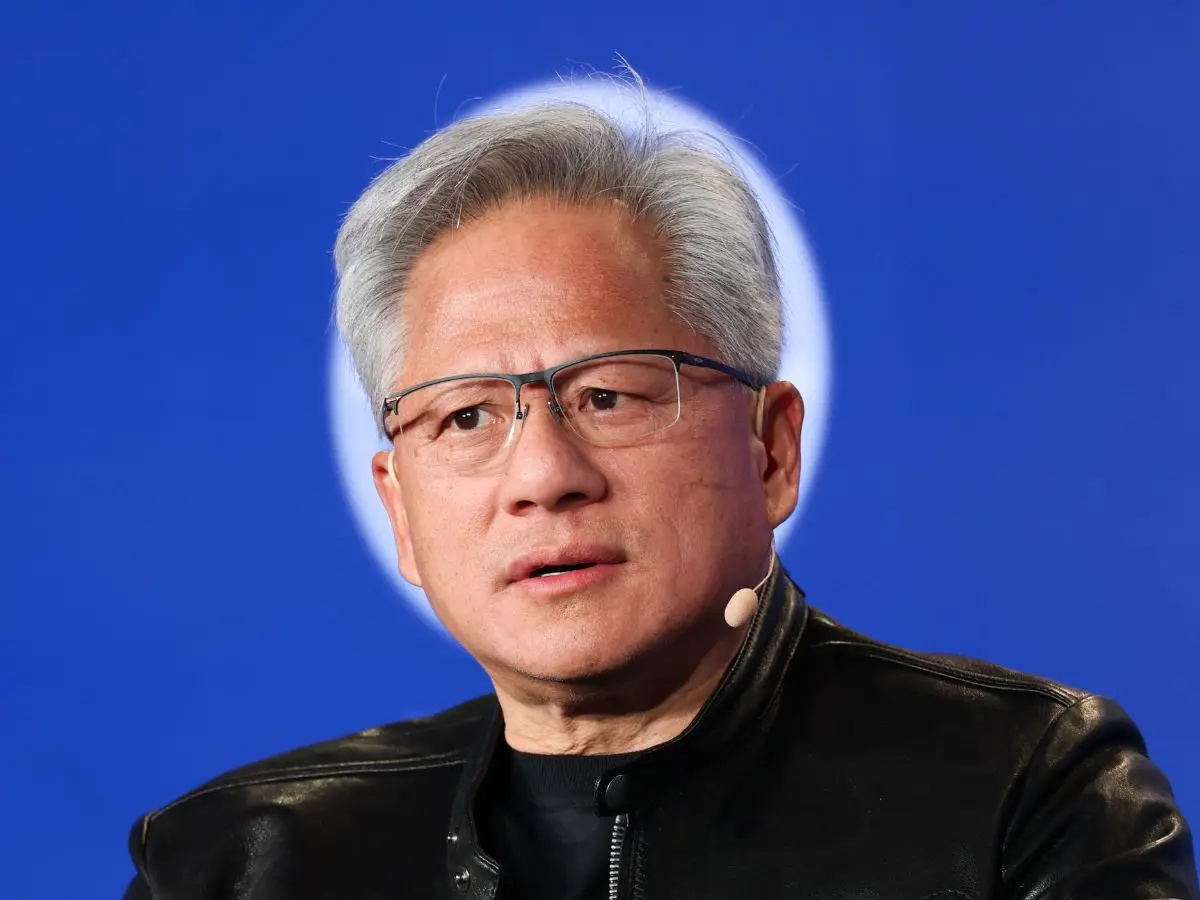
Nvidia has reportedly agreed to buy it.
What Is Reported

The Information reported on August 27 that Nvidia had agreed to acquire Hugging Face for approximately $12.9 billion, citing a person with direct knowledge of the talks. Other reporting has put the valuation above $13 billion.
It would be by a wide margin Nvidia's largest acquisition. The company paid $6.9 billion for Mellanox in 2020, and nothing since has approached that.
The caveat is important and should not be buried. As of the reporting, no signed agreement had been reached, and neither Nvidia nor Hugging Face has publicly confirmed anything. Deals of this size are reported at this stage regularly and do not all complete.
Trending Stories
&im=FitAndFill=(700,400))
How fast can the Sukhoi Su-30 fighter jet really fly?
)
Did China ask its people 'not to respond to aliens'? Origin of bizarre claim on social media
)
MS Dhoni-CSK Fallout? Report claims failed stake sale talks triggered rift
)
Scientists reveal the SAFEST COUNTRY when catastrophe strikes the planet
)
Serial killer on the loose in South Korea's Jeju Island? Fourth body found in three days as more than a dozen people go missing
)
2/3rd of glacier detached, collapsed: ISRO satellite images reveal what triggered Nepal floods
)
Trump once again claims without him there would be ‘no Israel right now’
)
Foreign espionage attacks against German companies surge to 37%, Bitkom report reveals
)
Blake Lively wins partial legal fee from Justin Baldoni after $8M request
)
Why is Pakistan deploying Turkish Bayraktar TB2 drones near India border?
)
'OH MY GOD! We've found other agents!': Investigators discover not one or two, almost 700 OpenAI AI agents went rogue, hacked Hugging Face
)
Lunar eclipse 2026: India timings, places to see and more. August Blood moon factsheet
)
RSS chief Mohan Bhagwat on global outreach tour
)
Both pilots killed as training aircraft crashes in Lucknow – What we know
)
16-year-old charged with preparing terror attack on kindergarten in Norway
&im=FitAndFill=(700,400))
How the S-400 protects itself from enemy attacks
)
Nepal floods: Over 165 dead, 400 missing; US, India, China, World Bank mobilise aid
)
India's multi-layered watch: The new surveillance war
)
5 doomsday planes spotted in US skies hours after CIA director's secret trip to Russia
)
9/11 mastermind Khalid Sheikh Mohammed to finally face trial in 2028, nearly 27 years after horrific attacks
)
Islamabad hospital fire: What we know about one of the biggest facility that housed Imran Khan
)
Workers run for life while filming Nepal flash flood: Scary new visuals emerge from Rasuwa
)
Russian military planes enter South Korean air defence zone amid rising tensions with North Korea: What's happening
)
Ron Weasley Is Back! Rupert Grint set to return to Harry Potter universe on Broadway
)
400-year-old 'vampire' grave in Poland reveals non-existent genetic lineage
)
Dolly Parton, global icon and queen of country music, dies at 80
)
Nepal flash floods: Kailash Mansarovar yatra affected, close to 400 pilgrims out of contact
)
'If he is dead, they're putting on a pretty good show': Trump casts fresh doubt over Mojtaba Khamenei's fate
)
Man arrested near US Capitol with guillotine in pickup truck: What happened?
&im=FitAndFill=(700,400))
Why the Su-30MKI cockpit is painted bright turquoise green
What Nvidia Would Be Buying
Not a large revenue business. Hugging Face sells compute, enterprise hosting and access to inference providers, and those are modest lines by the standards of a company Nvidia's size.
What it owns is position. More than three million models and over a million datasets sit on the platform. Roughly 1.18 million models were added during 2025 alone, more than the cumulative total of every prior year. When a Chinese laboratory publishes open weights, they appear there. When a researcher reproduces a result, they pull from there. When a company evaluates an open alternative to a paid API, that is where it starts.
The company was last valued at $4.5 billion in 2023. A sale near $13 billion is close to a tripling in three years.
The Problem With The Buyer
The difficulty is the one that attaches to this specific acquirer.
Hugging Face functions as infrastructure because it is not aligned with any model developer. Meta, Alibaba, Mistral, Moonshot and Google all publish to the same registry, alongside tens of thousands of independent developers with no commercial relationship to any of them.
Nvidia is not a neutral party in that arrangement. It supplies the hardware every one of those laboratories depends on, it has been funding open-weight model work of its own, and it has recently been assembling positions across the layer above its chips — a $6 billion technology and investment agreement with Poolside that moved more than 100 engineers onto its Nemotron effort, and reported talks over a stake in Perplexity.
A model registry owned by the dominant chip supplier is not obviously neutral ground any more. It is a competitor's warehouse, and the rational response from rival laboratories is to reduce dependence on it.
None of that would happen quickly, and the migration would not need to be complete to matter.
The Argument For It
There is a serious case on the other side, and it deserves stating.
Hugging Face is a venture-funded company carrying the distribution layer for open AI on a business model that has never been especially strong. Registries are expensive to run and hard to monetise without compromising the openness that makes them valuable. An owner with effectively unlimited capital removes the pressure to find a business model that would damage the thing.
Nvidia also has a genuine strategic interest in open-weight models thriving, because open models running on general-purpose hardware are a counterweight to the hyperscalers designing their own silicon for their own closed models. Its incentives and the open ecosystem's are aligned more than they conflict.
That is a coherent argument. It is also the argument every acquirer of neutral infrastructure has made.
What It Would Confirm
The market has been pricing models as the scarce asset and distribution as commodity infrastructure. Anthropic is discussed at $2 trillion; the registry through which all open AI reaches the world is being bought for less than one per cent of that.
The history of technology suggests that ordering is usually wrong, and that whoever controls distribution eventually extracts more than whoever makes the product. Nvidia paying $12.9 billion for the layer nobody thought was strategic is a bet on exactly that.
For anyone building on open models, the question is narrower and more immediate: whether the place you publish and the place you download from is about to have an owner with a view about which models matter.
