
&imwidth=800&imheight=600&format=webp&quality=medium "India’s artillery boom: Can the indigenous ammunition industry sustain a long war?")
Recent conflicts, particularly the war in Ukraine, have reinforced a basic military lesson: advanced weapons are only as effective as the ammunition available to keep them firing.
India is undertaking one of its biggest artillery modernisation drives in decades, expanding both imported and indigenous capabilities.
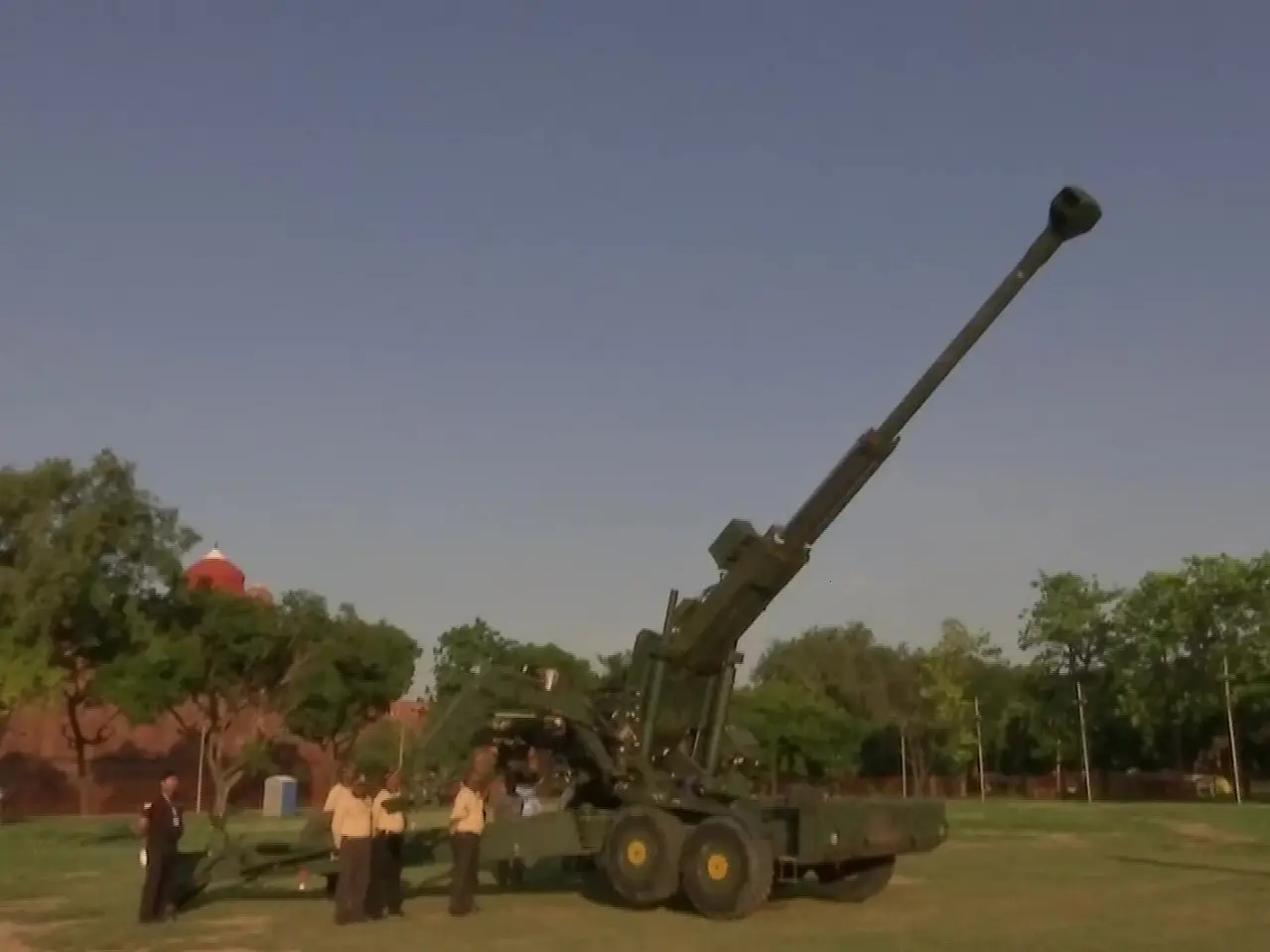
The Indian Army operates 145 M777 ultra-light howitzers and has contracted 200 K9 Vajra-T self-propelled guns. Another 300 K9 Vajras are being pursued, potentially taking the fleet to 500.

India is simultaneously strengthening its indigenous artillery portfolio. The government has approved 307 Advanced Towed Artillery Gun Systems, or ATAGS, for 15 artillery regiments. The indigenous 155mm/52-calibre gun can strike targets beyond 40 kilometres. Dhanush howitzers are also being inducted.
But more guns create an equally important requirement: ammunition.
Trending Stories
)
Nepal Flash Floods: At least 1,050 dead And 118 Nepalese rescued from disaster zone
)
Inside the UAE defense giant rapidly scaling up amid West Asia war
)
'Why didn't you save me?' 5-year-old Nepal flood victim, who survived under rubble for 60 hours, asked parents
)
US-Israel vs Iran permacrisis: Tehran strikes back against latest US strikes
&im=FitAndFill=(700,400))
How the Su-30MKI flies up to 8,000 kilometres using mid-air refueling
)
China shock puts Germany's economy under strain
)
Nearly 1 million Indians stuck in US Green Card backlog, wait could stretch to 179 years | Gravitas
)
Iran launches retaliatory strikes with missiles and drones; Trump warns of ‘much harder’ attack
)
2,000 pairs of underwear buried in Switzerland revealed something startling
)
Iran war: IRGC strike claim raises questions as Pentagon cracks deepen
)
Nvidia is reportedly buying Hugging Face for $12.9 billion
)
Pakistan faces growing hunger crisis amid rising food insecurity
)
AI sales startup Clay raises funding at a $7 billion valuation
)
Iran war reshapes global LPG trade
)
This Indian AI is making stock charts easier to understand in Hindi, Tamil, Telugu and other Indian languages
)
Over 100 children aged 12 & below in UK may have been forced into marriage | Gravitas
)
UN nuclear watchdog report on Syria confirms Assad-Era nuclear reactor plan
)
Explosives found near German power plant, suspected attack sparks security alert
)
Pheromone Maxxing: The dating trend that claims scent drives attraction
)
Volcano that erupted with strength of a million atomic bombs discovered in England
&im=FitAndFill=(700,400))
Why the Su-30MKI uses a giant air brake on its back instead of its wings
)
Shakti Sharma scripts history as first woman non-medical Air Vice Marshal
)
Swara Bhasker issues video clarification over Padmaavat remarks amid ‘wild’ backlash: ‘Never said Rani Padmavati was a coward’
)
Iran attacks Bahrain, Iraqi Kurdistan as Trump claims ‘total control’ of Hormuz; Houthis back Tehran, Peru cuts ties: What's happening
)
AI agents coming to UPI: India prepares hands-free payments rollout!
)
TN CM Vijay opens Mettur dam for Cauvery delta irrigation, surprises farmer with visit
)
Pentagon just launched its AI portal with ChatGPT, Grok and Gemini
)
Enzo Fernandez reacts after joining 'built for success' Manchester City in record deal
)
Meltdown in Pakistan cricket: PCB director of high performance Aaqib Javed explains reasoning behind dropping 7 players, sacking coaches
)
Pakistanis are eating less. What they are eating instead is even more alarming
)
Manchester City equal British transfer record with £125m Enzo Fernandez deal
Netflix to release docuseries on Donald Trump's secret plane switch in Turkey
)
Ariana Grande steps away from public life; bids an emotional farewell in London concert
)
US-Iran war: US strikes Iran after month-long pause
&im=FitAndFill=(700,400))
Why the glass canopy on the Su-30MKI has a distinct golden tint
)
Charlie Kirk murder case trial: Tyler Robinson faces possible death penalty after court ruling
)
A modern artillery system ultimately depends on a continuous supply of shells, propellants, explosives and fuzes. Recent wars have demonstrated how quickly ammunition stockpiles can be depleted during sustained combat.
India is consequently expanding domestic ammunition manufacturing, with private companies increasingly joining established producers.
SMPP Limited is among the Indian private defence manufacturers expanding into large-calibre ammunition. The company is developing manufacturing capacity for 155mm artillery ammunition as part of a broader expansion beyond its traditional ballistic protection business.
SMPP CEO Ashish Kansal believes affordability must remain central as militaries prepare for high-volume warfare.
But the lessons extend beyond artillery. Operation Sindoor has also sharpened industry’s focus on survivable unmanned systems.
“One of the big learnings from Operation Sindoor, was that we need drones that are EW compliant. They should be able to resist jamming, spoofing with a good navigation system to function in such denied environments,” Kansal said.
SMPP is also looking towards longer-range unmanned strike capabilities. Kansal says India needs to focus on kamikaze drones capable of travelling from a few kilometres to potentially 1000 to 1500 kilometres while carrying meaningful payloads.
The larger challenge is therefore evolving rapidly.
India needs guns, ammunition and increasingly affordable unmanned weapons that can be manufactured at scale.
Because in a prolonged conflict, military strength will depend not only on what India can deploy on day one, but how quickly its factories can replenish what the battlefield consumes.

