

&imwidth=800&imheight=600&format=webp&quality=medium "With $900 million, Meta eyes at 17 million members, one regulatory window and a payments problem in India")
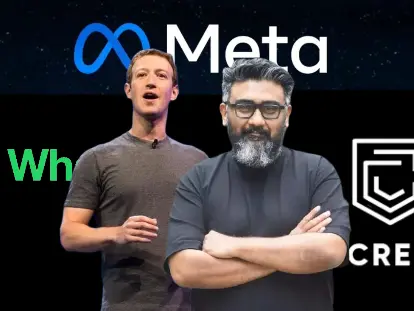
Meta Platforms has agreed to invest $900 million in Indian fintech startup CRED, acquiring an approximately 20 per cent minority stake and valuing the Bengaluru-based company at $4.5 billion. At the same time, CRED founder Kunal Shah has been appointed global head of WhatsApp, succeeding Will Cathcart, who led the platform for nearly seven years.
The deal is the single largest strategic investment by a global technology major in India's consumer financial services sector. But the number that matters most is not $900 million. It is 0.65 per cent.
What Meta actually bought
CRED is not a platform built for everyone, and it was never meant to be.
The company admits only Indians with CIBIL credit scores above 750, a threshold that excludes the vast majority of the population and leaves roughly 17 million members who collectively represent the country's most financially active consumer segment. These are people who pay their credit card bills on time, borrow responsibly, and spend at a scale that makes them disproportionately valuable to any financial platform trying to build depth rather than just volume.
The platform processes more than 40 per cent of India's credit card bill payments. Over time, it has expanded into personal loans, insurance, e-commerce and investment products. In March 2026, the Reserve Bank of India granted CRED a Payment Aggregator licence, one of the most consequential regulatory authorisations in Indian fintech, giving it the infrastructure to process payments directly for merchants.
Trending Stories
&imwidth=180&imheight=135&format=webp&quality=medium)
Rahul Gandhi's plea against Election Commission delayed as Supreme Court registry flags 14 ‘defects’
&im=FitAndFill=(700,400)&imwidth=180&imheight=135&format=webp&quality=medium)
Navratri 2026: 9 days, 9 forms of Goddess Durga and 9 colours- Check the complete list
&imwidth=180&imheight=135&format=webp&quality=medium)
Korean peninsula tensions escalate as North Korea launches multiple ballistic missiles, PACOM says 'no threat to US personnel'
&imwidth=180&imheight=135&format=webp&quality=medium)
Trump weighs firing Kimberly Guilfoyle as US ambassador to Greece amid misconduct allegations: Report
&imwidth=180&imheight=135&format=webp&quality=medium)
Anti-SIR protest in Mumbai: Protestors wear black masks & ribbons in Mumbai
&imwidth=180&imheight=135&format=webp&quality=medium)
UK PM Andy Birnham renews claims of Russian meddling in Brexit vote
&imwidth=180&imheight=135&format=webp&quality=medium)
BCCI rejects venue shift reports, India vs Sri Lanka 1st ODI to remain in Delhi
&imwidth=180&imheight=135&format=webp&quality=medium)
'Absolutely disgusting': Australia slams US plan to livestream Nidal Hasan's execution; Mike Johnson raises concerns, warns of terrorist propaganda
&imwidth=180&imheight=135&format=webp&quality=medium)
1,500 drones illuminate Mumbai sky as Cordelia Cruises unveils second ship, Cordelia Sky
&imwidth=180&imheight=135&format=webp&quality=medium)
Houthis warns US of 'painful response' if Washington joins Saudi war in Yemen as airlines suspend flights to Saudi Arabia
&imwidth=180&imheight=135&format=webp&quality=medium)
India Rejects Pakistan-China Boundary Commission, Tells Islamabad to Drop 'Theatrics' | GRAVITAS
&imwidth=180&imheight=135&format=webp&quality=medium)
Congress demands action against chief election commissioner
&imwidth=180&imheight=135&format=webp&quality=medium)
Apple HomeView smart home hub may launch soon with A18 chip, display and Siri controls: What to expect
&imwidth=180&imheight=135&format=webp&quality=medium)
'Turn approver, resign, we'll forgive you': Rahul Gandhi claims receiving messages from CEC Gyanesh Kumar
&imwidth=180&imheight=135&format=webp&quality=medium)
'I will not be silenced': Ilhan Omar alleges political intimidation after federal officers search her Washington home
&imwidth=180&imheight=135&format=webp&quality=medium)
Robotic surgery, advanced treatment: What is coming to this small Gujarat town?
&imwidth=180&imheight=135&format=webp&quality=medium)
Pakistan's government blames PTI for rise of terrorism in Khyber Pakhtunkhwa
&imwidth=180&imheight=135&format=webp&quality=medium)
‘This is just the start’: Maaya Rajeshwaran on historic ITF title, confidence boost and future goals
&im=FitAndFill=(700,400)&imwidth=180&imheight=135&format=webp&quality=medium)
How does a robot decide what to do next?
&imwidth=180&imheight=135&format=webp&quality=medium)
Trump says he 'may' meet North Korean leader Kim Jong Un during upcoming Asia trip
&imwidth=180&imheight=135&format=webp&quality=medium)
'Ouch!!! That must hurt': Kangana Ranaut hails Kamal Haasan's sharp reply to Elon Musk over Starlink row
&imwidth=180&imheight=135&format=webp&quality=medium)
Sidhu Moose Wala’s younger brother wins hearts by recreating late singer’s signature move at Toronto Hologram Show
&imwidth=180&imheight=135&format=webp&quality=medium)
Girl 'dead' for 8 hours wakes up at her own funeral, dad insists she wasn't breathing
&imwidth=180&imheight=135&format=webp&quality=medium)
UK school ditches technology, shifts from screen to pen and paper for learning
&imwidth=180&imheight=135&format=webp&quality=medium)
Opposition’s 10 demands in Supreme Court petition range from stay on SIR to audit of voter rolls
&imwidth=180&imheight=135&format=webp&quality=medium)
'I am thoroughly unamused': Judge slams Trump administration after 400 trees cut at Washington golf course
&imwidth=180&imheight=135&format=webp&quality=medium)
Portugal Federation confirms Cristiano Ronaldo’s return to national team despite suspension
&im=FitAndFill=(700,400)&imwidth=180&imheight=135&format=webp&quality=medium)
New OTT releases this week (October 12-18, 2026): Sacrifice, Koffee with Karan S9, Roadies Rebirth- 6 titles coming on Netflix, JioHotstar and more
&imwidth=180&imheight=135&format=webp&quality=medium)
India's Ajit Doval, Iran's Mohsen Rezaei hold talks amid escalating West Asia tensions, discuss 'issues of mutual interest'
&imwidth=180&imheight=135&format=webp&quality=medium)
'Almost certainly': UK Prime Minister Andy Burnham says Iran's IRGC behind RAF Fairford threat
&imwidth=180&imheight=135&format=webp&quality=medium)
Elon Musk pumps $276 million into Republican campaigns ahead of US midterm elections
Financially, CRED ended FY25 with operating revenue of Rs 2,735 crore, up 16 per cent year on year. Operating losses narrowed by 51 per cent to Rs 298 crore. On a net basis, after accounting for non-operating expenses, including employee stock options and depreciation, losses contracted by 11.5 per cent to Rs 1,457 crore. In May 2026 alone, CRED processed 157.19 crore UPI transactions worth Rs 61,002 crore.
Ashish Bhatia, Founder and CEO of India Accelerator and Co-Founder of Finvolve, said the deal should not be read as a valuation story.
"People often say CRED is a credit card bill payment app. That's like saying Amazon is a bookstore," Bhatia said. "CRED became valuable because it became the platform for a particular kind of Indian: financially responsible, creditworthy and aspirational, allowing them to progressively do more things. Pay bills, yes. But also borrow, invest, shop and discover. The product kept deepening because the relationship kept deepening. That's what platforms do. That's what Meta bought."
The gap Meta could not close
The strategic urgency behind the deal is visible in that single number: 0.65 per cent.
That is WhatsApp Pay's share of India's UPI market as of May 2026, according to data published by the National Payments Corporation of India and reported across multiple outlets. It trails PhonePe at 46.2 per cent, Google Pay at 32.7 per cent, Paytm at 7.9 per cent, and even smaller players such as Navi, super.money, BHIM, FamPay and CRED's own UPI product. For an app used by more than 500 million Indians every day, it is a number that tells its own story.
India processed a record 23.2 billion UPI transactions in May 2026 alone, according to NPCI. WhatsApp was present for almost none of them in any meaningful commercial sense.
The reason traces back to timing. PhonePe entered the UPI market in 2016. Google Pay followed in 2017. WhatsApp Pay did not receive full regulatory approval until 2020, by which time Indian consumers had already formed payment habits, merchants had already integrated rival platforms, and the market had already chosen its defaults. Meta has spent six years trying to close that gap. It has not.
Meta has now committed more than $6.6 billion across India's digital economy: $5.7 billion for a 9.99 per cent stake in Reliance's Jio Platforms in April 2020, and $900 million for an approximately 20 per cent stake in CRED in June 2026. The Jio investment was designed to accelerate WhatsApp commerce through JioMart. That partnership remains active. WhatsApp Pay's market position, however, has not materially improved.
One window, one deadline
The window Meta is now targeting is not competitive. It is regulatory, and it has a closing date.
India's National Payments Corporation of India requires PhonePe and Google Pay to cap their individual transaction volumes at 30 per cent of the total UPI market by 31 December 2026. Both currently exceed that threshold significantly, with PhonePe at 46.2 per cent and Google Pay at 32.7 per cent. The rule has been extended twice before, most recently on 31 December 2024, citing operational challenges. If it remains in force this time, both dominant platforms would be required to stop onboarding new users once they reach the cap, creating an opportunity that WhatsApp Pay, with Kunal Shah now leading the product globally, is better positioned than ever to seize.
The shift is already beginning. The combined share of PhonePe and Google Pay fell to 79 per cent in May 2026, below 80 per cent for the first time since NPCI began publishing individual application statistics, according to Outlook Business, citing NPCI data. The top three providers collectively held 95.2 per cent of all transactions in January 2024. By May 2026, that had contracted to 87 per cent as smaller platforms steadily gained ground.
NPCI also lifted the user onboarding cap on WhatsApp Pay entirely on 31 December 2024, opening UPI payments on the platform to its full Indian user base for the first time.
What this means for the ecosystem
The deal's implications extend well beyond WhatsApp and CRED.
Bhatia said it is a signal that India's fintech market is entering a period of fundamental bifurcation and that the criteria for survival are shifting.
"The ecosystem is bifurcating sharply between companies that own a real relationship with a specific community and companies that are just running transactions," he said. "The ones who survive the next cycle will be asking the right question today: not 'How do I grow faster?' but 'Which community do I truly belong to, and what more can I do for them?'"
The CRED valuation trajectory illustrates this shift in numbers. The company peaked at $6.4 billion in 2022, fell to $3.5 billion in a 2025 down round, and has recovered to $4.5 billion following Meta's investment. It is a full cycle that mirrors the broader shift in sentiment across India's fintech sector over the past three years. Community depth, rather than transaction volume, is what preserved its value through that correction.
The next layer: intelligence, not more rails
For founders watching this deal, Paramdeep Singh, Founder of Long Tail Ventures, said the real signal has nothing to do with building another payments product.
"India already processes over 18 billion UPI transactions every month. The next opportunity is no longer building another payments app, but building intelligence on top of existing financial rails," Singh said.
Singh pointed to underwriting, fraud detection, collections, compliance, treasury management and AI-powered financial tools for consumers and businesses as the most significant opportunities emerging from India's digital financial infrastructure.
"These are large, recurring problems where AI can materially improve cost, speed and accuracy," he said. "India's digital public infrastructure provides a unique foundation to build globally relevant companies in these areas. For founders, the challenge is no longer access to financial rails, but finding proprietary data and distribution that others cannot easily replicate."
The scale of that infrastructure is not in dispute. NPCI data show India's UPI network processed 228.3 billion transactions during 2025, up 29.3 per cent by volume year on year. The rails are built, and the question now is who builds the intelligence layer on top of them.
The data question regulators will watch
The deal does raise a question that India's regulatory architecture will need to answer over time.
CRED holds one of the richest repositories of consumer financial behaviour data in India, including credit card repayment histories, spending patterns, borrowing behaviour and UPI transaction data, all tied to the country's most creditworthy consumer segment. Meta, as a minority investor without a board seat, has said it will have no access to that member data, a structural choice designed to address the data sovereignty concerns that have historically made Indian regulators cautious about foreign technology companies expanding into financial services.
India's Digital Personal Data Protection Act 2023 is the governing framework for how platforms handle consumer data of this nature. Its rules covering consent managers and Significant Data Fiduciaries are still being operationalised. Whether the current architecture of the Meta-CRED deal satisfies the RBI and NPCI as WhatsApp's financial services ambitions continue to grow will be a question that regulators, and the market, will be watching closely.
