
&imwidth=800&imheight=600&format=webp&quality=medium "Will Trump’s copper tariffs hit the US economy harder than the rest of the world?")
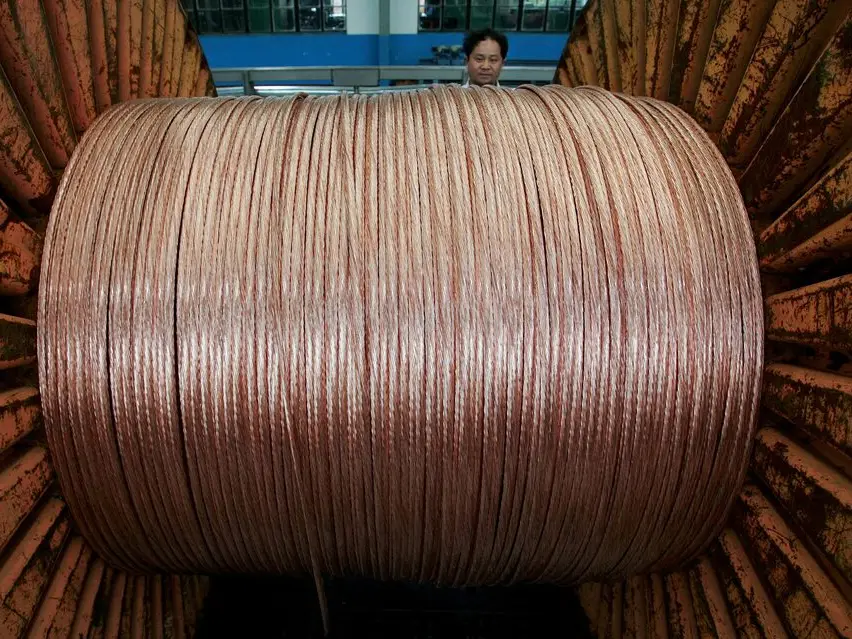
The cost of copper in the US has surged to unprecedented heights following the announcement of a 50 per cent tariff on imported copper, set to take effect on August 1. This new tariff could exacerbate the already-high prices of the industrial metal, used extensively in sectors such as electronics, construction, and renewable energy. On the day of the announcement, copper prices in the US spiked by 13 per cent, the largest single-day jump since 1989, reaching a record $5.69 per pound. By contrast, prices in global markets saw only minimal increases, underscoring the growing disparity between US copper costs and those in other regions.
Copper is vital to a vast array of industries, from home appliances to electric vehicles and semiconductors. The price spike is expected to increase the cost of everyday products for US consumers, including goods like refrigerators, air conditioners, and cars. Construction projects, including those related to infrastructure and housing, are also likely to face higher costs, as copper is a key material in wiring, plumbing, and various industrial applications. The potential ripple effect could drive up overall inflation, further straining the US economy.
Unrealistic expectations for domestic production

While the Trump administration’s aim with the tariff is to reduce reliance on foreign copper and boost domestic production, experts warn that this goal is unrealistic in the short term. The US imports nearly half of its copper, primarily from countries such as Chile, Canada, Peru, and Mexico. However, US mines are not equipped to meet the nation’s copper needs in the near future. Increasing domestic production would require substantial investments in mining infrastructure, which could take years, if not decades, to fully ramp up.
The tariff could also inadvertently encourage businesses to seek cheaper alternatives, such as aluminium, which could be used in place of copper in some products, despite its higher long-term maintenance costs. Yet, aluminium is not a perfect substitute, as copper’s superior conductivity makes it crucial for industries like renewable energy, semiconductors, and aerospace, where performance is paramount. As a result, some industries may face higher operational costs as they attempt to pivot, creating inefficiencies and increasing product prices for consumers.
Wider economic consequences
Trending Stories
)
Emmys 2026: Matthew Rhys wins Best Actor twice, sets historic 78-year record
)
3 Italians fly from Delhi to Munich without immigration clearance; Air India gets notice on major security lapse
)
Did India risk its US trade deal despite softer stance at BRICS?
)
Pakistan puts Pak Rs 70 lakh bounty on UN terrorist Masood Azhar; move draws skepticism in Delhi
)
‘US ensuring global energy supplies’: Trump demands reimbursement for securing Strait of Hormuz
)
'Huge destructive power': North Korea calls its latest missile launches 'live-fire drill' even as US dismisses 'immediate threat'
)
‘Let’s go’: Newly declassified videos show dramatic rescue of US Air Force officers downed in Iran
)
Historic first: ‘Ganga aarti’ performed on River Thames in London
)
Emmy Awards 2026: Widow's Bay and The Pitt win in lead categories- check out the complete list of winners
&im=FitAndFill=(700,400))
Why European Meteor missiles use ramjet engines compared to standard US solid rockets
)
Iran, India agree to deepen humanitarian and political ties, President Pezeshkian says
)
‘Want to reset ties with India, have engagement based on mutual interests,’ says Bangladesh minister
&im=FitAndFill=(700,400))
Emmys 2026 Red Carpet: Zendaya, Nicole Kidman and Julia Garner lead the glamour peak
)
Turkish Airlines plane flies through a storm three times, triggering severe turbulence
&im=FitAndFill=(700,400))
Why Chinese PL-15 air-to-air missiles use dual-pulse motors compared to European interceptors
)
What is Hyrox, in news for athlete who soiled herself, but kept running and using common equipment?
)
Russia proposes to build 360 kmph Ivolga FG trains in India: What happened on sidelines of BRICS
)
800 million years old - Scientists discover 'fingerprints' of supercontinent Gondwana in ancient rocks
)
China discovers vast gold and silver 'mine' in the Pacific with unheard-of deposits
)
Plane carrying prominent figure crashes at Libya’s Misrata airport: Report
&im=FitAndFill=(700,400))
New OTT releases this week (September 14-20, 2026): Lust Stories 3, Waiting Hai, Irumudi- 5 new titles coming on Netflix, Prime Video and more
)
Sent home midway from UK tour, Pakistan's Salman Agha hits 300* in domestic return
)
Nigerian Navy seizes 10,000 litres of suspected illegal fuel in Rivers State crackdown
)
Saudi Arabia discovers 110 million tonnes of Uranium-rich ore in Madinah region
)
Dodgers beat Reds for playoff berth in bid for third consecutive World Series
)
Ecstasy tablets are rage in 'drug haven' Libya | Gravitas
)
'Now Trump is copying us': Shivakumar links US $5,000 plan to Congress guarantees
)
Video of Pakistani lawmaker struggling to read English tribute to Jinnah goes viral - WATCH
)
Trump downplays China's alleged 'help' to Iran in strike on Jordan base | Gravitas
)
Baba Vanga's first prophecy for 2027 is out, and straight out of science fiction
)
Trump loses Supreme Court battle over mail ballots ahead of US midterms: What happened?
)
Photographs, LeT labels vanish from two 2008 Mumbai attack entries in Pakistan’s most wanted list
)
Delhi govt to roll out ₹13,820 crore development projects under Seva Sankalp Abhiyan: CM Rekha Gupta
)
UK man admits drugging, raping wife for 20 years in shocking abuse case
)
Extreme warming in Indian Ocean added 695 billion tons of ice to Antarctica ice sheet
)
Scotland, Wales & Northern Ireland push for exit from UK | Race To Power
)
China thinned Himalayan troop presence in 2025, India defence report says; terms border situation 'stable'
The copper tariff, while aimed at strengthening the US economy by fostering domestic production, is likely to backfire in several areas. The most immediate consequence will be price inflation for consumers. Everything from home repairs to new cars could become more expensive as companies pass along their increased costs. This price hike is also expected to affect industries like electric vehicles (EVs), where copper is a crucial component in batteries and wiring.
Additionally, industries dependent on copper for infrastructure projects, such as utilities and renewable energy companies, will see rising operational costs. Projects related to energy generation and distribution could be delayed or scaled back due to the increased cost of materials, further straining the US energy grid and impeding progress toward clean energy goals. In sectors like aerospace and defence, where copper is used in everything from aircraft to missile defence systems, the increased costs could hinder innovation and project timelines.
The tariff also places a significant burden on US consumers who will bear the brunt of higher prices, particularly in a country where inflation is already a concern. The added cost of everything from home appliances to EVs will strain household budgets, particularly for lower-income Americans.
The long-term picture
In the long term, the success of Trump's tariff strategy hinges on the ability of US manufacturers to ramp up domestic production. However, experts caution that such an outcome is not realistic in the near term. Copper mining is a complex and capital-intensive industry, and even if new mines are developed, it will take years to reach a scale that meets US demand. In the meantime, companies will likely seek workarounds, such as moving production overseas or investing in alternative materials.
As global copper prices remain relatively stable, the US faces a stark contrast in pricing. The disparity between US and international copper prices could make US products less competitive on the global stage, further widening the trade imbalance. Ultimately, while the tariff may have been designed to bolster US production, it risks damaging the broader economy in the process.