
&imwidth=800&imheight=600&format=webp&quality=medium "US, China seek 90-day trade ceasefire in fresh round of talks")
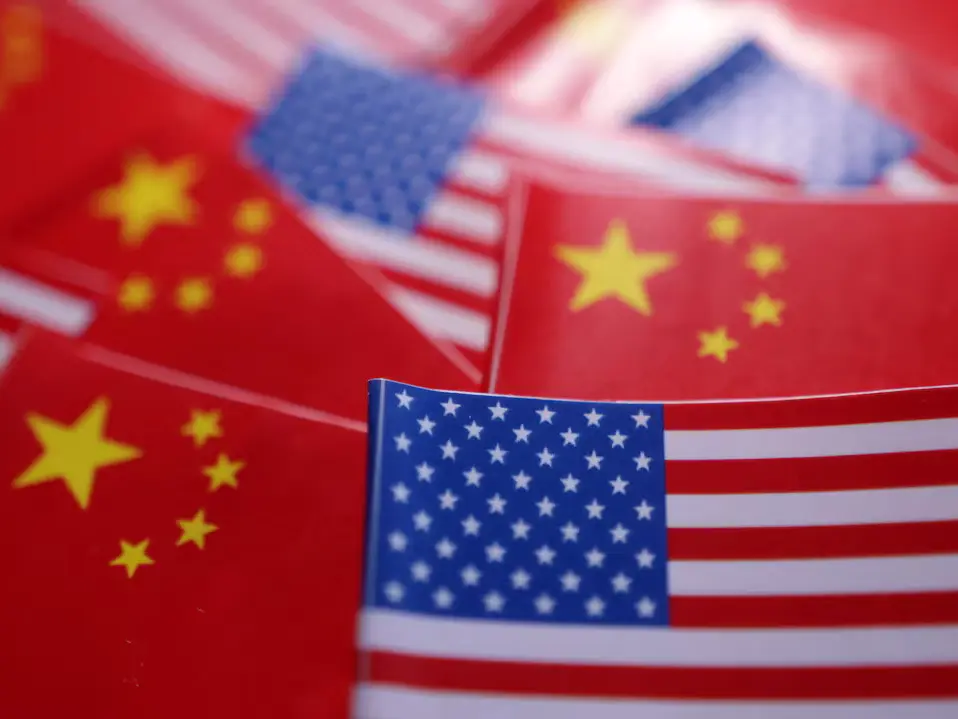
On Monday, the United States and China returned to the negotiating table, aiming to extend their fragile trade truce by another 90 days and stave off a new wave of tariffs that could destabilise global supply chains. Senior economic officials from both countries are meeting in Stockholm to hash out differences ahead of an August 12 deadline. Without a deal, existing US duties on Chinese goods could snap back to triple-digit levels, effectively triggering a new phase of the trade war.
As per Reuters, the talks follow a series of preliminary deals in May and June that temporarily paused tariffs and export controls on sensitive goods like rare earths and AI chips. The new round is expected to focus on locking in the tariff ceasefire and setting the stage for a potential Trump–Xi summit later this year. Unlike the major US–EU trade agreement signed on Sunday, which introduced a 15 per cent tariff framework and $750 billion in energy purchases, the US–China talks are reportedly expected to produce only a temporary extension, not a full-blown deal.
Trade analysts told Reuters that another 90-day pause is likely, which would allow both sides to avoid an escalation and maintain space for diplomacy. Such a truce would also help facilitate a meeting between President Donald Trump and Chinese President Xi Jinping, potentially in October or November.

Deep-rooted issues remain untouched
The discussions so far have been narrowly focused on halting retaliation. Talks in Geneva and London earlier this year dealt with tariff reductions and the resumption of rare earth and chip exports, but avoided the core ideological clash between the two economies. “The talks are not yet addressing the fundamental disagreements,” said Scott Kennedy, a China economics expert at the Center for Strategic and International Studies, as quoted by Reuters. “I’d be surprised if there is an early harvest… but an extension of the ceasefire for another 90 days seems the most likely outcome.”
Among Washington’s long-standing concerns are China’s state-led, export-driven industrial model and its impact on global prices. Meanwhile, Beijing has pushed back against US national security export controls, which it says are designed to limit Chinese tech growth.
Trending Stories
)
Three labourers killed as DU student loses control of his car, rams into them on Dwarka Expressway
)
Pentagon revives mandatory testosterone testing for male troops aged 30 and above
)
FACT CHECK: Why did PM Modi ask Xi ‘is it okay’ at BRICS Summit? New video reveals...
)
India seeks to build a full semiconductor supply chain
&im=FitAndFill=(700,400))
From Abhishek Sharma to Sahil Chauhan, 5 batters with fastest T20I hundreds
)
Indian activist-lawyer Prashant Bhushan's post brings focus on ‘conflict of interest’ appointments of ex-govt officials at Reliance, Adani groups
)
US And Denmark reach Greenland deal, Trump announces expanded military presence
)
Former India player Diana Edulji wants Smriti Mandhana to replace Harman as skipper at the earliest
)
China may have gained access to US's classified F-35 jets; parts meant for repairs diverted to Hong Kong, sparking Pentagon inquiry
&im=FitAndFill=(700,400))
Meet top 5 batters in the latest ICC T20I Rankings
)
Godfather of AI Geoffrey Hinton gives US lawmakers a one-year warning on AI
)
US F-16 fighter jet crashes in Michigan during training mission, pilot ejects safely
)
Shivakumar attends 79th Kalyana Karnataka Utsav in Kalaburagi
)
Trump signs Russia sanctions law: India faces fresh 100% tariff threat over Russian oil
)
Why Ranveer Singh’s Dhurandhar missed India’s Oscar entry; FFI jury member reveals what happened
)
Hong Kong extends newborn cash support scheme by three years
)
How did an Australian river with 500 crocodiles pass the Olympic test? Here's how
)
‘Will go to any extent’: Pakistan vows to defend Saudi Arabia amid Houthi attacks
)
'He will always be ahead': India coach Gambhir says Sooryavanshi won't walk into team ahead of Samson
)
The Verdict | When precision fails: US commits war crime in Minab school strike, UN finds
)
Trump signs Russia sanctions bill into law, targets Moscow’s energy sector
&im=FitAndFill=(700,400))
New Friday OTT releases (September 18, 2026): Lust Stories 3, You+Me, Best of the Best- 8 new titles coming on Netflix, Prime Video and more
)
Fast bowler Brydon Carse faces no charges over Derby nightclub incident
)
Africa is splitting, and a lot sooner than estimated, giving way to a new ocean
)
'Gangsta' crab shoves knife blade at man and his dog in Florida - Watch
)
Trump bans CNN, MS NOW and Politico from White House over ‘FAKE NEWS’
)
Trump 2.0: Dark days ahead for America’s ‘imperial presidency’
)
Trump's Greenland dream comes true? POTUS announces 'Infinite Life' deal with Denmark, claims permanent US control
)
Laura Wolvaardt sets new world record for most WT20I runs in a year
)
Drone strikes cooling tower at Russia's Kursk Nuclear Plant, IAEA confirms
)
Who is Khalilur Rahman? All you need to know about 81st UN General Assembly President
&im=FitAndFill=(700,400))
Meet top 5 bowlers in latest ICC T20I rankings
)
Ukraine plans record $109 bn defence spending, nearly two thirds of budget amid Russia war
&im=FitAndFill=(700,400))
Meet top 5 Indian batters with fastest T20I centuries
High-stakes timing for Trump and global markets
The urgency is heightened by the political and economic backdrop. Trump’s administration is preparing to impose new sectoral tariffs in coming weeks, targeting semiconductors, pharmaceuticals, ship-to-shore cranes, and other industrial goods. On the Chinese side, control over rare earth minerals, used in military systems and EV components, remains a key bargaining chip. China has also renewed its push for tariff relief on US-imported fentanyl precursors, in exchange for fulfilling a 2020 pledge to purchase more American farm goods.
“There’s a shared interest in avoiding escalation,” said Sun Chenghao, a fellow at Tsinghua University’s Center for International Security and Strategy, as quoted by Reuters. “A Trump-Xi summit would give both sides a political boost and a chance to pave the way toward real progress.”
What’s next?
If the Stockholm talks succeed, Washington and Beijing would likely announce a 90-day freeze on new tariffs, preventing automatic increases and maintaining the status quo through early November. But if the talks falter, both economies and global supply chains, could face renewed disruption.
The prospect of a Trump visit to China is also hanging in the balance. A successful summit could unlock deeper reforms, but failure could plunge the two superpowers back into a full-blown economic standoff, just as Trump sharpens his re-election pitch and Xi faces domestic pressure over China’s sluggish recovery.
(With inputs from the agencies)