US business equipment investment stalls as policy uncertainty clouds outlook

&imwidth=600&imheight=450&format=webp&quality=medium "US business equipment investment stalls as policy uncertainty clouds outlook")
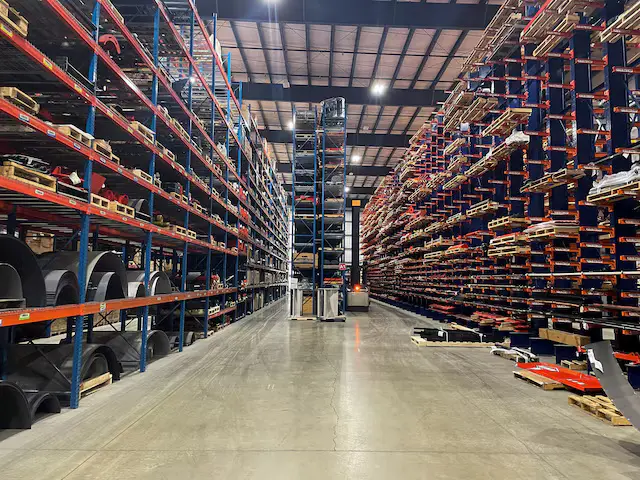
Tall racks hold parts needed inside Kuhn North America's farm equipment factory in Brodhead, Wisconsin, US, March 6, 2025. Photograph: (Reuters)
The weak print follows months of anecdotal reports suggesting companies are delaying capital expenditures due to uncertainty over tariffs and tax policy under US President Donald Trump’s administration.
Business investment in equipment appears to have slowed sharply in the second quarter of 2025, as new orders for US-manufactured capital goods unexpectedly declined in June, adding to growing evidence that policy uncertainty and trade tensions are weighing on corporate spending. Data released on July 25 by the Commerce Department showed non-defence capital goods orders excluding aircraft—a key indicator of business investment plans—fell 0.7 per cent last month. That marked a surprising reversal after a 2.0 per cent rebound in May and undershot economists’ expectations for a modest 0.2 per cent increase.
The weak print follows months of anecdotal reports suggesting companies are delaying capital expenditures due to uncertainty over tariffs and tax policy under US President Donald Trump’s administration. Economists now expect equipment spending, a key component of GDP, to have slowed dramatically from its 23.7 per cent annualised surge in the first quarter, some even anticipate a contraction.
Tariff rush fades, uncertainty lingers
The first quarter saw businesses front-load equipment purchases to avoid pending tariff hikes, but that urgency appears to have faded. While some tariff-related spending persists, the broader outlook has dimmed amid escalating trade uncertainty. The administration’s landmark Big Beautiful Bill, signed into law earlier this month, offers tax incentives for capital investment, but its benefits are being overshadowed by the unpredictability surrounding trade negotiations.
June data showed shipments of core capital goods (used to calculate equipment spending in GDP) rose 0.4 per cent, but inflation-adjusted figures suggest that growth has stalled. Much of the rise in shipments reflects higher prices rather than increased volumes, economists noted.
Aircraft volatility clouds broader picture
Trending Stories
)
)
)
)
)
&im=FitAndFill=(700,400))
)
)
)
&im=FitAndFill=(700,400))
)
)
)
)
)
)
)
)
)
)
)
)
)
)
)
)
)
)
)
)
)
)
)
)
)
)
)
Durable goods orders overall fell 9.3 per cent in June, dragged down by a sharp 51.8 per cent plunge in commercial aircraft bookings after a surge in May tied to a large Qatar Airways deal. Boeing reported just 116 new orders in June, down from 303 in May. Non-defence capital goods orders tumbled 24 per cent in June after a 50 per cent jump in May, reinforcing concerns that aircraft-related volatility may be masking underlying weakness in the broader investment landscape.
Meanwhile, orders for motor vehicles and parts increased 0.9 per cent, and computers and electronic products rose 0.6 per cent, providing minor offsets. Machinery orders gained 0.4 per cent, while electrical equipment ticked up just 0.1 per cent.
A separate S&P Global survey showed manufacturing activity contracted in July for the first time since December, citing protectionist costs and reduced investment appetite. With the Federal Reserve widely expected to keep rates steady this week, the focus will shift to upcoming GDP data, with the Atlanta Fed forecasting 2.4 per cent growth in Q2, driven more by trade flows than domestic investment.
(With inputs from agencies)