US battles ‘China conundrum’ in critical industries


US China
China continues to dominate critical industries despite continued efforts by the US.
From a breakthrough in chipmaking technology to its stronghold on the rare earths market, the west is struggling to catch up with China's critical might.
China has announced a significant advancement in its semiconductor technology with the development of a new laser-based immersion lithography machine.

This new equipment achieves a resolution of 65 nanometres, a notable improvement from the previous 90 nanometres.
The resolution of lithography machines is crucial for chipmaking as it determines how finely integrated circuits can be printed onto silicon wafers.
Current leading technology from ASML has a resolution of around 8 nanometres.
)
AI kill switch explained: Why shutting down a dangerous AI may not be as simple as pressing a button
)
US ships in Indian Ocean ‘will be attacked’ if war resumes, warns Iran
)
SNL UK takes aim at Ed Sheeran with AI Princess Diana sketch
)
Trump says he'll build an 'AI Force' and appoint a czar, for 'high IQ' people only
)
‘0% chance’: Nvidia CEO Jensen Huang dismisses AI extinction fears by 2030
&im=FitAndFill=(700,400))
What TSMC's 2nm technology means for Apple
)
'Were you here to sell chickpeas?': Wasim Akram criticises Babar Azam's captaincy
)
Sikh bus driver assaulted, bus stolen and rammed into cars in England; video surfaces
)
Mark Carney mimics Trump in hilarious moment over C$70 billion clean-energy investment; room erupts in laughter
&im=FitAndFill=(700,400))
Top 10 countries in mathematics: See the world’s best performers in 2026
)
Apple reportedly building AI server with M8 Ultra chips, may use Nvidia technology
)
TIFF 2026: Theja Rio’s Angh wins Platform Prize, puts Nagaland story on global stage
)
BTS' fans question iHeartRadio’s treatment of group after brief festival set
)
Samsung raises Galaxy S26 prices by Rs 20,000: Here’s what each model now costs
)
Operation Sindoor’s hidden naval dimension | MoD reveals Indian Navy Special Forces joined May 7 strikes
)
Bessent meets China’s He Lifeng to prepare for Trump-Xi summit
)
Trump defends AI amid growing alarm, announces new 'AI force' and promises an 'AI czar'
)
S Jaishankar, former Army chief among high-profile names issued Delhi SIR notices
)
Iran sets 7 conditions to end war with US: What are Tehran’s demands?
)
Trump announces ‘AI Force’ as debate grows over AI risks and regulation
)
Arvind Kejriwal, family members, Delhi CM Rekha Gupta get SIR notices
)
AI actress Tilly Norwood glitches mid-interview, switches from English to Chinese | Watch
)
Saudi vs Houthis: Houthis claim missiles & drones used in attack on key Saudi sites
)
Ed Sheeran addresses Macklemore's removal, Gaza conflict during Philadelphia concert: 'I cannot hide how I feel'
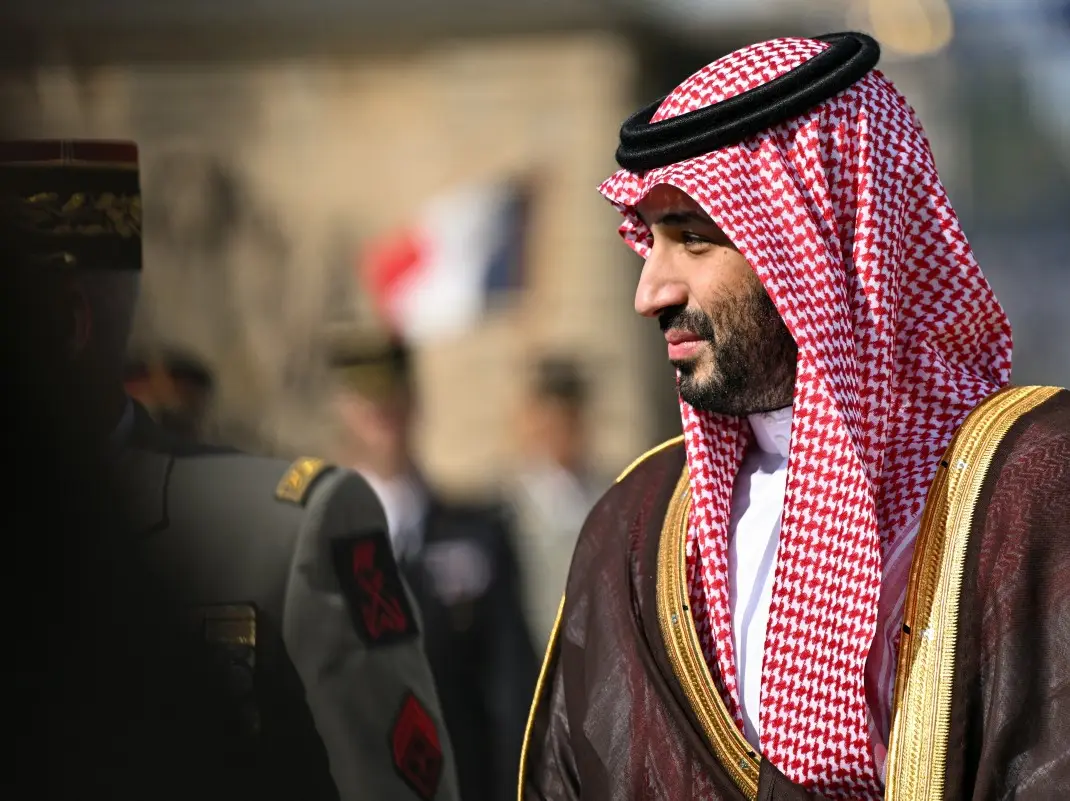)
Saudi Arabia exits China-led mBridge digital currency platform amid Saudi-Houthi conflict
)
'Lot of things to learn from experienced players': Jayasuriya backs Rohit, Virat for 2027 ODI World Cup
)
Chancellor Friedrich Merz vows to stay on as exit polls signal major poll setback
)
North Korea's nuclear tests triggered 1,399 earthquakes: Earth is still shaking | Gravitas
)
Several petrol pumps, other businesses to refuse UPI payments above Rs 2,000 from Oct 16: Is it legal?
)
Kampala-Ankara rift deepens: Uganda suspends military ties, seeks Fred Lumbuye's extradition
)
AUS vs ZIM, 3rd ODI: Ellis stars as Australia edge Zimbabwe by one wicket in last-over thriller
)
West Indies Squad for India Series: Hetmyer included for T20Is, Holder rested
)
China now makes advanced memory chips without the machines it was banned from buying
)
Trump in ‘deciding mode’ on Iran, says ‘very big things’ going to happen soon
)
Harry Brook targets long reign at top of T20I rankings after Sri Lanka sweep
)
Microsoft executive called AI training the ‘largest theft of labour in human history’
)
Munich Mayor taps first keg to kick off Oktoberfest
Despite these advancements, Chinese companies are still working to close the gap with global leaders like ASML, especially given the US Sanctions that have restricted access to advanced semiconductor equipment.
While China's advancements in chipmaking are impressive, another critical element in high-technology manufacturing is the rare earth minerals.
These elements are essential for producing a wide range of electronic components, from smartphones to electric vehicles.
China currently dominates the global supply of rare earths, controlling approximately 70 per cent of output and more than 90 per cent of refining.
The US And its allies have recognized the strategic importance of rare earths and are working to reduce their dependence on China.
However, recent price declines and increased supply have raised concerns about the viability.
Efforts, such as the Lynas rare earths processing plant in Texas, face challenges including a slump in prices and higher-than-expected costs.
The mountain pass mine in California and other ventures are struggling with economic hurdles.
This illustrates the difficulties in developing a competitive alternative to China’s entrenched market presence in key critical industries.
