

&imwidth=800&imheight=600&format=webp&quality=medium "UK unveils trade plan to support exporters, guard against cheap imports")
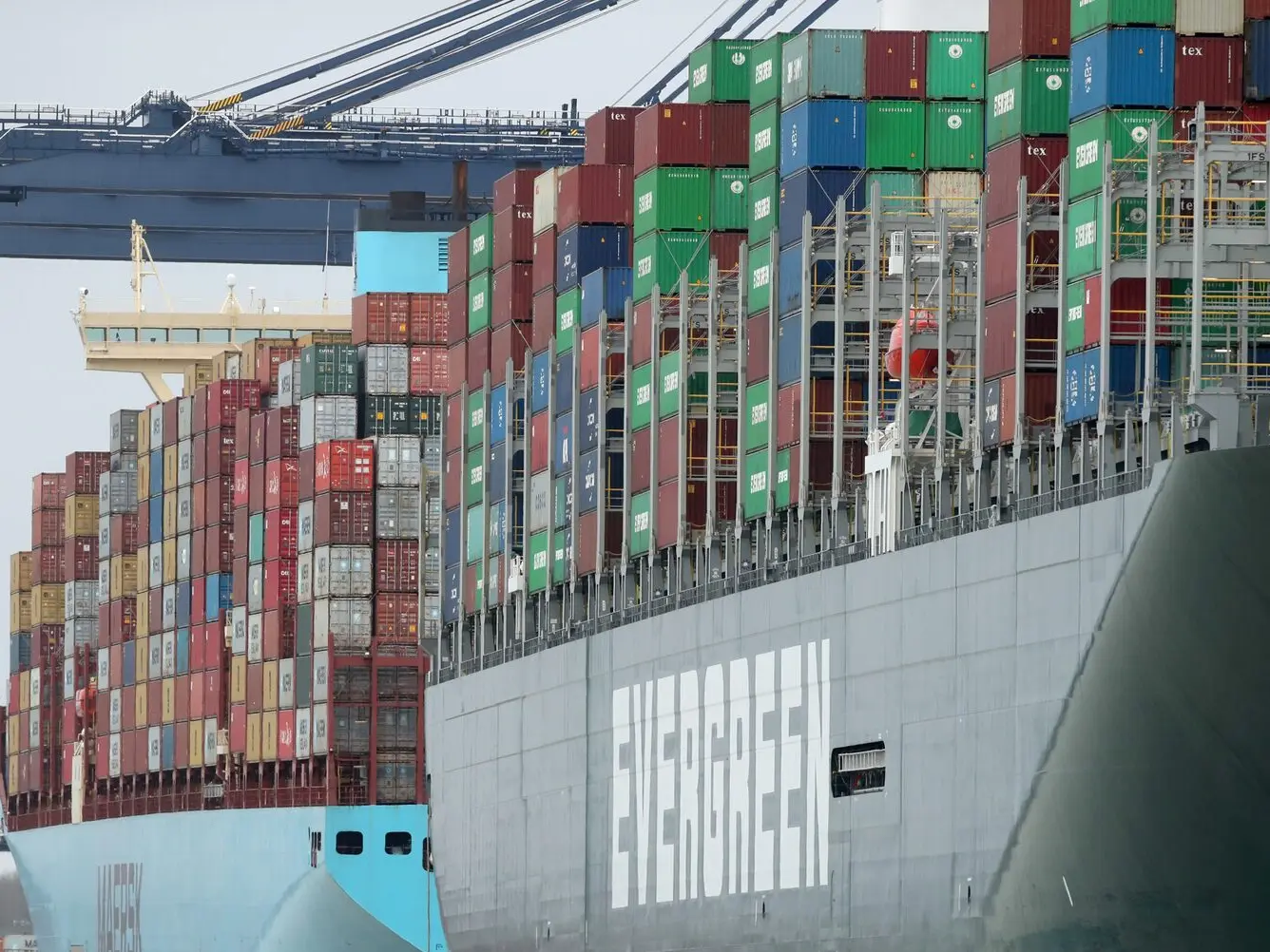
The UK government on Thursday introduced a newtrade strategy designed to strengthen British exports while tightening safeguards against the threat of cheap foreign imports. The move comes amid rising global uncertainty and renewed protectionism triggered by the US tariff wave under President Donald Trump.
What is Britain's new trade plan?
Unveiled at the British Chambers of Commerce (BCC) conference in London, the strategy outlines a dual approach: expanding export support for UK firms while reinforcing trade defences to ensure domestic industries remain competitive.
Business Secretary Jonathan Reynolds said the initiative is aimed at “ensuring British businesses are protected from harm”, as quoted by Reuters. According to the strategy, the UK will increase government-backed financing for exporters and provide assistance in navigating complex trade regulations—especially for small and medium-sized enterprises (SMEs).
Concerns over redirected exports amid US tariffs
The timing of the announcement follows rising concerns that goods originally intended for the US, particularly steel and electric vehicles, may be diverted to the UK, after President Trump’s new tariffs made American markets costlier for foreign producers. Reuters reports that British manufacturers fear a potential influx of underpriced imports, particularly from China, as global supply chains reroute. Sectors such as automotive and steel have called for urgent measures to prevent market distortion.
Trending Stories
&imwidth=180&imheight=135&format=webp&quality=medium)
Lula campaign accuses Meta of election interference after social media content blocked
&imwidth=180&imheight=135&format=webp&quality=medium)
US troop deaths in Iran war on rise? Pentagon reveals latest toll
&imwidth=180&imheight=135&format=webp&quality=medium)
100,000 strikes in 3 years: How October 7 redefined Israel's war
&imwidth=180&imheight=135&format=webp&quality=medium)
‘Your people don’t even let us near it’: IAF chief’s blunt response on US F-35; India yet to decide on Russia’s Su-57
&imwidth=180&imheight=135&format=webp&quality=medium)
Real or fake? PIB fact-checks protest videos; Delhi Police clarifies on Gurdwara Bangla Sahib clip
&imwidth=180&imheight=135&format=webp&quality=medium)
UK navy hit by espionage scandal: Sailor accused of spying for Russia | Gravitas
&imwidth=180&imheight=135&format=webp&quality=medium)
Saudi Arabia's King Khalid International Airport attack kills 12, injures 309; India calls it 'unacceptable'
&imwidth=180&imheight=135&format=webp&quality=medium)
‘Never-ending flow of cheap labour’: JD Vance hits back at Indian-origin Congresswoman over US green card curbs for major tech companies
&imwidth=180&imheight=135&format=webp&quality=medium)
Panama president declares ‘major disaster’ after powerful 7.7-magnitude earthquake; over 80 aftershocks recorded
&imwidth=180&imheight=135&format=webp&quality=medium)
HYBE’s Weverse Con India sets ticket sale date for March 2027 festival
&imwidth=180&imheight=135&format=webp&quality=medium)
Messi scores twice in Inter Miami return following final match for Argentina
&imwidth=180&imheight=135&format=webp&quality=medium)
CJP's Abhijeet Dipke, Ashutosh Ranka, Saurav Das released 22 hours after flight detention
&imwidth=180&imheight=135&format=webp&quality=medium)
'Unwarranted interference': India slams UN human rights office over remarks on Delhi protests
&imwidth=180&imheight=135&format=webp&quality=medium)
'Jantar Mantar not the story of India': BJP's Sambit Patra claims 'anarchists' tried to hold Delhi captive
&imwidth=180&imheight=135&format=webp&quality=medium)
Nicolas Cage refuses AI waiver for Spider-Noir, hints at Amazon exit and True Detective role
&imwidth=180&imheight=135&format=webp&quality=medium)
Riyadh airport hit in missile attack, dozens injured; 5 in intensive care
&imwidth=180&imheight=135&format=webp&quality=medium)
'Spent Rs 2,000 cr to elect Trump': Elon Musk bought US President's loyalty by writing the biggest political cheque in human history
&imwidth=180&imheight=135&format=webp&quality=medium)
Powerful 7.7 magnitude earthquake strikes Panama, tsunami warning issued
&imwidth=180&imheight=135&format=webp&quality=medium)
US mid-term elections: What are PACs - Unique American System that lets corporates shape voting
&imwidth=180&imheight=135&format=webp&quality=medium)
'Ouch!!! That must hurt': Kangana Ranaut hails Kamal Haasan's sharp reply to Elon Musk over Starlink row
&imwidth=180&imheight=135&format=webp&quality=medium)
Barry Manilow cuts short Las Vegas comeback show, cancels next concert over Bronchitis
&imwidth=180&imheight=135&format=webp&quality=medium)
Hamas used double agents, deceived Israel to carry out October 7 massacre
&imwidth=180&imheight=135&format=webp&quality=medium)
Bigg Boss 20: Who is Manish Goel? Meet the new wild card contestant on Salman Khan’s show
&imwidth=180&imheight=135&format=webp&quality=medium)
Portugal Federation confirms Cristiano Ronaldo’s return to national team despite suspension
&imwidth=180&imheight=135&format=webp&quality=medium)
Kim Kardashian brings glamour to Singapore Grand Prix while supporting boyfriend Lewis Hamilton
&imwidth=180&imheight=135&format=webp&quality=medium)
All 22 Indian seafarers safe in attack on Panama-flagged tanker off UAE coast
&imwidth=180&imheight=135&format=webp&quality=medium)
‘Time for Ukraine to get a new president’: Trump lashes out at Zelensky over Russia strikes
&im=FitAndFill=(700,400)&imwidth=180&imheight=135&format=webp&quality=medium)
Amitabh Bachchan @ 84: A look at his most iconic on-screen avatars - Anthony Gonsalves, Vijay Kumar and more
&imwidth=180&imheight=135&format=webp&quality=medium)
BTS’ RM raises privacy concerns over drones, lasers outside hotel amid Lima concert, urges fan respect
&imwidth=180&imheight=135&format=webp&quality=medium)
Thai queen becomes first reigning monarch to fly jet solothailand #queen #wion
&im=FitAndFill=(700,400)&imwidth=180&imheight=135&format=webp&quality=medium)
Food shortages, suicide attempts and more: USS Abraham Lincoln returns to US after 321 day deployment — What happened aboard the US carrier?
&imwidth=180&imheight=135&format=webp&quality=medium)
Rahul Gandhi calls Modi, Shah ‘cowards’ amid CJP protest crackdown in Delhi
&imwidth=180&imheight=135&format=webp&quality=medium)
‘Had he known, would have been here’: CJP Chief Abhijeet Dipke denied news of grandmother's death, family claims
&imwidth=180&imheight=135&format=webp&quality=medium)
Where are Abhijeet Dipke, Ashutosh Ranka, Saurav Das? CJP gives big update after flight detention
&imwidth=180&imheight=135&format=webp&quality=medium)
Putin conveys Iran’s proposal to Trump, offers to take Tehran’s enriched uranium
Unlike the European Union, the UK has not imposed high tariffs on Chinese-made electric vehicles, and its existing steel import safeguards are due to expire in 2026.
Trade defence under review
Officials have signalled an upcoming review of trade remedy tools managed by the Trade Remedies Authority (TRA). While the UK’s current mechanisms allow for countermeasures against dumping or subsidies, industry groups say enforcement has been slow and limited in scope.
According to Financial Times, British steelmakers are urging the government to extend or replace current safeguards and consider treating certain sectors, such as domestic steel production, as strategic.
Focus on services, India trade deal
The strategy also highlights a renewed focus on expanding UK services exports, which already account for over £500 billion annually, as per Financial Times. Officials pointed to the recently concluded UK–India free trade agreement as a key success. The deal is expected to increase bilateral trade by over £25 billion per year by 2040.
The government also referenced improvements in post-Brexit trading terms with the European Union and a new tariff agreement with the US as signs of diplomatic progress.
Closing the tax-free loophole on low-value imports
The UK Treasury is reviewing the “de minimis” rule, which currently allows goods worth under £135 to enter the UK without import taxes. Retailers argue that this loophole is being exploited by foreign e-commerce firms, including Shein and Temu, to undercut local sellers.
As per The Guardian, Andrew Opie of the British Retail Consortium called for “swift action” to prevent misuse of the rule, originally intended for consumers but now increasingly leveraged for commercial advantage.
What’s next?
The government’s trade policy update reflects a shift toward greater responsiveness in a changing global environment. With protectionist measures spreading across major economies and geopolitical risks reshaping supply chains, UK officials say the new plan aims to strike a balance, supporting exporters while defending vulnerable sectors.
The coming months will be key as the UK reviews steel safeguards, monitors redirected trade flows, and implements changes to low-value importrules.
(With inputs from the agencies)