
&imwidth=800&imheight=600&format=webp&quality=medium "Trump doubles US steel and aluminium tariffs to 50%; UK temporarily spared amid wider trade war")
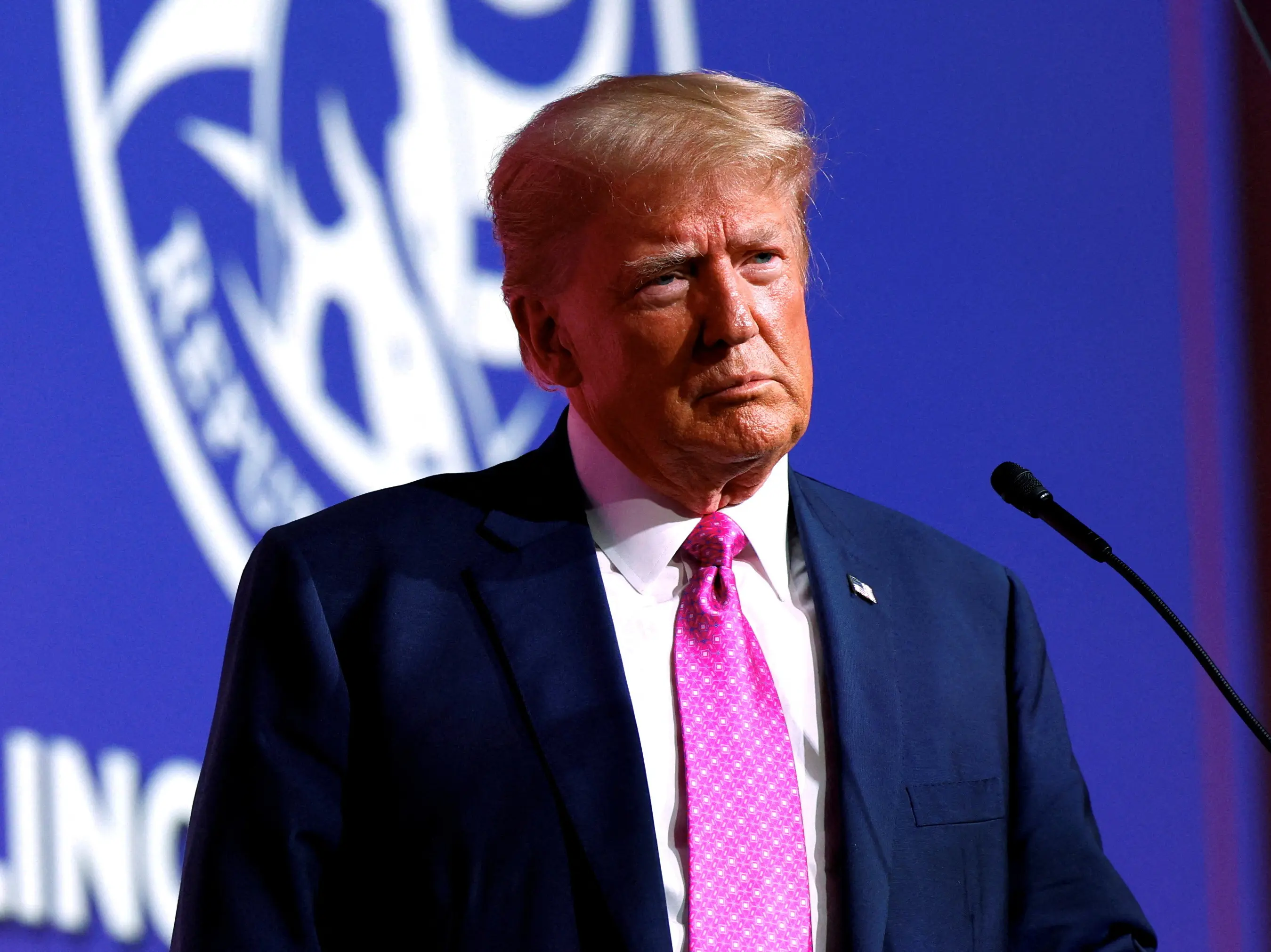
US President Donald Trump has signed an executive order doubling import tariffs on steel and aluminium from 25 to 50 per cent, a move that has sparked fresh concerns of a global trade flare-up.
The decision, effective from June 5, has exempted the United Kingdom for now, thanks to an ongoing bilateral agreement, but other trading partners, including Canada, Mexico and the European Union, are preparing countermeasures.
US metals tariffs hiked to 50 per cent

Trump’s new order raises the stakes in an already tense global trade environment. In a proclamation signed late Tuesday, he authorised a 50 per cent duty on most imported steel and aluminium, citing the need to bolster domestic industry. “Nobody’s going to be able to steal your industry… at 50 per cent, they can no longer get over the fence,” Trump said during a rally at a US Steel plant, as quoted by Reuters.
The hike marks the second major tariff escalation since March, when Trump first reimposed 25 per cent tariffs on steel and 10 per cent on aluminium, using Section 232 of the Trade Expansion Act, a clause that allows tariffs in the name of national security. “We started at 25 and then, after studying the data more, realised more help is needed,” said White House economic adviser Kevin Hassett at a steel conference in Washington, according to Reuters.
UK temporarily escapes the tariff blow for now
Trending Stories
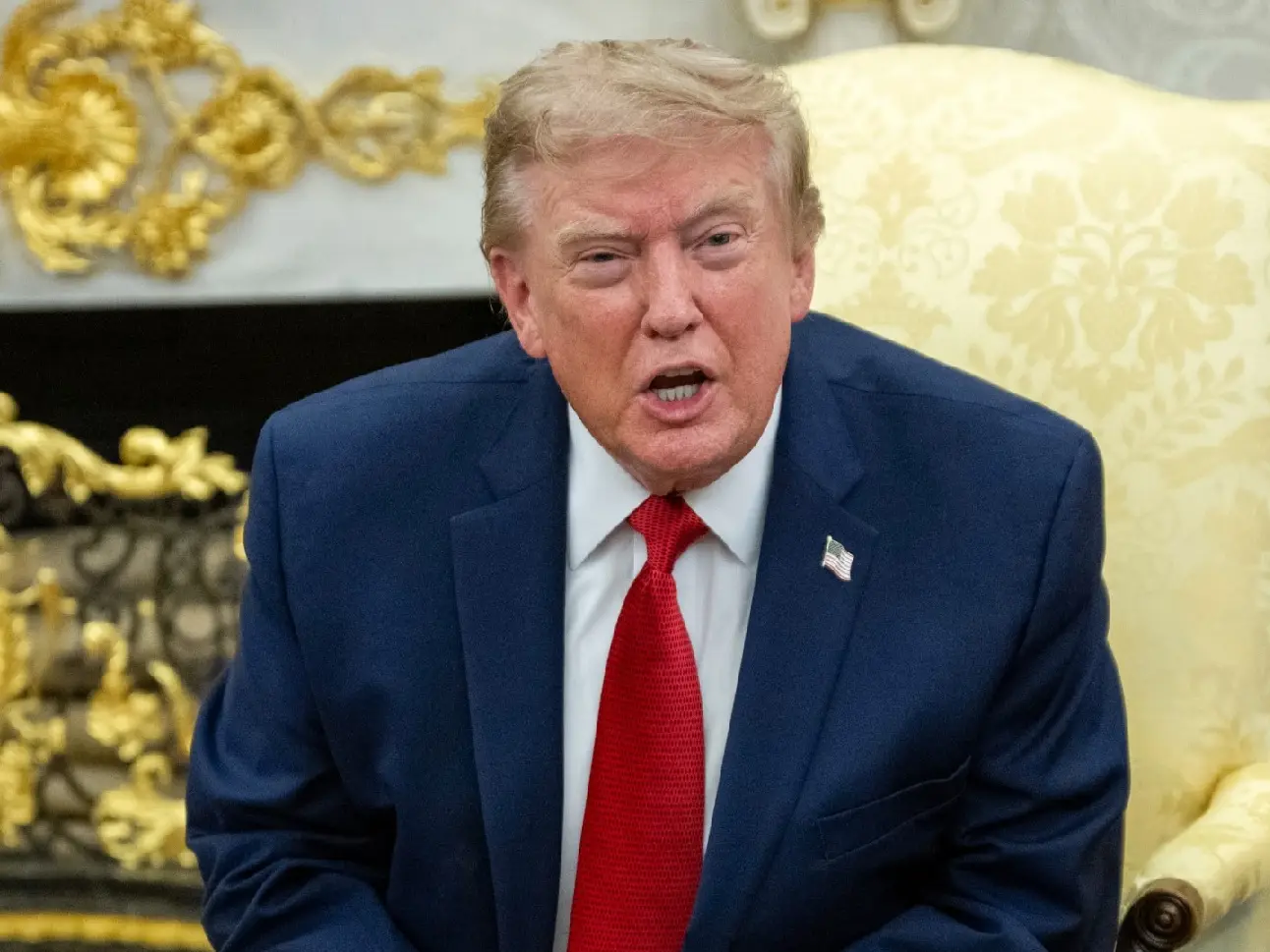)
Trump says Russia has ‘lost control’ of its diesel industry, calls for end to ‘ridiculous, never-ending’ war
)
Asian Games: Indian women's hockey team thrash Indonesia 17-1, blasts 36 goals in 2 matches
)
Putin's United Russia party wins 355 seats in Duma election; 4 other parties cross threshold to enter parliament
)
Delhi Air pollution: Strict crackdown on waste burning
)
'I never imagined…': Bihar-born Japan cricketer Abhishek Anand on historic India clash
)
‘0% chance’: Nvidia CEO Jensen Huang dismisses AI extinction fears by 2030
)
Samay Raina-Mukesh Chhabra controversy explained: What happened over girlfriend joke on India's Got Latent?
)
Four decades after leaving Kolkata, the Birlas may be coming back for more
)
BTS' fans question iHeartRadio’s treatment of group after brief festival set
)
Glitch in the matrix caught on camera: Woman vanishes after talking to reporter
)
Samsung raises Galaxy S26 prices by Rs 20,000: Here’s what each model now costs
)
IIT Bombay tensions ease after three-hour open house; director’s assurances pacify students
)
J&K Assembly Session begins amid chaos: BJP, ruling alliance clash as statehood demand dominates
)
8,000 bees worth over $20,000 stolen from hives in Queensland
)
Four Hands, Two Sonatas ep (5-8) review: Song Kang Lee, Jun Young elevate the emotional stakes after a tragic turn
)
The Verdict | The Mecca Agreement is under scrutiny as Houthis attack Saudis
)
Who was Sheikh Ahmed bin Rashid Al Maktoum? From Dubai Royal family to police, sports and racing
)
Saudi Arabia exits China-led mBridge digital currency platform amid Saudi-Houthi conflict
)
Maharashtra TET paper leak: Chargesheet reveals papers smuggled in shoe insoles for Rs 8,000
)
'Lot of things to learn from experienced players': Jayasuriya backs Rohit, Virat for 2027 ODI World Cup
)
Taylor Swift has a 'proud wife' moment as Travis Kelce scores first touchdown of season: 'That’s my husband!'
)
North Korea's nuclear tests triggered 1,399 earthquakes: Earth is still shaking | Gravitas
)
Mahabharat actor Saurav Gurjar arrested in Hyderabad, sent to 14-day judicial custody in sexual exploitation case
&im=FitAndFill=(700,400))
New OTT releases this week (September 21-27, 2026): Shaque: Trust No One, Hunkkaar, Don’t Be Shy- 5 new titles coming to Netflix, Prime Video and more
)
WATCH | Mysterious lights over Tehran caught on video. Drone, aircraft or something else?
)
What is Yom Kippur and why is it celebrated? All you need to know about the Jewish Day of Atonement
)
White House TV pool halts Trump coverage after CNN barred from UNGA events
)
Iranian airlines to shut worldwide on Sept 23, Bessent warns of US banking ban
)
Pilot recreates Mona Lisa in sky over Oklahoma and Arkansas in four-hour flight: VIDEO
)
Fitna Al-Khawarij: Decoding biggest security threat to Pakistan | Gravitas
)
Jailer 2: Vidya Balan joins Rajinikanth's upcoming film as Kantha | Watch
)
Microsoft executive called AI training the ‘largest theft of labour in human history’
)
40-foot waves crash into cruise ship in dangerous stretch near Antarctica. Watch
)
Mystery explosions rock Aleppo, residents told to stay indoors
)
BTS fans mock iHeartRadio’s day 2 turnout after short set controversy
)
The Scandal, why so scandalous? Ji Chang Wook leaves you gasping for air
The United Kingdom has been spared, for now. Under a preliminary trade understanding known as the Economic Prosperity Deal (EPD), signed on May 8, UK metal exports will continue to face the original 25 per cent tariff, not the new 50 per cent rate. The deal is yet to be fully ratified in Parliament, and the exemption remains conditional.
In the order, Trump said the UK deserved “different treatment” due to the EPD but warned that the 50 per cent tariff could still be applied on or after July 9 if the agreement does not fully materialise. Trade Secretary Jonathan Reynolds, who met US Trade Representative Jamieson Greer in Paris, welcomed the temporary relief and reaffirmed the UK’s commitment to implementing the agreement.
Gareth Stace, Director General of UK Steel, said the exemption was “a welcome pause,” but warned of uncertainty. “The introduction of 50 per cent tariffs immediately puts the shutters up… most of our orders, if not all of them, will now be cancelled,” he told Reuters.
Tariffs take effect as deadline for new trade offers looms
The tariff spike also coincides with a broader Trump deadline; June 5 marks the date by which trading partners were expected to submit their “best offers” to avoid additional tariffs, part of Trump’s so-called “Liberation Day” duties set to kick in from July 8.
As reported by Reuters, the Office of the US Trade Representative (USTR) recently sent letters to multiple governments asking for detailed proposals, including commitments on reducing tariffs, addressing non-tariff barriers, and purchasing more US goods. White House spokeswoman Karoline Leavitt confirmed that the letters were intended as a “friendly reminder.”
So far, only the UK has struck a deal in principle. Other major trading partners, including Canada and Mexico, have warned of retaliation. “It makes no sense for the United States to levy a tariff on a product in which you have a surplus,” Mexico’s Economy Minister Marcelo Ebrard told Reuters, noting that Mexico imports more steel from the US than it exports there.
Global steel and aluminium trade reels under pressure
The global steel and aluminium sectors are already seeing ripple effects. US steel imports fell 17 per cent in April compared to March, according to data from the American Iron and Steel Institute (AISI). Census Bureau data cited by Bloomberg shows that Canada and Mexico,the first and third largest exporters of steel to the US, will be hit hardest.
Canada also faces steep exposure on the aluminium front, as it supplies nearly half of US aluminium imports, more than twice that of the next ten countries combined, according to official US trade data reviewed by Reuters.
Domestic price shocks have followed. Aluminium premiums in the US have more than doubled since the start of the year, with Bloomberg reporting a surge in market volatility due to the abrupt policy shift.
Business leaders have raised alarms. Chad Bartusek, Director of Supply Chain at Illinois-based Drill Rod & Tool Steels, told Reuters that he woke up to a 50 per cent tariff bill of $145,000, double what he expected. “It’s one punch after another,” he said, adding that his firm has had to raise prices by up to 14 per cent and reduce workers’ hours.
Economists, too, remain sceptical. Erica York, Vice President of Federal Tax Policy at the Tax Foundation, warned of broader fallout. “It’s just very foolish to double down on this type of tariff,” she told Reuters. York pointed to a 2020 analysis showing that Trump’s earlier tariffs created about 1,000 steel jobs but cost the economy 75,000 jobs in downstream industries.
What lies ahead?
As Trump’s trade deadline looms, the global metals market waits in limbo. While the UK has secured a temporary reprieve, much of the world, including close allies, continues to face stiff levies. Whether these measures ultimately protect American industry or deepen global economic fragmentation remains to be seen.
For now, businesses, trade diplomats and economists alike are bracing for the next round of negotiations or the next wave of tariffs.