Trading with the Dragon? Germany and China talk free trade amid geopolitical tensions

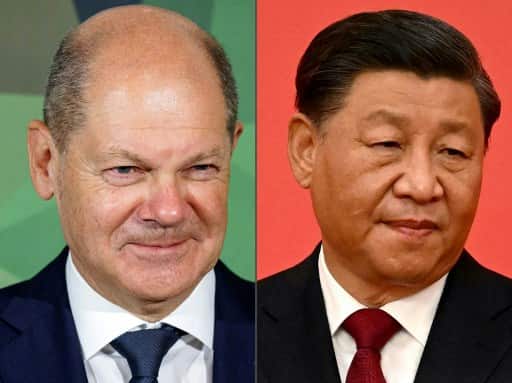
Olaf Scholz-Xi Jinping
Amid mounting geopolitical tensions and growing security concerns, Germany and China engaged in crucial trade talks, seeking to balance economic interests and national security, Reuters reported. The discussions, led by German Chancellor Olaf Scholz and Chinese Premier Li Qiang in Berlin, highlighted the potential benefits of free trade but drew criticism from skeptics who question the appropriateness of such talks at this juncture. As both countries face complex challenges, the delicate relationship between Germany, China, and the wider European Union (EU) is under scrutiny.
Security Concerns and Technological Risks
Germany's domestic intelligence agency issued a warning, underscoring China's ongoing campaign to acquire German technology for military purposes. The agency's annual report cited by Reuters highlighted the increasing risk of sophisticated cyber-spying operations, further raising concerns about national security and the potential compromise of sensitive technologies.

EU's Economic Security Plan
Simultaneously, the European Union's executive body unveiled an ambitious economic security plan. The plan aims to convince the 27 member states to adopt stricter controls on exports and emerging technologies that rival nations, including China, could utilize. While not explicitly naming China, the proposal emphasizes the need to reduce economic reliance and "de-risk" certain partnerships, signaling a shift in the EU's approach toward safeguarding strategic technologies.
Navigating the Balancing Act
&imwidth=180&imheight=135&format=webp&quality=medium)
The Royals season 2: Ishaan Khatter's series gets new director after two back-to-back exits- Report
&imwidth=180&imheight=135&format=webp&quality=medium)
Viral video shows cross falling on Colombia priest, no official confirmation | WATCH
&imwidth=180&imheight=135&format=webp&quality=medium)
Trump’s approval ratings hit a new low, Democrats want US president to campaign more
&imwidth=180&imheight=135&format=webp&quality=medium)
France reports first human case of livestock virus Shamonda, patient dies; what we know so far
&imwidth=180&imheight=135&format=webp&quality=medium)
Trump called Musk to lift Starlink restrictions affecting Ukraine's military operation: Report
&imwidth=180&imheight=135&format=webp&quality=medium)
Two BrahMos missiles on Tejas, triple the range and 100% indigenisation, says former BrahMos CEO
&imwidth=180&imheight=135&format=webp&quality=medium)
Ilhan Omar breaks silence over alleged marriage to her brother; Trump thinks it's 'really good answer'
&imwidth=180&imheight=135&format=webp&quality=medium)
Pakistan signs another defence pact even as Makkah Alliance shows no teeth. This time, it's with Qatar, Indonesia, Turkey
&imwidth=180&imheight=135&format=webp&quality=medium)
Netanyahu dials PM Modi, invites him and Capt Smit Machchhar to light torch on Israel’s Independence Day
&imwidth=180&imheight=135&format=webp&quality=medium)
‘Russian humanitarians’ fired missiles at Kyiv: Zelensky takes swipe at Witkoff over Putin praise
&imwidth=180&imheight=135&format=webp&quality=medium)
Putin fires nuclear capable hypersonic missiles, Zelensky ready to surrender 25% territory
&imwidth=180&imheight=135&format=webp&quality=medium)
From Agni-V to Project Kusha: How are India’s indigenous missile systems and defence shield reshaping modern warfare
&imwidth=180&imheight=135&format=webp&quality=medium)
'It's a crime not to see this scene': Tehran puts Trump 'behind bars'
&imwidth=180&imheight=135&format=webp&quality=medium)
What is the ‘heat ray’ weapon? Pete Hegseth reportedly authorises DHS to test it at US-Mexico border
&imwidth=180&imheight=135&format=webp&quality=medium)
Will Rohit and Kohli play ODI World Cup 2027? BCCI president Manhas says board 'not in a position to comment'
&imwidth=180&imheight=135&format=webp&quality=medium)
Watch: India rejects ‘imprecise and unsupported’ references in UN migrant rights report
&imwidth=180&imheight=135&format=webp&quality=medium)
US to get 850 F-35 stealth fighter jets under 10-year Pentagon-Lockheed deal
&imwidth=180&imheight=135&format=webp&quality=medium)
GRAVITAS | Putin fires nuclear-capable hypersonic missiles, Zelensky ready to surrender 25% territory
&imwidth=180&imheight=135&format=webp&quality=medium)
IIFA 2026: Salman Khan warns paps, kisses little fan and hugs Kareena Kapoor at press conference
&im=FitAndFill=(700,400)&imwidth=180&imheight=135&format=webp&quality=medium)
New OTT releases this week (October 19-25, 2026): Gajab Raat to Chaar Yaar-8 titles to watch during Dussehra week on Netflix, Prime Video and more
&imwidth=180&imheight=135&format=webp&quality=medium)
US business activity grows in June, but tariffs and inflation cloud outlook
&imwidth=180&imheight=135&format=webp&quality=medium)
'That was great, who threw that punch?': Trump asks as protester punched at rally
&imwidth=180&imheight=135&format=webp&quality=medium)
‘I caution the president...’: Trump’s ex-press secretary warns after Zacharia’s exit
&imwidth=180&imheight=135&format=webp&quality=medium)
Trump’s bid to put his name on everything: This time, it was Atlantic Ocean; a look at past efforts
&imwidth=180&imheight=135&format=webp&quality=medium)
Diljit Dosanjh's Oct 30 Delhi show hits roadblock, Delhi Police denies permission
&imwidth=180&imheight=135&format=webp&quality=medium)
'This is despicable': Amy Acton hits back at Vivek Ramaswamy over Ohio campaign ad featuring her estranged mother
&imwidth=180&imheight=135&format=webp&quality=medium)
'Misunderstanding should be resolved through dialogue': Uttarakhand CM Dhami intervenes in Daler Mehndi controversy, speaks to brother Mika Singh
&imwidth=180&imheight=135&format=webp&quality=medium)
Finance influencer dies by suicide in Chennai; father accuses tech CEO, who denies charge
&imwidth=180&imheight=135&format=webp&quality=medium)
One man, 8 months of work, and a river dirty again: Why Bittu Tabahi may quit
&imwidth=180&imheight=135&format=webp&quality=medium)
ENG vs SL: Harry Brook’s 202 goes in vain as Sri Lanka pull off second-highest ODI chase
&imwidth=180&imheight=135&format=webp&quality=medium)
ENG vs SL: Harry Brook breaks Shubman Gill’s record for fastest ODI double century
&imwidth=180&imheight=135&format=webp&quality=medium)
Saudi Arabia targeted yacht carrying 14 Indians in Red Sea, rescue underway, Houthis claim
As China's largest trading partner in Europe, Germany faces a delicate balancing act in formulating its China strategy. Despite China's significance as a vital market for German companies and a key source of materials for exports, concerns over national security and technology transfers have prompted a reevaluation of the relationship. The trade talks between Chancellor Scholz and Premier Li underscored the potential advantages of fair competition and open market access for achieving climate goals. Yet, critics argue that geopolitical tensions warrant a more cautious approach.
EU Member States Dilemma
The European Commission's economic security plan addresses the EU member states' concerns over certain nations' potential misuse of emerging technologies. However, implementing stricter export controls and screening outbound investments poses challenges, as nations are reluctant to relinquish their powers to grant export licenses, citing the need to balance economic interests with security considerations.
Future Debates and Funding
The EU's economic security plan sets the stage for an upcoming summit in Brussels, where EU leaders will engage in a critical debate on relations with China. The discussions will shape the EU's stance and policies towards China moving forward, considering the intricate dynamics of economic cooperation and security risks. Additionally, the European Commission has called for an extra €10 billion in funding to support industry development in strategic technologies.
(With Inputs from Reuters)