Swiss economy posts Q2 growth ahead of US tariff shock

&imwidth=600&imheight=450&format=webp&quality=medium "Swiss economy posts Q2 growth ahead of US tariff shock")
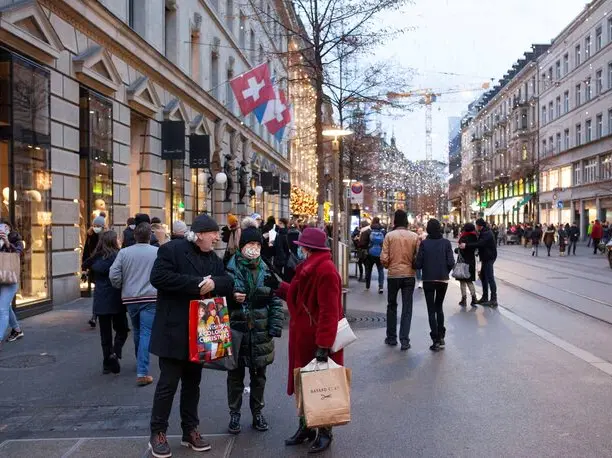
Shoppers are seen under Christmas illuminations, Switzerland December 11, 2021. Photograph: (Reuters)
Switzerland’s gross domestic product rose 0.1 per cent in the April-June period, down from 0.8 per cent in the first quarter, according to a flash estimate from the State Secretariat for Economic Affairs (SECO) on August 15.
Switzerland’s economy eked out growth in the second quarter of 2025, surprising economists who had forecast a contraction, but momentum slowed sharply ahead of steep new US trade tariffs. Gross domestic product rose 0.1 per cent in the April-June period, down from 0.8 per cent in the first quarter, according to a flash estimate from the State Secretariat for Economic Affairs (SECO) on August 15. The figure, adjusted for sporting events, beat the Bloomberg consensus for a 0.1 per cent decline but fell short of forecasts from Capital Economics, which expected 0.2 per cent growth.
SECO said gains in the services sector offset declines in industrial output, which was hit hard by a reversal of first-quarter stockpiling by US buyers, especially in pharmaceuticals, Switzerland’s top export. In Q1, American firms rushed to import Swiss goods before US President Donald Trump imposed tariffs.
Tariff impact looms large
Earlier this month, Washington announced a 39 per cent tariff on most Swiss imports—the highest rate applied to any developed economy—excluding gold and most pharmaceuticals. Analysts say the levy will affect 35-40 per cent of Swiss exports to the US, potentially cutting GDP by 0.5 per cent to 0.6 per cent over the next year. If the pharmaceutical exemption were removed, losses could reach 1-2 per cent, possibly tipping the economy into a brief recession.
BNP Paribas estimates the trade tensions and related uncertainty could shave a full percentage point off GDP by the end of 2026. Trade negotiations with Washington have made little headway. Reports suggest Bern has considered unconventional bargaining tactics, such as relocating FIFA headquarters to the US or imposing a special tax on gold exports to America, though the economic impact of these measures would be minimal.
Pressure mounts on the Central Bank
Trending Stories
)
)
)
)
)
&im=FitAndFill=(700,400))
)
)
)
&im=FitAndFill=(700,400))
)
)
)
)
)
)
)
)
)
)
)
)
)
)
)
)
)
)
)
)
)
)
)
)
)
)
)
With inflation near zero and growth faltering, analysts expect the Swiss National Bank (SNB) to cut its policy rate by 25 basis points to -0.25 per cent at its September meeting. The SNB already reduced rates to zero in June, seeking to ease pressure from a strong Swiss franc, which has surged this year amid global trade tensions. Goldman Sachs economists cited “weak growth, low inflation and ongoing tariff risks” as reasons for a rate cut. Annual inflation is projected at just 0.2 per cent in 2025, the lower end of the SNB’s target range.
Corporate investment is also likely to remain subdued as trade uncertainty lingers. Experts also noted that continued US pressure on exports could weigh on business confidence and hiring in the months ahead. More detailed Q2 GDP data will be released on August 28.
(With inputs from agencies)