
&imwidth=800&imheight=600&format=webp&quality=medium "Russia’s foreign currency inflows shrink as trade shifts to ruble payments")
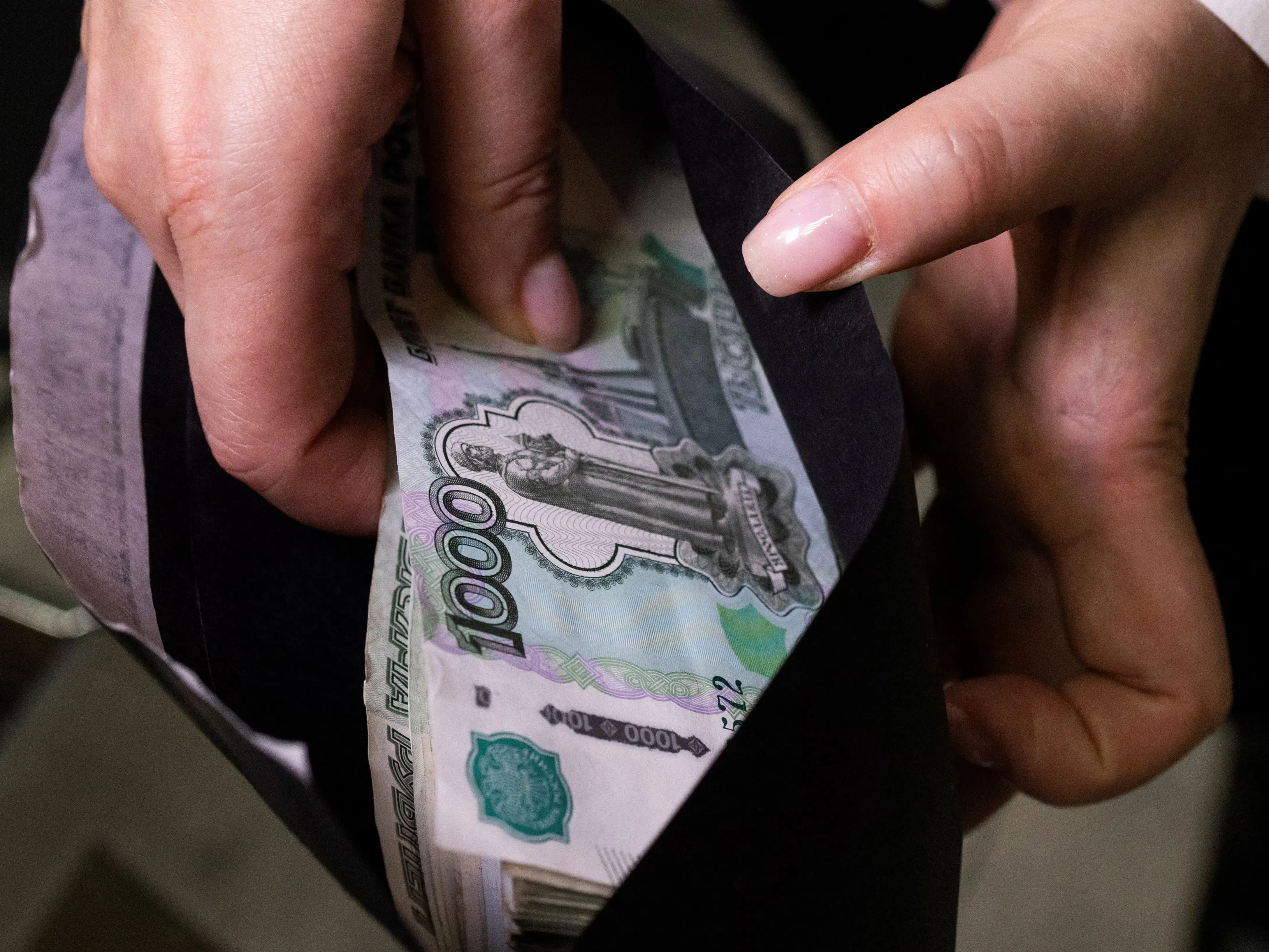
Russia’s cross-border trade is undergoing a significant shift. As Western sanctions tighten the noose on foreign currency transactions, Moscow is turning inward, and the ruble is becoming the dominant currency in both exports and imports. But this self-reliance is coming at a price.
According to new data published by the Bank of Russia on Wednesday, more than 50 per cent of Russian exports are now being paid for in rubles. Payments in so-called “friendly” currencies, primarily the Chinese yuan, have shrunk to about one-third of total receipts, down from nearly half at their peak a year ago. Meanwhile, the share of payments in “unfriendly” currencies, mainly the US dollar and euro has fallen to just 15 per cent.
This marks a sharp change in Russia’s post-Ukraine invasion strategy. After sanctions froze its access to Western financial systems in 2022, Russia increasingly leaned on the Chinese yuan. But even that workaround has begun to fray.

Sanctions squeeze yuan trade too
The turning point came in mid-2024, when the United States ramped up secondary sanctions on foreign banks facilitating transactions for Russian entities. According to Bloomberg, this move has chilled even “friendly” bank interactions, stalling the yuan’s previously growing role in Russia’s trade and banking system.
The Moscow Exchange, where the yuan is now the only major currency traded, no longer discloses turnover data, but yuan volumes reportedly fell to a two-year low in May, and remained subdued in June, according to Kommersant newspaper.
Trending Stories
)
Asian Games: Shooting spree continues as India win silver in women’s 50m rifle 3P team event
)
Bollywood mourns Mushtaq Khan: Sunny Deol, Rajpal Yadav and others pay tribute
)
'A terrorist country is asking me that question?': Jaishankar hits back at Pakistani journalist at UN; flags attacks on commercial shipping
&im=FitAndFill=(700,400))
New Friday OTT releases (September 25, 2026): Don’t Be Shy, Hunkkaar: The Roar, Mango Pachcha- 6 movies and TV shows on Netflix, Prime Video and more
)
India's UN Envoy slams Pakistan: 'They claim security by day, terrorism by night'
)
10,000 gather in support of 87-year-old forcefully evicted from home of 71 years
)
Indian diplomat Petal Gahlot raises deteriorating situation in Pakistan-occupied Kashmir in right of reply at UN
)
US court backs Pentagon's decision to exclude Anthropic over Claude AI restrictions
)
OpenAI AI Agents hacked 4 websites before Hugging Face, researchers reveal
)
Yemen's war escalates: Saudi-backed leader calls for general mobilisation against the Houthis
)
'FIRST LOOK from inside Noah’s Ark': Researchers share video from inside mysterious mound in Turkey
)
Army chief reviews operational preparedness along LoC, visits mega eye camp in Tangdhar
)
Pentagon quietly adds 37 wounded troops to Iran war tally without explaining when or how
)
Heart of the Beast review: Brad Pitt leads a gripping tale of survival and loyalty
)
Myanmar training camp case: US national, 6 Ukrainians allowed to meet their families abroad
)
Scientists detect first radio signals directly from faraway planet
)
Did Hitler kill his niece Geli Raubal? Newly found records reopen a 95-year-old mystery
)
Bias or safety concerns? Bengaluru CEO says firm will not hire men from UP, Bihar, Rajasthan, MP. Here's why
)
Gaza's war turned environmental damage into second crisis
)
Trump rejects Iran's 7-day ceasefire proposal as US weighs renewed bombing after midterms: Report
)
‘Not just a local tragedy’: Nepal PM Shah warns UN of growing climate threat, says Nepal floods were 'a warning to the world'
)
Nigeria Navy moves to boost oil security, tackle crude theft and infrastructure threats
)
WATCH | As Shehbaz Sharif claims Pakistan’s ‘victory’ during 2025 conflict, Indian diplomat R Srinivas laughs at UN
)
Jay-Z rape case: Accuser says allegations were false, never met rapper
)
Asian Games 2026: India women’s kabaddi team edge Iran 37-34 to clinch 3rd gold medal
)
Cindy Crawford’s son Presley Gerber cremated as death probe continues
)
Pakistan deploys over 20,000 security personnel as PTI vows march for Imran Khan's release
)
Saudi oil exports surge despite Iran war
)
'Making history': Xi Jinping praises Trump as US-China leaders dine at White House
)
Tesla is preparing something big for Optimus: new Gen 3 models surface in app
)
US Supreme Court backs Trump administration's use of SAVE database to check voter citizenship
)
‘It is all possible’: Putin weighs next steps on Ukraine talks, rules out Europe conflict
)
Outrage erupts after 3-year-old is married to 60-year-old man in Pakistan, link to her sister's murder being probed
)
Trump-Xi summit wrap: Big pageantry, Iran talks, few major developments and more meetings planned
)
Red Sea crisis: Houthis promise not to target European ships; UNSC condemns Saudi attacks
)
‘Attack on Mecca a red line for Pakistan’: Shehbaz Sharif warns Houthis at UN
The Russian central bank, which once detailed rising yuan usage in the banking system, has also stopped publishing granular figures.
Exporters sell fewer dollars as ruble takes over
With more trade now settled in rubles, the volume of foreign currency sales by Russian exporters has slumped to the lowest level since early 2023, even though exporters are still converting close to 100 per cent of receipts, the central bank said in its latest report.
Simultaneously, corporate demand for foreign currency has halved compared to the monthly average in 2024. According to Stanislav Murashov, economist at Raiffeisenbank in Moscow, this is partly because “the growing use of rubles to pay for imports” has reduced the need for foreign currency. The share of imports paid in foreign currencies has now dropped to 45 per cent, the rest settled in rubles.
Why is Russia doing this?
According to Murashov, the shift is fundamentally about sanctions avoidance. “The main goal of switching trade to rubles was to avoid frozen or delayed payments,” he told Bloomberg. “It’s about mitigating sanctions risk and keeping payments flowing.”
But this pivot has its downsides. As Murashov explains, the combination of a stronger ruble and lower commodity prices has delivered a “double blow to budget revenues.”
A shadow network of trade payments
To navigate the growing risks of international sanctions, Russian businesses have adapted, using alternative and less visible payment networks. A report by the Center for Analysis and Strategies in Europe (CASE) revealed that most Russia–China trade is now routed through “mirror” ruble and yuan accounts.
Here’s how it works: Chinese importers pay in rubles from local ruble accounts, while Russian exporters also receive rubles. In parallel, yuan accounts maintained in Chinese banks carry out the currency conversion without any direct transfer, thereby avoiding regulatory scrutiny. The CASE report describes this setup as “highly adaptable” and increasingly “robust and less transparent.”
In countries where this dual-account model isn’t viable, specialised intermediaries step in. These firms, registered across multiple jurisdictions, accept rubles from Russian buyers and pay exporters in rubles, handling the currency exchange offshore. For large Russian firms, more sophisticated routes exist, but all share one principle: keeping currency flows hidden from the Western financial system.
The West’s financial sanctions may have reshaped Russia’s trade architecture but haven’t stopped it. Instead, Moscow is doubling down on the ruble, even as the price includes a drop in export revenues, rising transaction costs, and a murkier financial landscape. While these adjustments may shield Russia from immediate shocks, they signal a deeper decoupling from the global monetary system, one that’s becoming less transparent, less efficient, but more sanctions-proof.