Powell under pressure as GDP, jobs data and politics collide at Fed meet

&imwidth=600&imheight=450&format=webp&quality=medium "Powell under pressure as GDP, jobs data and politics collide at Fed meet")
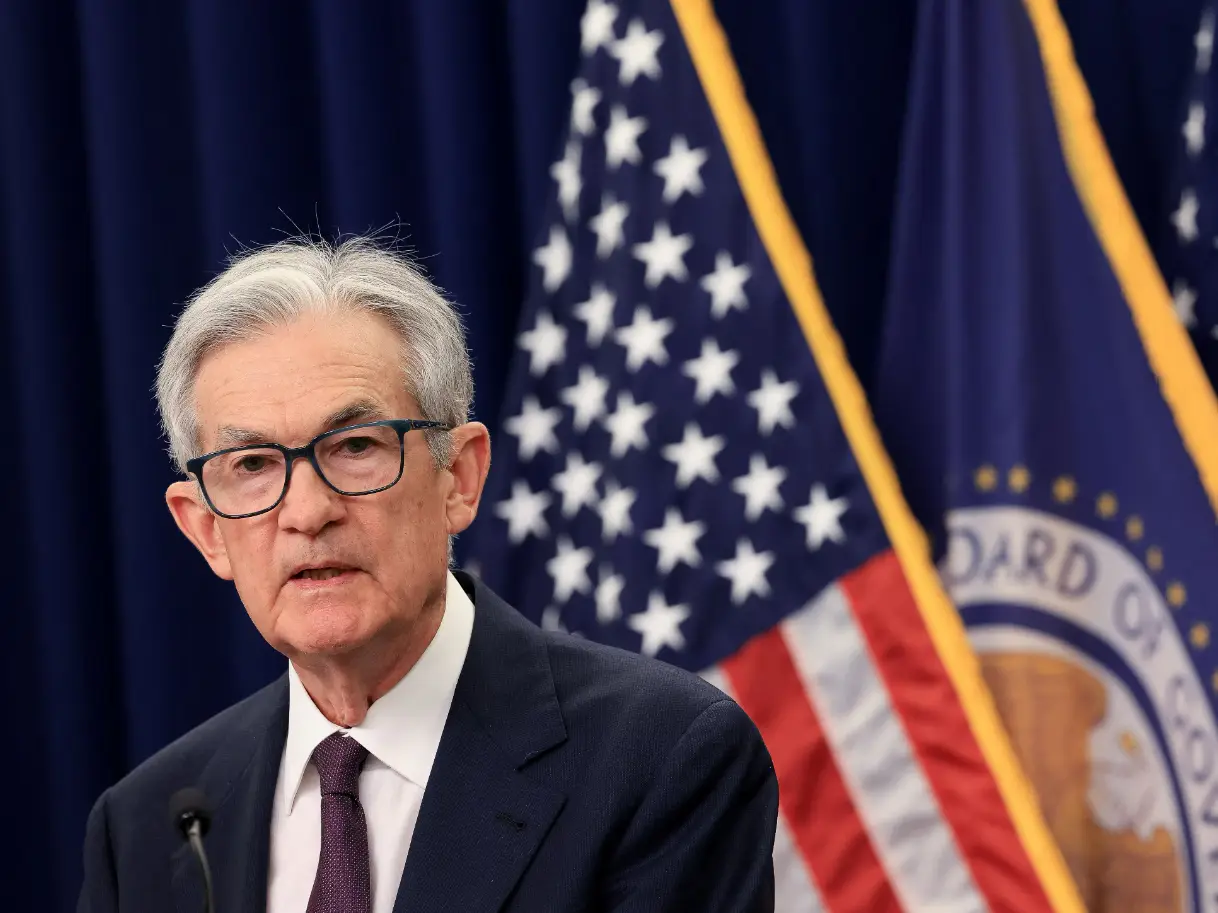
US Federal Reserve Chair Jerome Powell attends a press conference in Washington.. Photograph: (Reuters)
The Fed is expected to maintain steady interest rates, yet internal pressure grows from financial markets and the Trump administration, concerned about a softening labor market.
This week is shaping up to be one of the most politically and economically charged for the US Federal Reserve in months. Chair Jerome Powell and his team are set to begin a two-day policy meeting on Tuesday, just as a flurry of critical data is expected to land, including GDP, jobs and inflation figures that could sway monetary policy and rattle markets.
The Federal Reserve is widely expected to hold interest rates steady for another meeting. But behind closed doors, pressure is mounting, from inside the Fed, from financial markets, and from the Trump White House. According to Bloomberg, some officials are now openly concerned about a weakening labour market and have signalled willingness to consider a rate cut sooner rather than later.
Ahead of Fed meeting economic storm brews
The timing couldn’t be more delicate. On Wednesday, the US government will release its preliminary second-quarter GDP numbers. As per Bloomberg’s survey of economists, the economy is expected to show a 2.4 per cent annualised growth rebound, largely driven by a sharp narrowing of the trade deficit, after a surprise 0.5 per cent contraction in Q1. But beneath the headline number, household demand and business investment likely remained modest. Consumer spending is forecast to rise just 1.5 per cent, the weakest back-to-back quarterly performance since the COVID shock in 2020.
Meanwhile, the labour market appears to be cooling. The July jobs report, due Friday, is projected to show that US companies added just 100,000 jobs, the lowest private payroll gain in eight months. Unemployment is also expected to tick up to 4.2 per cent. The pace of hiring has slowed in recent months, with job openings declining and education payrolls no longer propping up the monthly figures.
Trump ups the pressure
Trending Stories
)
)
&im=FitAndFill=(700,400))
)
)
)
)
)
)
)
&im=FitAndFill=(700,400))
)
)
)
)
&im=FitAndFill=(700,400))
&im=FitAndFill=(700,400))
)
)
)
)
&im=FitAndFill=(700,400))
&im=FitAndFill=(700,400))
)
President Donald Trump, who has long criticised Powell, is again pushing for rate cuts. As per Bloomberg, Trump has blasted the Fed chief for being “too slow” and recently attacked Powell over cost overruns in the renovation of the Fed’s headquarters in Washington, D.C. Trump’s own tariff policy, which has stirred fears of renewed inflation, adds to the uncertainty facing the Fed.
Still, inflationary pressures remain mild so far. The personal consumption expenditures (PCE) report for June, the Fed’s preferred inflation metric is due Friday. According to Bloomberg, it’s expected to show a slight acceleration in core inflation, suggesting that tariffs are only gradually filtering through to consumers.
A global week for central banks
This week isn’t just pivotal for the Fed. Central banks from Canada to Colombia are under the spotlight. As per Bloomberg, the Bank of Canada is expected to hold its policy rate steady at 2.75 per cent for a third straight meeting, even as second-quarter GDP data is projected to show economic contraction. Trade uncertainty and resilient inflation have kept policymakers cautious. In Asia, the Bank of Japan will also likely keep its benchmark rate unchanged at 0.5 per cent. BOJ Governor Kazuo Ueda is under pressure to interpret the impact of Trump’s trade deal with Japan, a move that could influence the bank’s next rate decision, according to Bloomberg.
South Korea, Thailand, Indonesia, and China will all release key manufacturing data by Friday, while Australia’s inflation data could shape expectations ahead of the Reserve Bank of Australia’s August policy meeting. In Pakistan, a rate cut is expected on Wednesday, just ahead of new inflation readings. Elsewhere in Asia, July’s PMI data from India and China will show how Trump’s tariffs are reshaping regional trade patterns.
Europe, Africa brace for slowdown
Across Europe, a wave of second-quarter GDP releases is expected to show stagnation. Bloomberg projects eurozone growth to be flat from April through June after a 0.6 per cent jump in Q1, largely due to pre-tariff stockpiling. Germany may post a 0.1 per cent contraction, while France and Italy barely grow.
Inflation data on Friday is expected to confirm that euro-area price growth slowed to 1.9 per cent in July, just under the ECB’s 2 per cent target, as per Bloomberg. The core inflation rate is likely to remain steady at 2.3 per cent.
Meanwhile, in Africa, Ghana is expected to slash rates by a whopping 250 basis points to 25.5 per cent on Wednesday, taking advantage of easing inflation. South Africa and Eswatini are also seen cutting rates, while Malawi is expected to hold. Mozambique may opt for another cut to stimulate its recession-hit economy.
Latin America enters easing cycle
In Latin America, Chile’s central bank is poised to cut rates by 25 basis points to 4.75 per cent on Tuesday, marking its first cut in 2025. Brazil, however, is likely to pause its aggressive tightening campaign and hold the Selic rate steady at 15 per cent. Inflation has cooled but remains sticky.
Colombia, too, is expected to lower rates slightly, with inflation now falling within a range that gives the central bank some breathing room. Peru, which reports inflation data on Friday, is expected to show a modest annual rate of around 1.7 per cent.
What next?
For Powell and his team, the question is not just about whether to cut rates, but when. With trade tensions still bubbling, inflation proving elusive, and growth far from consistent, the Fed’s decision this week could set the tone for the rest of 2025.
Whether the central bank bows to political heat or holds its line on data-driven patience, all eyes will be on Powell’s remarks Wednesday afternoon. As Bloomberg reports, investors, traders, and the White House will all be listening very closely.
(With inputs from the agencies)