
&imwidth=800&imheight=600&format=webp&quality=medium "How London could become AI's layoff apocalypse fallout zone")
For decades, London's army of analysts, coders, lawyers and consultants formed the backbone of one of the world's great financial capitals. Now, that workforce is shrinking at a pace that has alarmed economists, recruiters and policymakers alike, as artificial intelligence quietly automates away the very jobs that once defined the city's professional class.
The Numbers Tell The Story
The scale of the shift is stark. Finance analyst vacancies in London have collapsed from more than 350 roles four years ago to roughly 80 today, according to recruitment data cited in recent reporting. White-collar postings now account for only around a quarter of all London job listings, down from nearly half just a few years ago. Corporate lawyers, software developers, management consultants and digital marketing managers have all seen their vacancy counts fall from the hundreds into the double digits.

Half The City's Workforce At Risk
Research from the Greater London Authority paints an even bigger picture. An estimated 2.4 million London workers, close to half the capital's entire workforce, face some degree of automation risk from AI. Of those, more than 300,000 workers, including bookkeepers, brokers and administrative staff, fall into the high-risk category for displacement, while another 748,000 sit in the next tier of exposure.
Banks Are Leading The Cuts
Trending Stories
)
Samay Raina-Mukesh Chhabra controversy explained: What happened over girlfriend joke on India's Got Latent?
)
Putin's United Russia party wins 355 seats in Duma election; 4 other parties cross threshold to enter parliament
)
Asian Games: Indian women's hockey team thrash Indonesia 17-1, blasts 36 goals in 2 matches
)
FIFA chief Infantino wants to reform governing body with consultation from federations
)
40-foot waves crash into cruise ship in dangerous stretch near Antarctica. Watch
)
Four decades after leaving Kolkata, the Birlas may be coming back for more
)
Explainer: Why rare-earth export licences and Board of Trade are US priorities ahead of Trump-Xi summit
)
Saudi Arabia exits China-led mBridge digital currency platform amid Saudi-Houthi conflict
&im=FitAndFill=(700,400))
New OTT releases this week (September 21-27, 2026): Shaque: Trust No One, Hunkkaar, Don’t Be Shy- 5 new titles coming to Netflix, Prime Video and more
)
Microsoft executive called AI training the ‘largest theft of labour in human history’
)
UK PM Burnham agrees to 'defensive' military support for Saudi Arabia against Houthis
)
J&K Assembly Session begins amid chaos: BJP, ruling alliance clash as statehood demand dominates
)
The Scandal: Why so scandalous? Ji Chang Wook leaves you gasping for air
)
IIT Bombay tensions ease after three-hour open house; director’s assurances pacify students
)
US and China vie for AI dominance as calls grow for regulation | Gravitas
)
Taylor Swift has a 'proud wife' moment as Travis Kelce scores first touchdown of season: 'That’s my husband!'
)
Samsung raises Galaxy S26 prices by Rs 20,000: Here’s what each model now costs
)
Pilot recreates Mona Lisa in sky over Oklahoma and Arkansas in four-hour flight: VIDEO
)
Bessent meets China’s He Lifeng to prepare for Trump-Xi summit
)
Iranian airlines to shut worldwide on Sept 23, Bessent warns of US banking ban
)
Glitch in the matrix caught on camera: Woman vanishes after talking to reporter
)
US-Iran war, peace deals and more: What to expect from Trump's UNGA 2026 speech
)
From ‘communist’ to ‘great mayor’: Trump praises Mamdani after New York meeting, discusses immigration and housing
)
Russia-Ukraine war: Russian strikes knock out three of Ukraine's largest steel plants
)
North Korea's nuclear tests triggered 1,399 earthquakes: Earth is still shaking | Gravitas
)
'Lot of things to learn from experienced players': Jayasuriya backs Rohit, Virat for 2027 ODI World Cup
)
BTS fans mock iHeartRadio’s day 2 turnout after short set controversy
)
China expels top generals Zhang Youxia, Liu Zhenli over ‘disloyalty’, corruption
)
Trump says Russia has ‘lost control’ of its diesel industry, calls for end to ‘ridiculous, never-ending’ war
)
‘0% chance’: Nvidia CEO Jensen Huang dismisses AI extinction fears by 2030
)
Trump's helipad event overshadowed by audio failure as major TV networks suspend pool coverage
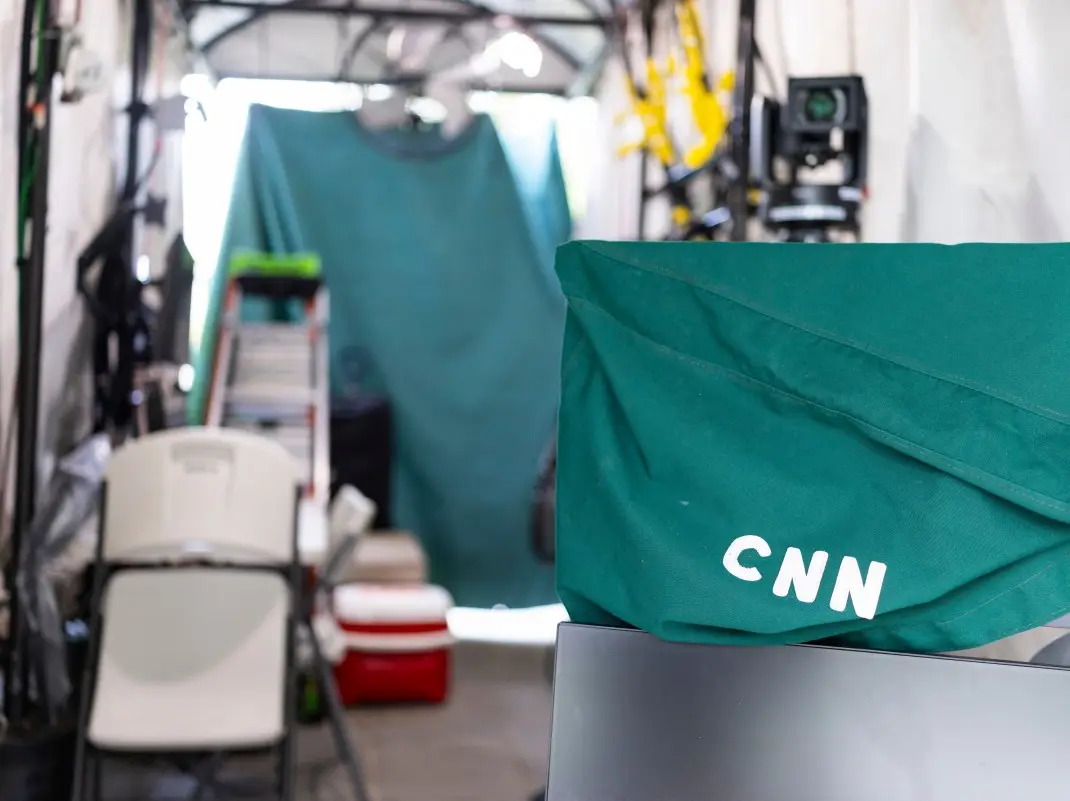)
White House TV pool halts Trump coverage after CNN barred from UNGA events
)
Jailer 2: Vidya Balan joins Rajinikanth's upcoming film as Kantha | Watch
)
8,000 bees worth over $20,000 stolen from hives in Queensland
)
The Verdict | The Mecca Agreement is under scrutiny as Houthis attack Saudis
)
Mahabharat actor Saurav Gurjar arrested in Hyderabad, sent to 14-day judicial custody in sexual exploitation case
)
WATCH | Mysterious lights over Tehran caught on video. Drone, aircraft or something else?
)
Delhi Air pollution: Strict crackdown on waste burning
Major employers are already acting on this shift. Standard Chartered has outlined plans to eliminate around 8,000 roles as part of AI-driven efficiency measures, while HSBC is reportedly weighing cuts of close to 20,000 jobs. In the hedge fund world, recruiters describe a similar pattern: the layers of junior staff that once supported portfolio managers are disappearing as firms hand a single employee an AI tool instead of building out a full team. Even executive assistant roles are being quietly phased out as AI takes over scheduling and travel booking.
The UK Is Losing Jobs Faster Than Anyone Else
A Morgan Stanley analysis found that UK firms reported net job losses linked directly to AI of around 8% over the past 12 months, roughly double the international average among comparable economies including the US, Germany, Japan and Australia. The twist is that UK companies are not lagging on AI productivity: gains of around 11.5% roughly matched those seen in the US. But while American firms with similar productivity gains tended to create more jobs than they cut, British employers have largely done the opposite, with more than 40% of executives admitting AI is being used specifically to reduce headcount rather than expand the business.
A Generation Locked Out
The fallout is landing hardest on younger workers. Software developer and consultant vacancies have fallen 37% since the launch of ChatGPT, compared with a 26% decline across the jobs market as a whole, and UK youth unemployment has climbed to 13.7%, its highest level since 2020. Early-career roles requiring two to five years of experience are among the most exposed, raising concerns that the entry-level pipeline into management is being cut off just as the next generation of workers tries to get a foothold.
Taken together, the picture emerging from London is one of a city at the leading edge of AI's disruption of white-collar work, not in some distant future, but right now. Whether London becomes a cautionary tale or a model for managing the transition may depend on how quickly policymakers and employers respond to a workforce shift that, for hundreds of thousands of people, has already begun.
