G7 urges repeal of bans on Japanese food products; China denounces 'economic coercion'

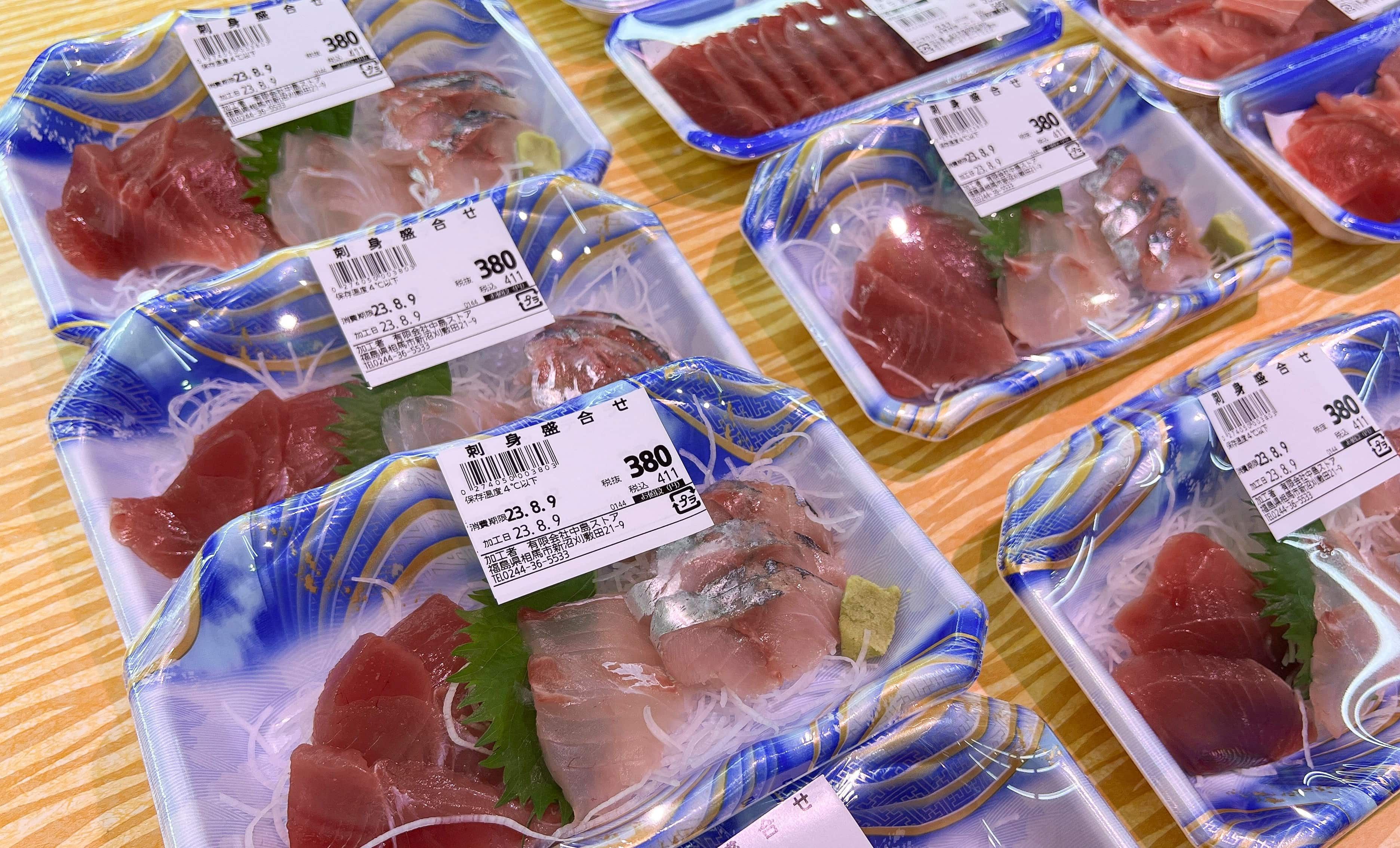
Packs of sashimi, or raw fish, are displayed at a supermarket.
The Group of Seven (G7) industrial powers havecalled for an "immediate repeal" of restrictions on Japanese food product imports.The move comes as a clear reference to China's measures following Japan's decision to release treated wastewater from the Fukushima nuclear power plant.
During a weekend meeting in Osaka, the G7 trade ministers issued a statement expressing their disapproval of actions that exploit economic dependencies and committed to fostering "free, fair, and mutually beneficial economic and trade relationships." The statement, which does not specifically mention China, underscores growing concerns throughout the world about what the G7 views as increased economic coercion through trade.
China had previously imposed a comprehensive ban on Japanese fish imports two months ago when Japan commenced the release of treated radioactive water from the damaged Fukushima facility into the Pacific Ocean. Both Japan and the United States have criticised these restrictions as unfair, and Russia similarly imposed a comparable ban earlier this month.

In response, China has characterised the G7's actions as "economic coercion" and urged the group not to adhere to double standards but to take practical measures to preserve normal international trade and investment patterns. The Chinese embassy in Japan expressed concerns that G7 members' actions disrupt global production and supply chains' security and stability.
Other economic concerns
The G7, composed of the United States, Japan, Germany, Britain, France, Italy, and Canada, also voiced concerns about recent measures to control the export of critical minerals. China, the world's leading graphite producer, announced export restrictions on this crucial material, which is extensively used in electric vehicle batteries. This move was seen as an attempt to bolster control over the supply of critical minerals, as China faces challenges to its global manufacturing dominance.
)
AI kill switch explained: Why shutting down a dangerous AI may not be as simple as pressing a button
)
US ships in Indian Ocean ‘will be attacked’ if war resumes, warns Iran
)
SNL UK takes aim at Ed Sheeran with AI Princess Diana sketch
)
Trump says he'll build an 'AI Force' and appoint a czar, for 'high IQ' people only
)
‘0% chance’: Nvidia CEO Jensen Huang dismisses AI extinction fears by 2030
&im=FitAndFill=(700,400))
What TSMC's 2nm technology means for Apple
)
'Were you here to sell chickpeas?': Wasim Akram criticises Babar Azam's captaincy
)
Mark Carney mimics Trump in hilarious moment over C$70 billion clean-energy investment; room erupts in laughter
&im=FitAndFill=(700,400))
Top 10 countries in mathematics: See the world’s best performers in 2026
)
Apple reportedly building AI server with M8 Ultra chips, may use Nvidia technology
)
TIFF 2026: Theja Rio’s Angh wins Platform Prize, puts Nagaland story on global stage
)
BTS' fans question iHeartRadio’s treatment of group after brief festival set
)
Samsung raises Galaxy S26 prices by Rs 20,000: Here’s what each model now costs
)
Operation Sindoor’s hidden naval dimension | MoD reveals Indian Navy Special Forces joined May 7 strikes
)
Trump-Xi summit: US Treasury Secretary holds meeting with Chinese Vice Premier
)
Bessent meets China’s He Lifeng to prepare for Trump-Xi summit
)
S Jaishankar, former Army chief among high-profile names issued Delhi SIR notices
)
CDU suffers historic defeat in eastern Germany as AfD surges, Merz vows to stay on
)
Iran sets 7 conditions to end war with US: What are Tehran’s demands?
)
Trump announces ‘AI Force’ as debate grows over AI risks and regulation
)
Arvind Kejriwal, family members, Delhi CM Rekha Gupta get SIR notices
)
AI actress Tilly Norwood glitches mid-interview, switches from English to Chinese | Watch
)
Saudi vs Houthis: Houthis claim missiles & drones used in attack on key Saudi sites
)
Ed Sheeran addresses Macklemore's removal, Gaza conflict during Philadelphia concert: 'I cannot hide how I feel'
)
Saudi Arabia exits China-led mBridge digital currency platform amid Saudi-Houthi conflict
)
Punjab man consumes poison outside DC office; Congress, BJP target AAP government
)
ICE shooting in Texas leaves man seriously injured; officials demand independent investigation and transparency
)
'Lot of things to learn from experienced players': Jayasuriya backs Rohit, Virat for 2027 ODI World Cup
)
Chancellor Friedrich Merz vows to stay on as exit polls signal major poll setback
)
North Korea's nuclear tests triggered 1,399 earthquakes: Earth is still shaking | Gravitas
)
Several petrol pumps, other businesses to refuse UPI payments above Rs 2,000 from Oct 16: Is it legal?
&im=FitAndFill=(700,400))
New OTT releases this week (September 21-27, 2026): Shaque: Trust No One, Hunkkaar, Don’t Be Shy- 5 new titles coming to Netflix, Prime Video and more
&im=FitAndFill=(700,400))
Gulshan Grover turns 70: Ram Lakhan, Gangster, Hera Pheri- Must-watch movies of the actor on OTT platforms
)
Noel Tata challenges Chandrasekaran’s reappointment as Tata Sons chairman. What happened at the board meeting
)
West Indies Squad for India Series: Hetmyer included for T20Is, Holder rested
&im=FitAndFill=(700,400))
Kareena Kapoor birthday special: Inside her net worth, best movies, luxurious lifestyle and love story with Saif Ali Khan
)
China now makes advanced memory chips without the machines it was banned from buying
)
Trump in ‘deciding mode’ on Iran, says ‘very big things’ going to happen soon
)
Jailer 2: Vidya Balan joins Rajinikanth's upcoming film as Kantha | Watch
)
Microsoft executive called AI training the ‘largest theft of labour in human history’
)
Italy moves to ban face veils in schools as Meloni pushes new integration measures
The G7 trade ministers emphasised the necessity to reduce dependence on any single country for critical resources and underscored the importance of building dependable supply chains for critical minerals, semiconductors, and batteries.
The ministers also reaffirmed their worries about various non-market policies, including what they characterised as "pervasive, opaque, and trade-distortive industrial subsidies" and the forced transfer of technology. While there was no mention of the West Asia crisis during the trade ministers' meeting, the group did express their commitment to raising awareness about the challenges associated with moving humanitarian goods across international borders during natural disasters and emergencies.
Recent events in West Asia have raised concerns and calls for a ceasefire to facilitate aid delivery to Palestinian civilians in Gaza. Western nations have generally supported Israel's right to self-defence but are increasingly concerned about the impact of the conflict and the need for humanitarian aid.
(With inputs from Reuters)
WATCH WION LIVE HERE